
Skip to content
Based in West Bridgford · Serving Nottingham and surrounding areas GasSafety 247: +44 7888 885791
10 related services

Request Carbon Monoxide and Combustion Safety Assessment in Nottingham

Arrange carbon monoxide and combustion safety assessment in Nottingham after immediate risks are addressed. Define appliance, flue and follow-up concerns.
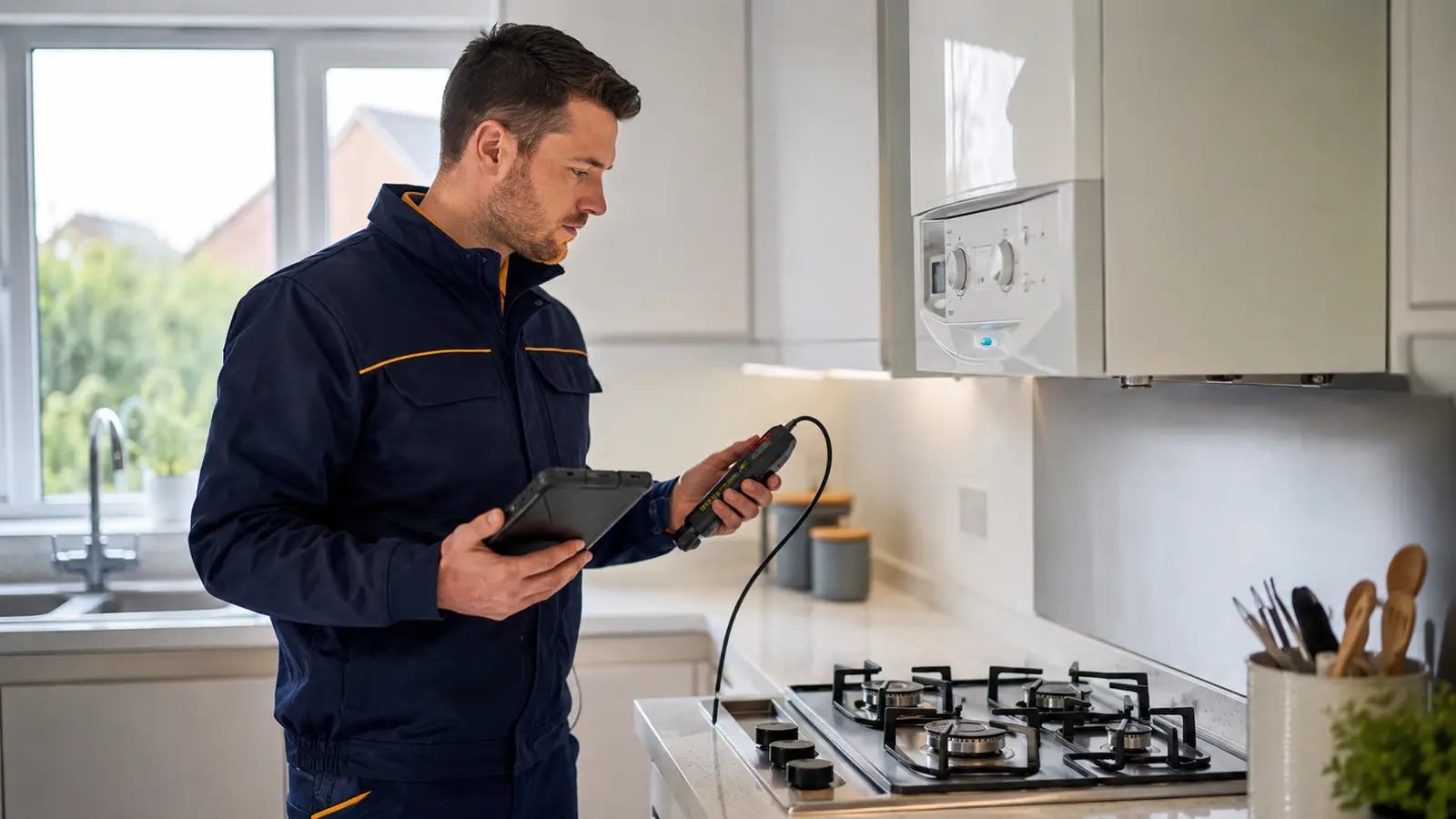
Gas engineer carrying out appliance and combustion checks in a UK homeCheck the ID card
and work category

Your service enquiry

Arrange appliance and combustion-safety follow-up with Nottingham-based GasSafety 247 once immediate risks have been addressed. This enquiry is for a defined inspection, documented concern or remedial proposal involving gas equipment, its flue or ventilation. If carbon monoxide exposure is suspected, go outside and obtain urgent medical advice; do not remain in the building waiting for a booking reply. Call 999 for a life-threatening emergency. Suspected natural-gas escapes require the National Gas Emergency Service on 0800 111 999. For subsequent professional assessment, send the property location, incident record and affected equipment so the work category, access and charge can be discussed.
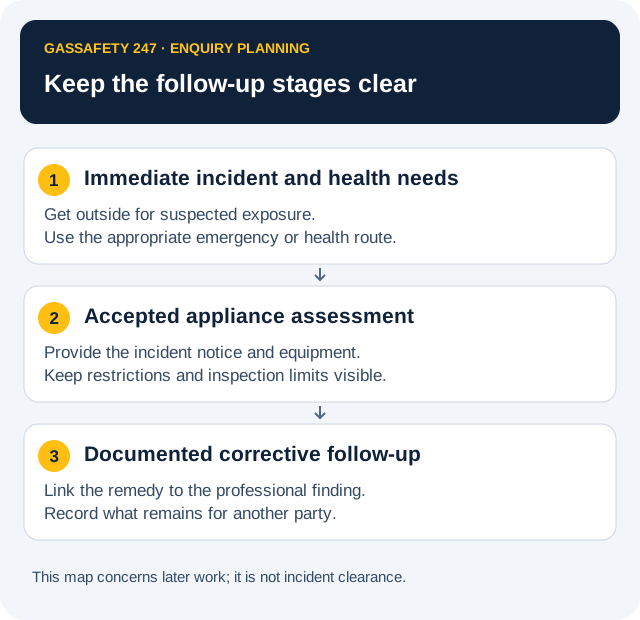
Carbon monoxide follow-up stages: immediate incident and health routes, accepted appliance assessment, then documented corrective action
Keep urgent incident action separate from the later equipment purchase and its recorded restrictions.
10 related services

Choose the co & combustion job you need

Each page explains the useful pre-visit details, checks and qualification boundaries.

All local routes

CO & Combustion across 100 areas

Choose the location that matches the property, then share the full postcode when you call or message.

CO & Combustion in West Bridgford01CO & Combustion in Edwalton02CO & Combustion in Gamston03CO & Combustion in Lady Bay04CO & Combustion in Compton Acres05CO & Combustion in Wilford06CO & Combustion in Silverdale07CO & Combustion in Clifton08CO & Combustion in Ruddington09CO & Combustion in Tollerton10CO & Combustion in Plumtree11CO & Combustion in Keyworth12CO & Combustion in Bunny13CO & Combustion in Bradmore14CO & Combustion in Gotham15CO & Combustion in East Leake16CO & Combustion in Costock17CO & Combustion in Stanford on Soar18CO & Combustion in Normanton on Soar19CO & Combustion in Sutton Bonington20CO & Combustion in Kegworth21CO & Combustion in Rempstone22CO & Combustion in Wysall23CO & Combustion in Willoughby on the Wolds24CO & Combustion in Widmerpool25CO & Combustion in Stanton on the Wolds26CO & Combustion in Normanton on the Wolds27CO & Combustion in Cotgrave28CO & Combustion in Cropwell Bishop29CO & Combustion in Cropwell Butler30CO & Combustion in Kinoulton31CO & Combustion in Hickling32CO & Combustion in Upper Broughton33CO & Combustion in Owthorpe34CO & Combustion in Radcliffe-on-Trent35CO & Combustion in Shelford36CO & Combustion in East Bridgford37CO & Combustion in Newton38CO & Combustion in Bingham39CO & Combustion in Saxondale40CO & Combustion in Aslockton41CO & Combustion in Whatton42CO & Combustion in Orston43CO & Combustion in Bottesford44CO & Combustion in Lowdham45CO & Combustion in Nottingham City Centre46CO & Combustion in The Meadows47CO & Combustion in Sneinton48CO & Combustion in Colwick49CO & Combustion in Bakersfield50CO & Combustion in Mapperley51CO & Combustion in Gedling52CO & Combustion in Carlton53CO & Combustion in Netherfield54CO & Combustion in St Ann's55CO & Combustion in Sherwood56CO & Combustion in Carrington57CO & Combustion in Basford58CO & Combustion in Bulwell59CO & Combustion in Bestwood60CO & Combustion in Arnold61CO & Combustion in Woodthorpe62CO & Combustion in Daybrook63CO & Combustion in Top Valley64CO & Combustion in Rise Park65CO & Combustion in Hucknall66CO & Combustion in Linby67CO & Combustion in Papplewick68CO & Combustion in Calverton69CO & Combustion in Burton Joyce70CO & Combustion in Lenton71CO & Combustion in Dunkirk72CO & Combustion in The Park73CO & Combustion in Wollaton74CO & Combustion in Beeston75CO & Combustion in Chilwell76CO & Combustion in Attenborough77CO & Combustion in Bramcote78CO & Combustion in Stapleford79CO & Combustion in Toton80CO & Combustion in Long Eaton81CO & Combustion in Sawley82CO & Combustion in Sandiacre83CO & Combustion in Risley84CO & Combustion in Breaston85CO & Combustion in Draycott86CO & Combustion in Borrowash87CO & Combustion in Ockbrook88CO & Combustion in Ilkeston89CO & Combustion in West Hallam90CO & Combustion in Heanor91CO & Combustion in Kimberley92CO & Combustion in Eastwood93CO & Combustion in Nuthall94CO & Combustion in Castle Donington95CO & Combustion in Loughborough96CO & Combustion in Quorn97CO & Combustion in Southwell98CO & Combustion in Newark-on-Trent99CO & Combustion in Mansfield100
Complete service information

Carbon Monoxide & Combustion Safety: detailed service scope, booking and next steps

Explore this page

Choose the assessment that answers your actual safety concern

A previous alarm needs an incident history, not an assumed boiler fault

Explain what prompted the enquiry: an alarm activation, a professional warning, a concern about an appliance or a requirement to review an existing installation. Preserve the time and location of the event and any emergency-service findings already supplied. Different starting points need different work, and an alarm near a boiler does not establish that the boiler was the source. A useful booking identifies the question to be investigated without declaring the answer. Describe other fuel-burning equipment where it is known, while leaving source attribution to the appropriate assessment.

If a building or appliance has been restricted from use, include the actual notice rather than a remembered summary. This allows the proposed follow-up to recognise the current safety position before any attendance is accepted.

Planned combustion inspection has a different purpose from incident response

A customer may want an appliance assessed because there is an unresolved maintenance finding or a change around its flue. Explain that reason when requesting a combustion safety inspection. Planned attendance should identify the equipment, relevant surrounding arrangement and findings to be recorded. It is not a replacement for immediate incident action or medical evaluation. Ask whether the proposed appointment addresses the named gas appliance alone, connected flue concerns or another specified issue. Several tasks can be requested together, but each needs an accepted boundary.

This gives the purchaser a clear basis for comparing inspection proposals and avoids treating every combustion concern as the same package of tests.

A risk assessment should state which decisions it supports

For a carbon monoxide risk assessment, describe the property use and the decision you need to make. That might concern an appliance retained after refurbishment, a change in room use or an outstanding professional recommendation. Existing plans and reports are more useful than a claim that the whole building simply needs a safety certificate. Agree which assets and environmental factors the assessment will cover, the form of its findings and any specialist input outside that scope. A quotation should not imply that one visit removes every possible source of carbon monoxide.

The completed record needs to distinguish inspected items, access limitations and recommendations, so the responsible person can commission the next action with a defensible understanding of what was assessed.

Keep the alarm, the appliance and the occupied space distinct

An alarm installation does not inspect fuel-burning equipment

A carbon monoxide alarm is a warning device; its presence does not establish that an appliance has been correctly installed or maintained. HSE explains that alarms do not replace professional maintenance and safety checks. When discussing alarm-related work, identify the product and follow its manufacturer's instructions for siting, operation and maintenance. If you also need an appliance assessment, request that separately in the same enquiry. Avoid describing the alarm's silence as proof that no fault exists. A commercial scope may include an alarm-related discussion and a gas inspection, but the invoice and record should make those tasks identifiable.

Customers can then understand what service they have actually bought rather than assuming that fitting or checking a warning device has certified the heating installation.

A flame observation is evidence for assessment, not clearance to use

If an ordinary external view has raised a concern, describe it without attempting to adjust the appliance or expose a burner. The gas appliance flame check enquiry allows you to identify the product and the reason for professional review. A photograph of a flame does not replace examination of the installation, and flame appearance alone cannot provide a remote safety clearance. Do not continue using equipment you suspect is unsafe merely because a familiar colour is visible. The accepted professional work should explain what was considered, the actual finding and any restriction or remedial recommendation.

Keep that outcome with the appliance's records instead of treating an online visual comparison as the completed service.

Ventilation concerns should include changes to the room

Tell us about known alterations affecting the appliance space, such as changes around an existing vent or enclosure. You do not need to calculate the ventilation provision yourself. Supply available product documents and describe what has changed, then request gas appliance ventilation assessment. Air provision and a flue perform different roles, so an appointment should not silently substitute one review for the other. Work to cabinetry, windows or other building elements may involve separate trades and permissions. Ask how any proposed correction will be coordinated and which person is responsible for completing it.

A finding that requires another contractor should remain an open action until the appropriate work and follow-up have been completed.

Commission the relevant appliance and flue work

Flue flow questions need the actual installation identified

A flue flow testing enquiry should name the appliance served and describe any known flue arrangement from reliable records. Shared routes, inaccessible areas or earlier modifications need to be disclosed where known. Do not climb, dismantle a terminal or open an enclosure to collect booking information. Ask the proposed provider how inspection access and any limitations will be handled. The scope should make clear whether a particular gas installation can be accepted and whether additional specialist attendance is necessary. This matters when a landlord, building manager and occupier control different parts of the route.

The customer should know which sections were actually considered rather than receiving an unqualified claim that an entire chimney or shared building system has been checked.

Spillage assessment is a professional work instruction

For appliance spillage testing, provide the existing concern and the appliance identity. A previous report may already specify the question that requires follow-up. The customer should not perform an improvised test or try to create a suspected operating condition before attendance. Agree the competent work category, inspection purpose and required record instead. Where the professional identifies a dependency on ventilation, other equipment or access, the findings should name it. A proposal for further investigation can be a legitimate result, provided it explains what remains unresolved.

The service should connect the evidence to the recommended next instruction without promising that a named test will always isolate a single cause.

Combustion readings belong to their measurement context

Request flue gas analysis for an identifiable appliance and accepted inspection purpose. If you hold previous readings, send the original record with its date and product details rather than copying a number into a message without context. Measurements need professional interpretation appropriate to the equipment and instructions; a customer-facing webpage should not prescribe universal pass values or encourage adjustment. Ask how the result and any limitation will be recorded, and whether the quoted task includes the particular maintenance or remedial work you need. A combustion measurement, service and statutory landlord check are distinct purchases even where an appointment combines relevant activities.

Their inclusion should be expressed clearly in the accepted scope.

Arrange follow-up after an incident without losing restrictions

Retain the warning notice alongside the new instruction

After emergency attendance, request a post-carbon-monoxide appliance inspection using the written incident findings, appliance status and restrictions. Explain who issued the record and which equipment it names. An instruction to investigate does not authorise the occupier to restore use. The proposed appointment must account for the actual restriction and the work needed before the appliance's status can be reassessed. Where several organisations attended, preserve their separate reports rather than combining them into an apparent single conclusion. This helps the follow-up provider identify which concern it is accepting and which questions still belong to another party.

The purchasing decision should support documented safety action, not simply the fastest route to switching equipment back on.

Separate the proposed remedy from evidence of its completion

The incident remediation follow-up route is useful when corrective work has been proposed or undertaken and its relationship to the original finding needs recording. Identify the recommendation, the contractor's work record and any outstanding action. Buying a replacement component is not the same as demonstrating that the incident concern has been resolved. Ask what verification the professional proposes, which equipment will be assessed and what outcome document you will receive. If a building or ventilation correction was required from another contractor, its completion should be established through appropriate evidence.

A final record should state the assessed position and remaining limitations without becoming a promise that no future carbon monoxide risk can arise.

Medical needs remain outside the gas appointment

A gas inspection cannot determine whether a person has been poisoned or needs treatment. The NHS carbon monoxide guidance provides the urgent health route. Prioritise that advice where exposure is suspected and do not await a commercial callback to seek help. For the later equipment enquiry, share the minimum relevant incident context; private clinical documents are not ordinarily needed to describe an appliance task. The gas professional's role should be defined through the accepted work, while healthcare decisions remain with the appropriate medical service. Keeping these responsibilities separate helps the customer arrange both without confusing a reassuring appliance conversation with a clinical assessment.

Define the responsible customer and property access

Nottingham homeowners can request a specific safety review

GasSafety 247 is based in Nottingham. A homeowner enquiry should identify the address and the gas equipment or installation question to be considered. A concern following decoration, building work or an appliance alteration can be described as a scenario without assuming the contractor caused a fault. If earlier documents relate to equipment that has since been replaced, explain the change. The Nottingham city-centre service hub connects other relevant work choices, while the accepted appointment remains property-specific. Availability and access must be confirmed directly. This page does not establish a separate incident-response team, guaranteed arrival time or specialist capability for every fuel-burning source in the building.

Landlords need alarm obligations and gas work stated separately

For a landlord carbon monoxide compliance check, identify the accommodation, existing warning devices and the purpose of the request. Applicable alarm responsibilities and landlord gas safety duties should not be merged into an unspecified certificate. Ask which inspection and records are included, and refer to current authoritative guidance where requirements affect the instruction. Tenant access arrangements and the owner or agent's authority to approve corrective work also need definition. If a gas safety record is due, use the landlord gas safety hub to request it explicitly.

A planned appointment must not be used to defer action on a reported current safety incident.

Shared buildings may need more than the flat's appliance owner

An occupier can often identify their own appliance but may not control the building's communal spaces or shared installation. State that distinction when requesting assessment. Supply a building-management contact if an agreed inspection may require access beyond the instructed unit, and ask the responsible parties to confirm permissions. Do not presume that an engineer commissioned by one flat can inspect or alter every shared asset. The quotation should identify the property and equipment boundary it accepts, with limitations recorded where broader access is unavailable. This makes the result usable for the purchaser without misleading neighbouring occupiers into believing that their equipment or an entire building has automatically been cleared.

Understand the quotation and the resulting record

Compare inspection proposals by their question and evidence

Ask what the initial charge covers, which equipment will be considered, what information is needed beforehand and which outcome record is proposed. An inspection fee should not be mistaken for an all-inclusive remedy. Where further work is recommended, request a proposal linking it to the findings and identifying who must approve it. Different quotations may cover different assets or investigation stages, so comparing only the headline price can conceal a material difference in scope. The pricing enquiry provides a route to discuss property-specific charges without inventing a universal carbon monoxide package.

Any additional attendance, materials or third-party correction should be agreed as part of the actual purchase.

Record inspected items, limitations and any next responsible party

The completed work record should make the assessed equipment identifiable and preserve relevant findings. Where inspection was limited by access, that limitation belongs in the handover. Ask which outstanding action requires another professional, the appliance owner or the building manager. A recommendation should not disappear because the provider's initial visit has ended. If the equipment's use remains restricted, maintain the restriction and follow the recorded professional advice. Keep the incident report, accepted scope and subsequent work records together so the next instructed person can understand the sequence.

That continuity is more useful than a broad marketing statement that the property has been made completely safe.

Request Nottingham and surrounding-area follow-up with a defined brief

Call or WhatsApp GasSafety 247 with the postcode, appliance details and existing incident or inspection record once the urgent situation has been addressed. West Bridgford and Edwalton are existing target-area routes; they do not represent additional offices. Use the service-area directory for the preserved coverage inventory and confirm whether the specific task can be accepted. State whether you need an initial assessment, a proposal for corrective work or verification following documented remediation. The response should establish the accepted service, relevant competence and appointment arrangements. Sending a message requests discussion; it does not itself confirm attendance or permit restricted equipment to be used.

Sources supporting this service information

Questions answered

Questions about carbon monoxide & combustion safety in Nottingham

Should I wait for a GasSafety 247 reply when my carbon monoxide alarm activates?

Do not use a booking reply as the immediate safety route. Treat a suspected current exposure urgently, get outside and seek medical advice in accordance with NHS guidance. Contact the appropriate gas emergency service where gas equipment is involved. This hub supports a later, clearly scoped appliance or combustion-safety enquiry.

What is the first document to send for post-incident appliance work?

Send the actual emergency or inspection notice identifying the affected equipment and any restriction. Include the property and a contact who can arrange appropriate access. An incident document helps the provider frame the accepted follow-up; it does not guarantee that all work described can be undertaken in one visit.

Can the silence of an alarm establish that the boiler is safe?

No. A warning device's silence is not a professional assessment of appliance safety. Continue to follow any existing restriction and request the appropriate equipment review where there is a concern. Alarm information may be relevant to the history, but it should not become the sole reason to resume using suspect equipment.

Does a carbon monoxide inspection replace medical advice after exposure?

It does not. A gas professional can assess accepted equipment work, while suspected poisoning requires the healthcare route. Prioritise urgent health advice and avoid confusing a conversation about an appliance with an assessment of a person's condition. Share only the incident context needed to commission the later gas task.

Which service should I select for a ventilation concern around a gas fire?

Select the ventilation-assessment enquiry and identify the gas fire, available product information and any known room alterations. The proposed provider must confirm the relevant appliance category and scope. If a flue question also needs consideration, name that separately so the proposal does not assume that examining air provision resolves the entire installation concern.

Is a photographed flame enough for an online safety decision?

A photograph can show what prompted contact, but cannot supply a complete installation assessment or remote clearance. Do not expose internal parts to take it. Describe the ordinary observation and request competent inspection if necessary, preserving any restriction already given. The result should come from the professional work actually accepted and performed.

Can I buy flue gas analysis together with a boiler service?

Ask for both tasks to be identified in the proposed appointment. The provider should state the appliance, relevant scope and records included, rather than leaving you to assume that a named test and all maintenance are interchangeable. Whether they can be combined depends on the product, purpose and accepted professional work.

What if the previous combustion reading has no appliance identification?

Supply the record as it exists and explain the missing identity. Avoid attaching it to a convenient model by assumption. The professional may need to establish which installation the document concerns before it can support a new assessment. An incomplete historical reading should remain an information gap in the enquiry.

Can the whole shared chimney be included in my flat's quotation?

Request that boundary explicitly, with the responsible building contact and access arrangements. The provider must say which work and specialist input it can accept. A flat-level instruction should not imply inspection of a shared route or neighbouring equipment unless those elements are genuinely included and permission has been arranged.

What does a post-remediation follow-up need beyond the repair invoice?

Provide the original finding, the proposed remedy and evidence describing the correction actually completed. The next assessment can then address its relationship to the concern rather than relying on payment as proof of resolution. Ask what verification and remaining limitations the follow-up record will identify.

Will an appliance inspection automatically include every combustion source in the building?

Only the expressly accepted assets and purpose are included. Other equipment may involve another fuel, specialist or responsible party. Describe known sources during the enquiry and ask how wider questions should be handled. Avoid interpreting an individual gas appliance result as a universal assessment of all possible sources.

Can a landlord combine alarm checks and the gas safety record in one request?

They can request both, while retaining separate task descriptions and the relevant records. Confirm the accepted alarm-related work and gas-check scope before attendance. Neither an alarm discussion nor a general carbon monoxide assessment automatically supplies the landlord gas safety record that may be required for the property.

What if corrective ventilation work belongs to the building owner?

Keep that recommendation identifiable and coordinate it with the responsible owner or manager. The gas appointment may record the dependency without including the building work itself. Ask who will verify completion and whether later gas assessment is needed. Restricted equipment should remain subject to the actual safety advice meanwhile.

Do you offer guaranteed clearance after one carbon monoxide visit?

No property-wide or one-visit clearance should be assumed from this page. The accepted professional assessment has specific assets, conditions and limitations. Request a clear statement of findings and remaining actions. A commercially useful result explains what has been established without promising that all future risks have been eliminated.

How do I enquire about an appliance that has already been disconnected?

Explain its recorded status and include the disconnection or warning documentation. Ask for the assessment needed before any proposed future use, rather than commissioning reconnection alone. The relevant provider must consider the existing restriction and accepted work category; making the enquiry does not authorise reinstatement.

Are appointments in nearby areas handled from another branch?

The business base is Nottingham; the existing nearby-area pages describe target service areas. Send the exact postcode to confirm the proposed task and attendance options. A location page is not evidence of a branch, local incident team or guaranteed journey time.

Do I need to send private hospital records with my inspection enquiry?

Ordinarily the appliance task can be described through the incident context and professional equipment notices without detailed clinical documents. Ask if a particular piece of information is genuinely needed before sharing sensitive material. Healthcare decisions and gas-work instructions remain separate responsibilities.

How should an inconclusive assessment be handed over?

Ask for the inspected equipment, observations, limitations and outstanding question to be recorded. Any proposed further investigation should explain what it aims to establish and which party must instruct it. Inconclusive findings should not be presented as a confirmed cause or permission to disregard an existing safety restriction.

Does booking a risk assessment set a universal inspection interval?

The appointment should address the actual equipment, use and purpose. Future inspection or maintenance recommendations need the applicable product instructions, professional findings and relevant obligations. Do not infer a universal interval for every combustion source from the name of the booked service.

What information makes my carbon monoxide follow-up request actionable?

State the postcode, affected gas equipment, reason for follow-up, written incident findings and who can authorise access and expenditure. Explain any ongoing restriction first. Once urgent needs are addressed, call or WhatsApp to discuss the accepted assessment, proposed charge and next appointment arrangements.

Speak directly with GasSafety 247

Need to discuss co & combustion?

Call or WhatsApp with the property postcode, appliance and the work or fault you need assessed.

Content updated:

Call nowWhatsApp