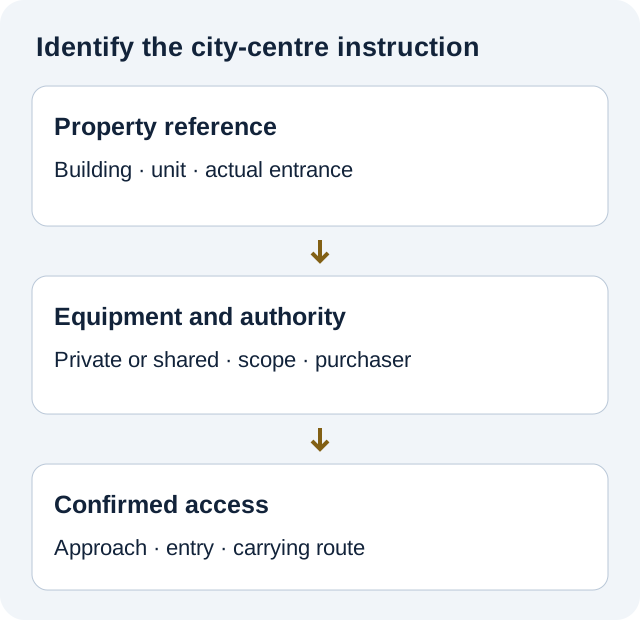
Contact Nottingham-based GasSafety 247 about the work needed at your city-centre address: a boiler fault, planned maintenance, a defined gas check or a proposed heating alteration. Give the actual building, flat or premises reference, the equipment involved and the person who can arrange access. Homeowners, rental-property contacts and business purchasers can use this hub to reach the existing Nottingham City Centre service pages and request the appropriate assessment or quotation. The proposed attendance should match the equipment, responsible purchaser, access route and confirmed work category.
Call or WhatsApp with those details to start the discussion. GasSafety 247's business base is Nottingham; this service-area page does not claim a separate office or a dedicated city-centre engineer roster.
Gas, Boiler and Heating Services: detailed service scope, booking and next steps
Explore this page
01
Choose the city-centre service by the outcome you need
Boiler faults belong to a named appliance request
Use the Nottingham City Centre boiler repair route when the enquiry concerns a boiler that no longer performs as expected. Give its reference from existing records, the visible message where safely available and what heating or hot-water function has changed. If the cause is unclear or an earlier remedy has not addressed the complaint, the local boiler diagnostics page offers a more focused enquiry path. Neither route diagnoses the appliance from the city-centre postcode. In a building containing several units, make sure the supplied reference describes the equipment serving the instructed property.
That distinction helps the provider consider the appropriate assessment without confusing a private appliance with a shared building installation.
Planned work needs the equipment and purpose together
For routine appliance maintenance, use boiler servicing in Nottingham City Centre and provide relevant previous records. A safety-check instruction follows the city-centre gas safety route, with the intended scope and document purpose stated. A purchaser may need both services, but one label should not stand in for the other. Identify each task before attendance is arranged, especially when the occupier gives access and a separate owner receives the records. The provider should confirm what can be considered and what each purchase covers. This makes the hub commercially useful: it directs the customer to the relevant next action rather than presenting every city-centre enquiry as the same annual visit.
Installation projects need their own property brief
For a replacement or relocated appliance, start through Nottingham City Centre boiler installation. For work extending beyond the appliance, use the local central-heating installation page and describe the rooms, retained equipment and intended changes. Include the building stage and any project professional already involved. A new internal layout can introduce access, shared-building or external-alteration questions that need consideration before equipment is ordered. Ask which part of the proposed design and installation the provider can undertake. The existing URL supports a specific enquiry; it does not approve every proposed position or confirm that every specialist system falls within the business's actual supported work categories.
02
Give an address brief that reaches the correct city-centre unit
Distinguish street frontage from the entrance used for work
Send the full property reference and explain if the actual entrance differs from the postal frontage. A customer may identify a shop address while the dwelling or service equipment is reached through another entrance. Mark the relevant approach on a simple instruction or accessible photograph, without publishing private access codes. Identify the person who can authorise entry through any managed area. The provider needs the actual work location as well as the street name to discuss attendance usefully. A familiar city-centre landmark can help orient a conversation, but it should not replace the building and unit reference in the accepted instruction or the documents later issued for that property.
Keep multiple occupancies separate in the enquiry
If a building contains more than one dwelling or business unit, describe the particular equipment and space included in your request. State whether the instruction covers one unit or a separately agreed wider scope. Different occupiers may have different purchasers and access arrangements, so a street address alone may leave the commercial boundary unclear. Supply an internal property reference where your management system uses one. Do not assume a visit to one boiler establishes findings about another installation in the same building. A clear unit-level instruction allows the provider to consider the appropriate task and helps records reach the correct owner or manager afterwards without relying on a general building name.
Identify private equipment and shared-building involvement
Tell the provider if the requested work interfaces with communal plant, a managed enclosure or another party's equipment. Explain who controls that part of the building and what authority is available. The initial enquiry should not turn a dwelling's comfort complaint into an assumed instruction to alter shared infrastructure. Ask what scope can appropriately be considered and whether a building contact or separately capable provider needs to be involved. An occupier, landlord and management company may each hold different information; identify the relevant roles early.
This keeps the proposed attendance tied to the actual installation and responsible parties rather than treating a city-centre service-area page as permission to work anywhere inside the building.
03
Use Nottingham's local context without guessing the property's installation
The historic centre contains distinct building contexts
Nottingham City Council describes the Lace Market as combining heritage with residential, business and leisure uses, and identifies converted industrial buildings around the Canal area. Those verified descriptions support a useful question about your premises; they do not identify its appliance, tenure or heating design. For an enquiry in one of those settings, send the actual building and equipment information and explain any known management or alteration constraint. A converted building should not automatically be assigned a particular system or fault. The commercial next step remains an assessment appropriate to the customer's request, informed by the facts of that address rather than a general story about Nottingham's history.
Protected status is a property question before an alteration
Nottingham's council provides conservation-area information and guidance for checking the relevant context. If the proposed work affects an external feature or another element subject to permission, obtain property-specific advice and tell the provider what has been established. This page does not designate every city-centre address or grant consent for a modification. The survey brief should identify the desired outcome and unresolved permissions separately. Where another professional handles those decisions, give that person's role and the relevant project documents. A price for heating work should not be mistaken for approval of the building change, and a city-centre address should not be used to presume that all alterations are either permitted or prohibited.
A refurbishment should preserve the accepted external and internal decisions
When a project changes the appliance position, room layout or visible outside installation, supply the current drawing and identify revisions still expected. The responsible provider should establish what can be assessed against that brief, while the customer or project team resolves the relevant building permissions. Keep the accepted version associated with the quotation. A supplier using an earlier layout and a decorator using a later layout can create an interface that no party intended. For a city-centre project with a building manager or other coordinating professional, identify who distributes changes.
This helps the customer commission a considered installation rather than buy a component before the surrounding project decisions are sufficiently clear.
04
Coordinate arrival using actual access information
Public parking information does not confirm unloading for the task
The council's city-centre parking service provides information about on-street and off-street options. Use current official information when considering the approach, and tell the provider what practical access has actually been agreed. A nearby visitor space does not establish a suitable unloading position or a right to enter a restricted street. For equipment delivery, describe the route from the agreed arrival point to the work area and any building-managed loading arrangement. Ask which issue still needs resolution before attendance is confirmed. This is an access-planning discussion for the particular purchase, not a claim that GasSafety 247 has parking privileges or a guaranteed route to every city-centre address.
Restricted approaches need confirmation from the responsible authority
Nottingham City Council publishes restricted-access permit information. If your building's approach involves such a restriction, identify it in the enquiry and check the applicable current arrangements with the relevant authority or building contact. Do not rely on this service page as a permit or interpret an appointment request as confirmation that a vehicle may enter. The provider should understand the actual constraint when discussing the scope and timing. A customer can still start with the information available, but any unresolved approach condition should remain visible until an appropriate arrangement is confirmed.
It should not be replaced by an invented travel time, automatic exemption or local engineer-presence claim.
Carrying routes, lifts and timed access affect the practical brief
Explain any lift booking, loading slot, internal stair route or managed entry relevant to the proposed task. State whether the building contact has confirmed it or whether it is still a request. A limited inspection and a replacement involving equipment removal may have different practical needs. The provider should establish those needs against the actual work, rather than assume a front-door booking resolves the whole route. Where access through a shared area requires coordination, identify who arranges it. This gives the purchaser a clearer next step and avoids planning a finished installation around an attendance date before the equipment, scope and approach have been considered together.
05
Arrange residential work through the person who can instruct it
Owner-occupiers can frame the decision by the lost function
Describe what you want restored or changed in the dwelling. A boiler complaint, one uncomfortable room and an unreliable control require different initial descriptions. The Nottingham City Centre heating repairs page helps organise a wider heating fault, while radiator enquiries for the city centre identify emitter-focused work. Explain any relevant connection to a shared arrangement before assuming a private repair boundary. The customer should receive a proposal for the actual concern, with exclusions and unresolved inputs clear. This allows a household to request a useful assessment without selecting replacement parts from a symptom or relying on the neighbourhood name to determine a technical solution.
Landlord instructions should name the scope and record recipient
Use Nottingham City Centre landlord gas safety enquiries for a defined rental-property inspection request. Identify the actual property reference, equipment involved, access contact and person who receives the relevant record. Supply the previous document where available, and describe any separate reported fault instead of silently adding it to an inspection instruction. The provider should confirm the accepted scope and appropriate competence. A property with several occupiers does not automatically create the same work boundary as every other rental. The responsible purchaser needs the actual instruction and relevant advice, with the proposed service described accurately rather than represented as a universal certification of the whole building.
Agents can keep access and approval roles intelligible
Explain which person opens the property, which person manages the instruction and who may approve additional expenditure. Where a key holder provides access, give the provider a usable contact arrangement without treating the key holder as the automatic purchaser of further work. Keep the unit reference on relevant photographs and documents. If several city-centre properties are discussed together, separate their equipment records and tasks so the request remains actionable. A building reception or management desk may assist with entry, but its presence does not settle every authority question.
A clear role split helps the proposed attendance address the right system and return findings to the person responsible for considering them.
06
Specify the premises when the enquiry is for a city-centre business
The equipment and use determine the work category
Describe the premises, the equipment and what it is used for before selecting a service. A dwelling above a business, an office appliance and catering equipment should not be merged into one unspecified gas call. Use the Nottingham City Centre commercial-gas route to discuss the actual workplace requirement, with the business's supported categories confirmed for that task. Send relevant records and explain who is responsible for the installation. A domestic service offer does not establish commercial or specialist capability. This hub connects the existing enquiry routes, allowing a purchaser to ask the correct scope question before committing to attendance or assuming a general gas-service label covers every appliance on site.
Operating hours and service interruption should be discussed explicitly
Explain the premises' use during the proposed attendance period and any practical restriction affecting access to the equipment. A business may need a responsible contact, a managed work area or coordination with another activity. Those details belong in the appointment discussion; this page does not promise attendance outside operating hours or a fixed interruption period. Ask what the proposed task covers and how any necessary interruption will be considered. The purchaser should be able to distinguish an assessment arrangement from completed remedial work. Once actual attendance is confirmed, share the relevant plan with the people responsible for the affected area rather than rely on a provisional enquiry as a final schedule.
Specialist requests need confirmation before the customer depends on them
Where the enquiry involves equipment or fuel outside a routine domestic task, name it and provide its available specification. Ask whether GasSafety 247 can appropriately consider that category and which additional competence or provider may be needed. Do not infer eligibility for every commercial, LPG or other specialist installation from the presence of an existing service URL. The relevant landing page can provide an enquiry pathway while the actual task is assessed. A truthful proposal should say what can be undertaken and what is excluded.
That makes the commercial hub useful without inventing a broad capability statement, a local portfolio or specialist staff allocated to the city centre.
07
Connect room-level heating and stored-water enquiries to the right route
Controls should be described by their intended user function
Use the city-centre heating-controls page when the request concerns operating the system, a control complaint or a proposed control change. Send the relevant reference and describe the function you want considered. In a rental or managed property, identify who operates the device and who owns any associated account. A new control should not be selected merely because the building contains several rooms or the product is advertised as smart. The provider should explain compatibility and the accepted scope for the actual arrangement. If the request follows a system fault, preserve that distinction so control replacement is not treated as a remote diagnosis of every heating problem.
Cylinder work needs an identified stored-water arrangement
For a property with a cylinder, use Nottingham City Centre hot-water cylinder enquiries and say whether the request is maintenance, investigation or replacement. Give the product information already available and describe the ordinary hot-water complaint. Where the arrangement is shared or managed, identify that fact and the responsible building contact. A cylinder enquiry should not be represented as a guaranteed stronger shower or a universal remedy for a hot-water shortage. Ask which equipment the proposed attendance covers and which relevant competence is required. This keeps the route transactional and focused on a particular purchase rather than adding stored-water equipment to an unrelated boiler instruction by assumption.
Cleaning recommendations should remain tied to assessed findings
Use the city-centre power-flushing route if system cleaning has been recommended or is being considered. Explain the finding behind that recommendation and any known installation limitation. The appropriate provider should assess suitability and the actual work boundary before the customer relies on a cleaning offer. A room that feels cold does not, on its own, specify the service to buy. If the original concern is an unclear heating fault, retain that enquiry through the assessment route. This helps the customer distinguish an investigated recommendation from a product-led assumption and prevents a hub listing from implying guaranteed restoration for every city-centre heating arrangement.
08
Review an offer against the particular building instruction
A comparable price includes the defined work and access boundary
Request an offer identifying the equipment, unit, task and associated access responsibilities. For a managed building, ask which site information or authorisation remains to be confirmed. One quote may cover a limited appliance task while another includes connected work or a separately specified assessment. Compare those items before assuming the totals purchase the same result. The pricing enquiry provides a way to discuss the actual factors with GasSafety 247. No fixed city-centre surcharge, parking privilege, universal call-out total or finance offer is invented here. The price and scope should remain understandable on the facts of the accepted request, including any input that still needs assessment.
An assessment finding can create a separate decision
Ask how findings will be reported and what agreement is needed for additional work. The provider should explain the identified concern and proposed response, with the relevant authority to approve expenditure clear. If a finding involves a shared or managed part of the building, the next instruction may need a different responsible party from the person who arranged the initial attendance. Keep the report associated with the actual unit and equipment. A quotation should not be presented as a completed repair, and a discussion about a possible installation should not become permission for an unpurchased alteration.
Clear stages allow the customer to decide the next commercial step with the relevant information.
Completion records should remain usable for this property
Confirm who receives the relevant findings or work record and keep the property reference consistent. The document should identify the actual service performed and any recommendation still open. Where a purchaser manages several units, a record described only by the street may be difficult to connect to the instructed equipment. The customer can then use the document for a later maintenance enquiry without inventing continuity between unrelated systems. Keep manufacturer operating information separate where it serves a different purpose. This record discipline supports the practical service relationship; it does not create a guarantee of future performance or evidence that every component in the building was inspected during one limited attendance.
09
Navigate the Nottingham cluster without assuming a branch network
This hub joins the service pages to the Nottingham business base
The existing Nottingham City Centre service pages below provide a category-by-location route for each commercial enquiry. Customers can also start at the main services directory when the service category matters before the address. Those paths connect to the same Nottingham-based business and existing contact details. A separate page is not a separate office, engineer allocation or confirmed work history. Use the category page to explain the intended purchase, then provide the property facts needed for the actual scope. This hub's role is to make that route easy to find while preserving an accurate relationship between the business base, service categories and the city-centre request.
Nearby-area navigation uses a factual relationship
Nottingham City Council identifies The Park immediately west of the city centre. Its existing area page is useful if the service address belongs to that enquiry rather than the central building described here. Use the full area directory for another listed target location, including properties managed alongside a city-centre address. Do not combine separate properties into an unlabelled instruction or assume a cross-area link establishes a travel time. These links support geographic discovery within the preserved inventory. The actual address, work category and access arrangement still determine the attendance discussion, with Nottingham consistently the business base rather than an invented network of local branches.
Start the city-centre enquiry with the responsible contact
Use the contact page to call or WhatsApp the business with the address, unit reference, equipment and purpose of the request. Add the authorised access contact and any known managed-entry or approach constraint. Ask which next step is appropriate and what it covers; use the engineer appointment enquiry when discussing an assessment date. Keep the actual confirmation rather than treating an online area page as a booking. The intended result is a commercially useful service arrangement: a specific city-centre property, an identified task, suitable responsibility and an understandable proposal linked to the Nottingham-based business.
Questions about gas, boiler and heating services in Nottingham City Centre
Where do I begin with a city-centre boiler problem?
Contact GasSafety 247 with the actual building and unit reference, boiler information you already hold and the function that has changed. Use the city-centre repair page for an appliance fault, or the diagnostics route when the cause remains unclear. Explain any shared-building involvement before attendance is discussed. The provider should confirm the relevant scope and category; neither a postcode nor an accessible photograph diagnoses the appliance or selects a repair automatically.
Does this page represent a GasSafety 247 office in the city centre?
It represents an existing service-area enquiry hub for the Nottingham-based business. It does not establish a separate city-centre office, branch, engineer base or completed local work history. Use the existing business contact to discuss the actual address and task. Category pages organise the request, while attendance and supported work categories need confirmation for the particular property before the customer relies on an arrangement.
Why is a flat number needed if I provide the street address?
A building can contain several instructed units or systems. The complete property reference helps identify which equipment, occupier and purchaser belong to the enquiry. Include the entrance used for work if it differs from the postal frontage, and keep that reference on relevant records. A visit to one unit should not be represented as a finding about another installation merely because both share a street address or building name.
How should I describe an apartment reached through a managed entrance?
Give the full unit reference and explain who authorises entry through the managed area. Identify the access contact and any confirmed timing or internal route constraint. Do not publish private codes in a public message. The provider should know what remains unresolved before accepting attendance. A reception desk or key holder can support entry without automatically becoming the person authorised to buy additional heating work.
Can a visit to my private boiler include communal building equipment?
State the requested boundary and identify the person responsible for any shared installation. The provider needs to establish authority, competence and the appropriate scope for that equipment. A domestic instruction does not automatically include communal plant or another owner's system. Ask which part of the arrangement can be considered and whether a managing contact or different provider is required. Keep the proposed private and shared tasks distinguishable in the offer.
Which local page is appropriate for planned boiler maintenance?
Use the existing boiler-servicing page for Nottingham City Centre and supply the appliance identification and relevant previous maintenance record. State any current fault separately so the provider can explain whether assessment is included. A boiler service and a gas safety check are different requested tasks and should not be treated as interchangeable labels. Ask what the agreed attendance covers and which record relates to the work actually performed.
How do I request a city-centre landlord inspection for a managed rental?
Use the landlord gas safety enquiry route and identify the property, intended scope, access contact and responsible record recipient. Supply the previous document if available and describe any separate reported equipment issue. The provider must confirm the actual instruction and relevant competence. Where several units or management parties are involved, the work boundary should be established explicitly rather than inferred from a broad request to certify the building.
Does an occupier who opens the property authorise extra repair work?
Entry and purchasing authority should be clarified separately. Tell the provider who may approve a proposed addition and how that person is reached. An occupier, caretaker or reception contact may provide access for an instruction issued by someone else. The assessment findings should return to the appropriate decision-maker. This keeps a city-centre managed-property attendance actionable without treating whoever is present as the automatic purchaser of every later recommendation.
How should I enquire about heating in a dwelling above business premises?
Explain which space and equipment the request covers and identify any connection with the business or shared building arrangement. Supply the relevant unit reference, records and responsible purchaser. Do not combine a domestic boiler and workplace equipment into an unspecified gas visit. The provider can then consider the actual work category and explain what scope is appropriate. The property's location above a shop does not itself select commercial or domestic eligibility for every task.
Can a workplace use the same enquiry as a household boiler visit?
Start with the premises use and equipment so the business can assess the relevant category. The commercial-gas route for Nottingham City Centre provides a specific enquiry path. A domestic boiler offer should not be assumed to cover workplace, catering or other specialist equipment. Ask what actual capability can be confirmed and whether another appropriate provider is needed. The accepted attendance should identify the task and responsible party, not rely only on a general gas-service description.
What local information matters for an external installation change?
Give the actual building status and known permission constraints, with the proposed change and relevant drawing. Nottingham City Council's conservation information can help identify the appropriate context, but this page does not designate every address or approve an alteration. Obtain property-specific advice where needed. The heating proposal and the building permission question should remain understandable as separate responsibilities before the customer relies on a route, position or final installation price.
Are all buildings in the Lace Market assumed to have the same heating system?
No installation is inferred from the area label. The council's description of mixed heritage, residential, business and leisure uses supplies context; it does not identify equipment at an individual address. Send the actual appliance and relevant building information. A service recommendation should follow the appropriate assessment of that property and task. The same approach applies when a converted building's history is known but its current heating arrangement has not been established.
Is council parking information enough to confirm access for equipment delivery?
Public parking information does not confirm a particular unloading arrangement, restricted approach or carrying route to the work area. Explain what access is actually agreed with the building contact and check relevant current official information. A limited assessment and an installation involving removal may need different planning. Ask what remains unresolved before attendance is confirmed. No permit, parking privilege or right of vehicle entry is supplied by a service-area page.
What if the property is approached through a restricted city-centre street?
Identify that restriction in the enquiry and consult the relevant current council or building arrangements. Nottingham City Council publishes restricted-access information, but the applicable position needs confirmation for the actual approach. Do not treat a requested appointment as vehicle-entry permission. The provider should understand the condition when discussing work and attendance. A clear unresolved access question is preferable to an assumed exemption that neither party has established.
Should I mention a lift booking or internal loading time?
Include any managed arrangement relevant to the proposed task, stating whether it is confirmed or still requested. Explain the route from arrival to the actual unit and identify who coordinates it. The provider should establish what the agreed work needs before attendance is relied on. A front-door appointment may not resolve an equipment-carrying route or building-managed timing, especially for a replacement rather than a limited appliance assessment.
How do I separate an immediate fault from a later refurbishment enquiry?
Describe the present lost function and the future project as two intentions. The provider can then explain the appropriate assessment now and the information needed for a separate survey or proposal. Supply a current drawing if the later project is defined, and label open decisions clearly. A repair enquiry should not become an assumed installation purchase, while a refurbishment plan should not hide a fault that the customer needs considered first.
Can controls or a radiator be requested without replacing the whole boiler?
Use the corresponding Nottingham City Centre service page and describe the particular function or emitter task. Tell the provider about relevant existing equipment and any managed or shared connection. The professional should assess suitability and the appropriate boundary before recommending work. No whole-system replacement is assumed merely because the enquiry concerns a control or radiator. The offer should explain what is being assessed or changed and which components remain outside the purchase.
Which route should I use for a cylinder in a managed city-centre property?
Start with the hot-water cylinder page for Nottingham City Centre, giving the product information and whether the request is maintenance, investigation or replacement. Explain any shared supply or management restriction and identify the responsible contact. The provider needs to establish the actual work category and authority. A cylinder request should not be hidden within a boiler service label or represented as automatic permission to alter other managed equipment.
Can several city-centre addresses be arranged under one message?
You can discuss a portfolio request, but identify each property's unit reference, equipment and intended task separately. Keep its records and access contact associated with that address. Ask how the provider will consider scope and attendance for the individual instructions. A single street list does not establish that every installation is the same or that a finding at one property applies to the others. The resulting arrangements should remain understandable per property.
Why might two offers for the same city-centre appliance have different totals?
Compare the included assessment or work, associated components, access responsibilities and unresolved assumptions. One offer may cover a limited task while another purchases connected work or a different attendance scope. Ask the providers to explain those boundaries against the same instruction. The local page does not create a fixed surcharge or price rule. A comparable purchase depends on the work actually offered and the property information assessed, rather than the headline total alone.
Does the link to The Park establish a fixed travel time from the city centre?
It establishes an existing navigation path based on the council's description of The Park's position west of the city centre. It does not calculate a journey, allocate an engineer or confirm availability at another address. Use the relevant area page when that is where the work is requested, then give the actual property and scope. Nottingham remains the business base across those enquiry routes without creating an implied local branch network.
What confirms the next appointment for my Nottingham City Centre enquiry?
Retain the business's actual confirmation describing the address, proposed next step and any agreed preparation or access arrangement. An initial conversation may discuss assessment, maintenance or a quotation survey; those are different activities. Ask what the next step covers before the household or building team plans around it. The online hub supports discovery and a relevant enquiry, while the particular work category, date and scope need agreement for the customer's property.
Speak directly with GasSafety 247
Need gas or heating help in Nottingham City Centre?
Send the postcode, appliance details and what you need GasSafety 247 to assess.

 Check the ID card