
Skip to content
Based in West Bridgford · Serving Nottingham and surrounding areas GasSafety 247: +44 7888 885791
10 related services

Arrange Hot Water Repair and Cylinder Work in Nottingham

Request hot water repair and cylinder work in Nottingham. Identify the boiler, storage equipment and symptoms, then confirm competence and accepted scope.

Heating engineer inspecting a modern wall-mounted boilerCheck the ID card
and work category

Your service enquiry

Tell Nottingham-based GasSafety 247 what you need from the property's stored hot-water system: an assessment of poor performance, maintenance for identified equipment, a replacement proposal or planning for changed demand. Include the cylinder reference, the address and the hot-water problem or project you want considered. Homeowners, landlords and managing agents can enquire about the appropriate work category and the next assessment step for Nottingham and the existing surrounding target areas. The proposal should identify the cylinder arrangement, associated controls and components, access, expected interruption and completion information.

Call or WhatsApp with the details you safely have available. The business must confirm suitability, capability and an actual attendance arrangement before the customer relies on a particular service being agreed.
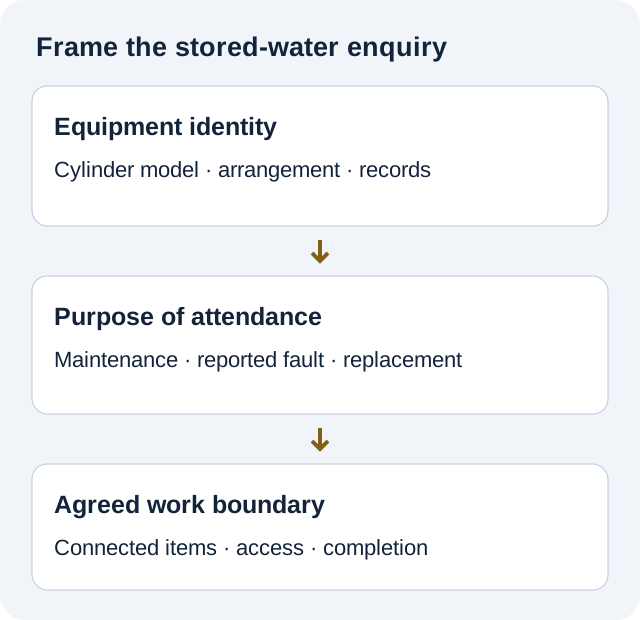
Cylinder enquiry: identify the model and arrangement, distinguish maintenance, a reported fault or replacement, and agree connected work and access
Start with the actual cylinder and the reason for contact; the proposed attendance should identify its equipment and work boundary.
10 related services

Choose the hot water & cylinders job you need

Each page explains the useful pre-visit details, checks and qualification boundaries.

All local routes

Hot Water & Cylinders across 100 areas

Choose the location that matches the property, then share the full postcode when you call or message.

Hot Water & Cylinders in West Bridgford01Hot Water & Cylinders in Edwalton02Hot Water & Cylinders in Gamston03Hot Water & Cylinders in Lady Bay04Hot Water & Cylinders in Compton Acres05Hot Water & Cylinders in Wilford06Hot Water & Cylinders in Silverdale07Hot Water & Cylinders in Clifton08Hot Water & Cylinders in Ruddington09Hot Water & Cylinders in Tollerton10Hot Water & Cylinders in Plumtree11Hot Water & Cylinders in Keyworth12Hot Water & Cylinders in Bunny13Hot Water & Cylinders in Bradmore14Hot Water & Cylinders in Gotham15Hot Water & Cylinders in East Leake16Hot Water & Cylinders in Costock17Hot Water & Cylinders in Stanford on Soar18Hot Water & Cylinders in Normanton on Soar19Hot Water & Cylinders in Sutton Bonington20Hot Water & Cylinders in Kegworth21Hot Water & Cylinders in Rempstone22Hot Water & Cylinders in Wysall23Hot Water & Cylinders in Willoughby on the Wolds24Hot Water & Cylinders in Widmerpool25Hot Water & Cylinders in Stanton on the Wolds26Hot Water & Cylinders in Normanton on the Wolds27Hot Water & Cylinders in Cotgrave28Hot Water & Cylinders in Cropwell Bishop29Hot Water & Cylinders in Cropwell Butler30Hot Water & Cylinders in Kinoulton31Hot Water & Cylinders in Hickling32Hot Water & Cylinders in Upper Broughton33Hot Water & Cylinders in Owthorpe34Hot Water & Cylinders in Radcliffe-on-Trent35Hot Water & Cylinders in Shelford36Hot Water & Cylinders in East Bridgford37Hot Water & Cylinders in Newton38Hot Water & Cylinders in Bingham39Hot Water & Cylinders in Saxondale40Hot Water & Cylinders in Aslockton41Hot Water & Cylinders in Whatton42Hot Water & Cylinders in Orston43Hot Water & Cylinders in Bottesford44Hot Water & Cylinders in Lowdham45Hot Water & Cylinders in Nottingham City Centre46Hot Water & Cylinders in The Meadows47Hot Water & Cylinders in Sneinton48Hot Water & Cylinders in Colwick49Hot Water & Cylinders in Bakersfield50Hot Water & Cylinders in Mapperley51Hot Water & Cylinders in Gedling52Hot Water & Cylinders in Carlton53Hot Water & Cylinders in Netherfield54Hot Water & Cylinders in St Ann's55Hot Water & Cylinders in Sherwood56Hot Water & Cylinders in Carrington57Hot Water & Cylinders in Basford58Hot Water & Cylinders in Bulwell59Hot Water & Cylinders in Bestwood60Hot Water & Cylinders in Arnold61Hot Water & Cylinders in Woodthorpe62Hot Water & Cylinders in Daybrook63Hot Water & Cylinders in Top Valley64Hot Water & Cylinders in Rise Park65Hot Water & Cylinders in Hucknall66Hot Water & Cylinders in Linby67Hot Water & Cylinders in Papplewick68Hot Water & Cylinders in Calverton69Hot Water & Cylinders in Burton Joyce70Hot Water & Cylinders in Lenton71Hot Water & Cylinders in Dunkirk72Hot Water & Cylinders in The Park73Hot Water & Cylinders in Wollaton74Hot Water & Cylinders in Beeston75Hot Water & Cylinders in Chilwell76Hot Water & Cylinders in Attenborough77Hot Water & Cylinders in Bramcote78Hot Water & Cylinders in Stapleford79Hot Water & Cylinders in Toton80Hot Water & Cylinders in Long Eaton81Hot Water & Cylinders in Sawley82Hot Water & Cylinders in Sandiacre83Hot Water & Cylinders in Risley84Hot Water & Cylinders in Breaston85Hot Water & Cylinders in Draycott86Hot Water & Cylinders in Borrowash87Hot Water & Cylinders in Ockbrook88Hot Water & Cylinders in Ilkeston89Hot Water & Cylinders in West Hallam90Hot Water & Cylinders in Heanor91Hot Water & Cylinders in Kimberley92Hot Water & Cylinders in Eastwood93Hot Water & Cylinders in Nuthall94Hot Water & Cylinders in Castle Donington95Hot Water & Cylinders in Loughborough96Hot Water & Cylinders in Quorn97Hot Water & Cylinders in Southwell98Hot Water & Cylinders in Newark-on-Trent99Hot Water & Cylinders in Mansfield100
Registration boundary: Unvented-cylinder work requires the appropriate qualification.
Complete service information

Gas-Fired Hot Water & Cylinders: detailed service scope, booking and next steps

Explore this page

Select the cylinder task that matches the enquiry

A fault assessment starts with the hot-water complaint

Describe what has changed in ordinary use. Does hot water fail to arrive at several outlets, run out earlier than it used to or differ between the kitchen and a bathroom? Include when you first noticed the change and whether another heating function is affected. These observations help frame the requested assessment without turning the customer's description into a diagnosis. An outlet problem, a control problem and a storage problem can all be described as no hot water, but they may lead to different work.

Supply earlier findings if a professional has already inspected the arrangement. The provider should explain which equipment and reported symptoms the proposed assessment covers, including any work category that needs a different suitably capable person.

Routine maintenance needs the actual cylinder identity

Provide the manufacturer and model from existing paperwork or a label that can be read without disturbing equipment. State the maintenance you are requesting and send the most recent service record if available. The professional should establish the appropriate scope against the actual product and installation, rather than offer the same checklist for every stored-water arrangement. Ask what the attendance includes and how any finding requiring additional work will be communicated. A planned maintenance enquiry does not automatically authorise replacement parts or alterations. If the cylinder has a reported fault as well as a maintenance request, describe both so the provider can explain whether they are covered by the same agreed attendance or require distinct assessment and approval.

A replacement proposal should state why the current arrangement is changing

Explain whether the proposed replacement responds to a confirmed defect, age and maintenance concerns, increased household demand or a building alteration. Send a prior report where it is the basis of the decision. A customer wanting an additional bathroom may need a different assessment from a customer replacing a leaking vessel while keeping the household arrangement. Ask which connected items are retained and which are included in the replacement offer. The cylinder itself is only one part of the purchase; access, controls, connections and any applicable safety or completion requirements also need consideration.

Keep those boundaries visible so a proposed like-for-like supply item is not mistaken for a fully assessed change to the property's hot-water service.

Identify the stored-water arrangement before comparing offers

Vented and unvented describe different arrangements

Heatrae Sadia's glossary distinguishes a vented cylinder with a vent pipe from an unvented cylinder connected to a pressurised water supply. If you do not know which arrangement is present, send the documents you hold and label the type as unknown. Ask the appropriate professional to establish it rather than identify the installation by appearance alone. The terminology is useful for an enquiry because it helps the provider consider the relevant scope and competence. It does not tell the customer that one cylinder can be substituted for another without assessment.

A replacement quotation should identify the arrangement being offered and any associated changes, not rely only on a capacity figure or the colour of the existing insulation.

Direct and indirect describe how the cylinder receives heat

The manufacturer's glossary uses direct for electric immersion heating and indirect for heating through a separate source and heat exchanger. The provider should identify the actual product and connected arrangement before selecting work. Send any relevant heat-source reference and explain whether the complaint occurs with the normal operating method, an alternative method or both. The customer does not need to test internal components to establish that information. If a proposal changes the heating method, ask what else changes and who is responsible for each element.

Keep the cylinder and its associated heat source identifiable in the offer so the customer can understand whether the purchase addresses stored water, the equipment heating it or both.

A brand name is not a complete equipment specification

Use the exact model and available product reference when enquiring, rather than treating a familiar brand as the name of every unvented cylinder. Different models can have different configurations and requirements. A marketing photograph or a neighbour's successful installation does not identify the equipment at your address. If the manufacturer label cannot be safely accessed, send an existing installation record and explain that limitation. A proposal should record what has actually been established and what is still to be verified. Named manufacturer sources on this page provide general reference information; they do not imply that GasSafety 247 holds a brand partnership, specialist authorisation or a particular warranty entitlement for the customer's cylinder.

Describe household demand in a form the professional can assess

List the hot-water uses and when they overlap

Explain how many people use the property, the relevant bathrooms and the usual pattern of baths, showers and other significant hot-water use. State whether the concern occurs when several activities overlap or after a particular sequence. This is a customer requirement, not a sizing instruction. The responsible professional should consider the information alongside the actual system before recommending capacity or a change in arrangement. If the household is changing, distinguish present use from the intended future pattern. A brief that describes what the family needs is more useful than asking for the largest vessel that fits a cupboard, because it connects the equipment decision to the outcome the customer is trying to purchase.

Separate available quantity from the speed of delivery

Say whether the complaint concerns running out of usable hot water or the apparent delivery at a particular outlet. The manufacturer glossary treats draw-off and outlet flow as different concepts, so one headline cylinder size does not answer both questions. Tell the provider whether the issue affects every outlet you ordinarily use or only one. Do not take measurements that require unsafe contact with hot water or an altered installation. A professional assessment should establish the relevant supply and equipment conditions. The quotation can then explain which complaint the proposed work addresses, avoiding an assumption that replacing a storage vessel necessarily changes every tap or shower characteristic at the property.

Describe waiting and reheating as observed behaviour

Include whether the household normally waits between major uses and whether that pattern has recently changed. Describe the ordinary controls used, with their visible references or available instructions, rather than adjusting service settings to experiment. If another professional has identified a heating or control issue, send the finding. A customer may want shorter waiting periods, but the proposal should explain the actual arrangement being considered and the conditions that affect that objective. No fixed recovery period is promised for every cylinder or heat source. A useful offer connects the stated household use, selected equipment and assessed installation so the purchaser can understand the intended result and any limitation still requiring clarification.

Give the assessor relevant records and safe observations

The document trail can identify previous changes

Send the cylinder's installation, commissioning and maintenance records where available. Include any known repair or alteration that affects the present enquiry. A vessel may remain in place while an associated component or control changes, so the current arrangement should not be inferred solely from the oldest invoice. Identify whether a document applies to this property and equipment, particularly if you manage several addresses. If records are missing, explain what you know and let the provider establish the next assessment needed. An incomplete document trail is an information gap to address; it should not be filled with a presumed service history or an invented assurance that every connected component has already been checked.

Photographs should show the context without creating a test

Use accessible photographs to identify the cupboard, visible equipment and practical access to the work area. Explain what each photograph shows and which observation prompted the request. Do not remove electrical covers, operate safety devices or disturb connections to make a better picture. If the cylinder or associated equipment is behind stored belongings, ask what preparation is appropriate before attempting to expose it. A photograph supports the initial conversation but cannot certify the installation, confirm internal condition or select a replacement design. The provider should distinguish a preliminary view from findings made through the appropriate assessment, so the customer understands how much of the offered scope has actually been established.

Earlier recommendations should be supplied in their own words

If another contractor recommended a component change or a complete replacement, send the written explanation and any relevant product reference. Say whether that work was carried out or remains only a recommendation. The new provider can then consider the existing evidence and explain its proposed assessment rather than start with a customer paraphrase such as cylinder needs replacing. Ask how a differing recommendation relates to the earlier finding. The customer should be able to compare the reasoning and scope without being expected to decide a technical fault remotely.

Keep the report with any later quotation so the original complaint, professional assessment and accepted remedy remain associated with the same property and equipment.

Define the assessment or maintenance attendance

Identify which connected items are within the service boundary

Ask whether the proposed attendance covers the cylinder alone or agreed associated equipment and controls. Give the provider references for relevant components already identified in the enquiry, especially where another contractor installed them. The actual product instructions and installation should determine the appropriate professional work; this page does not provide a universal maintenance procedure. A customer arranging a cylinder service should know which report or record will be supplied and how an excluded fault will be described. If the household has both a boiler maintenance requirement and a stored-water requirement, the boiler servicing page helps distinguish those purchases.

Neither attendance should silently be represented as evidence that every other system component was serviced.

Agree the commercial response to a finding

Ask how the provider will explain an issue discovered during the agreed attendance. The explanation should identify the finding, proposed follow-up task and any change to the original purchase. Clarify who can approve that addition, especially when a tenant or caretaker provides access for someone else's instruction. An assessment charge and a later repair price should remain understandable in the actual agreement. No promise of included parts, free repeat attendance or immediate replacement is created here. Where a finding changes the suitability of the requested task, the provider should explain that change and the appropriate next step rather than proceed on the assumption that a broad maintenance instruction authorised every possible remedy.

Keep the completion record tied to the task performed

Request a record identifying the equipment attended, work completed and any remaining recommendation. Ask where it will be sent and keep it with the property's existing cylinder documents. A record should not describe replacement, testing or component work that was merely discussed and never carried out. If several heating services are arranged together, the documents should still allow the customer to see the cylinder work actually performed. This supports a later enquiry and gives a landlord or managing agent a clearer maintenance trail. It also helps the customer distinguish a completed attendance from an open recommendation that still requires another instruction, assessment or appropriately capable provider.

Evaluate a replacement as an installed arrangement

The proposed vessel needs an identifiable selection basis

Ask the provider to identify the offered model and explain the requirements it is intended to address. Capacity is one detail, but the selection should relate to the assessed arrangement, the household brief and relevant product specifications. Keep the exact reference with the quotation and clarify any unresolved choice. If the current vessel's size is simply repeated in an initial offer, ask whether that is an assessed selection or a provisional assumption. The customer can then compare proposals on their actual purpose and scope. A replacement should not be sold as universally more powerful, guaranteed to eliminate every waiting period or suitable for an unassessed future heat source merely because its catalogue description is attractive.

Position, removal and service access affect the purchase

Tell the provider about the current location, doorway restrictions and planned use of the surrounding space. Ask how removal and installation are considered and what access the proposed product needs afterwards. A vessel fitting within a cupboard's headline dimensions does not establish the complete installation space. Where another contractor is changing the cupboard or floor, identify the design and coordinate responsibility before work is accepted. The customer should know whether removal, disposal and associated building work are included or separately arranged. This keeps the offer connected to a practical installed arrangement rather than a supply item that cannot be assessed against the property's access and later maintenance needs.

Associated components must be described rather than assumed new

Request a clear statement of which controls, connections and other relevant items are supplied, retained or separately assessed. A proposal for a new cylinder may differ materially from another proposal using the same model if their surrounding work differs. The appropriate professional should determine what is required for the actual installation; the customer should not choose safety components from a generic online list. If retained items are conditional on their assessed condition, keep that condition in the offer. A scope that identifies those decisions gives the purchaser a useful basis for comparison and allows a later change to be explained as a specific addition or revised requirement.

Treat safety features and competence as part of the purchase

Visible discharge needs an appropriate response

Approved Document G addresses safe conveyance of discharge from hot-water safety devices. If you observe water discharging or another concern around the cylinder, describe it to an appropriately qualified professional and seek guidance promptly. Do not block an outlet, alter a safety device or remove a cover to investigate. Mention the observation when contacting the provider, rather than presenting it only as a request for a cosmetic cupboard repair. A photograph taken from a safe position may help the initial description, but it does not establish the cause or confirm that continued operation is suitable.

The actual product instructions and professional assessment should govern the response to the customer's equipment.

Competence must fit the cylinder work being requested

Approved Document G highlights appropriate installer skills for unvented systems. Ask how the responsible person's competence for the proposed cylinder task is demonstrated. The business must confirm who can undertake the actual work; a gas-service brand alone does not establish every hot-water or electrical work category. If the proposal includes work on a gas appliance, that element also needs the relevant Gas Safe competence. Keep the responsible parties clear where more than one category is involved. The Gas Safe enquiry information supports the gas-related part without inventing a business registration or claiming that the same qualification automatically covers all cylinder arrangements.

Installation documents should follow the applicable route

For an unvented installation, the approval or eligible self-certification route needs to be established for the work. Ask the provider which route applies and who arranges the required records. Do not assume the same paperwork is created by a maintenance visit, component repair and new installation. The offer should identify the actual task and the documents expected at completion. Keep the commissioning information, operating instructions and relevant compliance record with the product reference. If the cylinder purchase is part of a larger renovation, inform the project coordinator about those responsibilities so the wider project does not rely on a document that no party has agreed to arrange.

Coordinate cylinder work with the occupied property

Explain how the household uses hot water during the proposed period

Tell the provider if the property remains occupied and which practical constraints affect interruption of hot-water use. Ask what the agreed task is expected to involve and which uncertainty remains until assessment. A replacement and a limited maintenance attendance may require different arrangements, so the household should plan from the actual scope rather than a universal duration stated online. Where the customer needs an alternative provision, discuss suitability and responsibility explicitly; no temporary service is assumed to be included. The person arranging the work should share the confirmed plan with those affected, especially if an agent gives the instruction but the household needs to organise daily routines around attendance.

Cupboard use and surrounding trades should be coordinated

Explain whether the cylinder area is also being altered by a carpenter, builder or decorator. Supply the planned layout and state what stage the work has reached. The professional should establish the product's installation and ongoing access requirements before the surrounding space is finalised. A storage plan that closes off equipment or a finish installed before relevant work is assessed can create a project interface that needs resolving. Ask which preparation tasks belong to the customer and which to another contractor. Keep the accepted responsibilities visible so later cylinder attendance is not treated as permission to dismantle unrelated furniture or complete an unpurchased building task.

Flats and managed arrangements need the correct authority

Tell the provider about any communal supply, shared plant or building-management restriction. Identify the person responsible for the shared arrangement and the authority available for work within the dwelling. The fact that a cylinder is physically inside a flat does not decide the complete ownership or installation boundary. Ask which part of the request the provider can appropriately assess and whether another specialist or managing contact must be involved. The customer should not commission an alteration to a shared arrangement from an assumption based on a domestic service page.

A clearly defined instruction helps the parties establish the correct scope before access and equipment decisions are made.

Make a cylinder quotation comparable and actionable

Break the offer into equipment, work and assessed assumptions

Request the cylinder reference, associated items and installation or maintenance tasks within the offer. Ask what existing components remain, which access work is included and what condition has not yet been confirmed. The customer can then compare two proposals that may use the same headline product but purchase different services around it. If a price is preliminary, keep its assumptions and the next assessment step visible. The quotation discussion provides the route to ask GasSafety 247 about the actual price factors. No per-litre installation rate, unconditional package total or invented finance offer is published here for an unassessed system.

Availability and substitution should preserve the agreed requirement

Ask how the proposed model will be sourced and what happens if the offered item changes. A similar capacity alone may not identify an equivalent product or installed arrangement. Request the replacement reference and an explanation of the effect on specification, cost and sequence before agreeing a substitution. Where the customer plans to supply equipment, discuss suitability and responsibility before purchase. Do not infer that the business accepts any cylinder ordered elsewhere or holds every model in stock. The customer should be able to recognise the product being installed and understand how it relates to the accepted hot-water requirement.

Warranty and future maintenance are separate terms to understand

Keep manufacturer product terms distinct from the actual agreement for attendance and installation. Ask which documents apply to the proposed cylinder and how a product concern would be handled. If a guarantee has maintenance conditions, obtain the relevant terms rather than assume a brand's longest advertised period applies to every arrangement. Any continuing maintenance service needs its own scope, price and agreement. The care-plan discussion is a separate enquiry route; a cylinder replacement does not itself create a subscription or promise unlimited future repair. Clear terms let the customer understand the purchase without blending product marketing, installation responsibility and later servicing into one unverified assurance.

Route the hot-water requirement through the Nottingham base

Use the address and equipment together in the enquiry

GasSafety 247's confirmed business base is Nottingham. Send the service address, postcode, cylinder reference and the task you want considered. The Nottingham and surrounding-area routes connect the existing target locations to this enquiry pathway without implying offices or dedicated cylinder specialists in each area. Explain if the correspondence contact differs from the occupant and who can provide practical access. The provider should consider the actual address and work category before confirming attendance. A location label helps discovery; the equipment and property information establish the particular service request the customer needs answered.

Rental and business purchasers should identify the responsible instruction

A landlord or agent should preserve the occupier's actual hot-water observations and provide a property reference with the cylinder records. Identify who may approve additional work and who receives the completion information. The landlord enquiry hub connects that responsibility with the wider property-service discussion. Where the enquiry concerns a workplace, larger storage arrangement or specialist system, use the business route and state that scope from the outset. A domestic cylinder page does not establish capability for every commercial application. This keeps the instruction appropriate to the equipment and avoids translating several different service requirements into a generic hot-water appointment.

Request a defined next step for the cylinder task

Use the contact options to call or WhatsApp with the cylinder information and the reason for the request. Ask whether the next proposed step is an assessment, product-specific maintenance attendance or a replacement survey, and what it covers. If a date is discussed, retain the actual confirmation and any stated preparation requirement before treating it as arranged. Keep earlier records and any new recommendation linked to the same equipment. The customer's objective is a hot-water purchase that can be understood: an identified arrangement, a relevant complaint or household requirement, an agreed work boundary and a record of what was completed.

Sources supporting this service information

Questions answered

Questions about gas-fired hot water & cylinders in Nottingham

What cylinder details help GasSafety 247 consider my request?

Give the service postcode, manufacturer and model from safely available paperwork, and the reason for contacting the business. Say whether you want maintenance, a fault assessment or a replacement proposal. Include relevant earlier findings and explain any access limitation. If the cylinder type is unknown, state that openly instead of guessing. The provider can then identify the appropriate next assessment and confirm whether the actual work category and address can be considered.

Can I arrange a cylinder service without knowing whether it is vented?

You can start an enquiry using the information you hold. Send an existing equipment record or accessible photograph and say that the arrangement has not been identified. The appropriate professional should establish it before agreeing work that depends on the cylinder type. Do not remove components to answer that question yourself. An initial description helps scope the discussion, but it does not certify the installation or select a product-specific maintenance procedure.

Why does the provider ask how my stored water is heated?

That information helps distinguish a cylinder-related request from a heat-source or associated control request. Explain the normal operating arrangement as you understand it and supply the relevant records; leave technical identification to the professional where uncertain. The proposed attendance should identify which equipment it covers. The customer can then understand whether the purchase concerns maintenance of the cylinder, assessment of the heating method or agreed work involving both.

Does running out of hot water prove that the cylinder is too small?

It does not establish that diagnosis from the complaint alone. Describe the household's use, the sequence before the shortage and any recent change in ordinary behaviour. Send an earlier professional finding if one exists. The assessor should consider the actual arrangement and explain which issue a proposed remedy addresses. A capacity change should be based on that considered requirement rather than a remote assumption that every shortage means the vessel needs replacing.

Should I request a cylinder replacement for a weak shower complaint?

Describe the complaint first, including whether it occurs at that outlet alone or elsewhere too. A storage replacement should not be selected without considering the relevant supply and arrangement. The professional can establish the appropriate assessment and explain whether cylinder work addresses the observation. If another contractor has already investigated the shower, supply the actual report. The aim is a remedy for the identified concern rather than an unassessed product purchase.

How do I explain hot-water demand after adding a bathroom?

Send the proposed bathroom information and describe how the household expects to use the outlets, including overlap with existing use. Distinguish completed work from a future plan. Ask for the cylinder arrangement to be considered against that brief, with relevant connected equipment and supply conditions assessed by the appropriate professional. The extra bathroom does not by itself choose a capacity or prove that every current component needs replacement.

Is cylinder maintenance included when I book a boiler service?

Check the accepted attendance scope. A boiler service should not be assumed to include product-specific cylinder maintenance simply because the equipment is connected. If both tasks are required, identify both at the enquiry stage and ask what work and records will be supplied for each. The offer may combine attendance while preserving separate task boundaries. This makes it possible to understand what was actually serviced without relying on an ambiguous system-wide description.

How do I commission maintenance and investigation of a reported fault together?

Tell the provider about the fault alongside the maintenance request and ask which activities the proposed attendance covers. A product-specific service and fault diagnosis may require different scope, time or follow-up work. Clarify how findings and additional prices will be communicated and who may approve them. The resulting instruction should identify both intentions, so the customer does not assume every repair is included in a maintenance price or omit the complaint until attendance.

What should I do about water observed near a cylinder discharge point?

Seek prompt advice from an appropriately qualified professional, describe the observation and refer to the actual product's safety information. Avoid blocking the outlet, operating safety devices or disturbing equipment to investigate. This page cannot identify the cause or approve continued operation from a message. Tell the provider that the enquiry includes this concern so it is considered as an equipment issue, with the response governed by the actual arrangement and professional assessment.

Can an accessible photograph establish that my cylinder is safe?

A photograph can support identification and show practical context, but it cannot certify internal condition, the connected installation or suitability for continued use. Supply it with the observation and any relevant records. The provider should explain the assessment needed and distinguish preliminary information from findings made through appropriate attendance. Do not create a test or remove a cover for a clearer picture; explain any information that cannot be obtained safely.

What is important in a cylinder replacement quotation beyond litres?

Check the offered model, arrangement, intended household requirement and connected work. Ask which components remain, what access and removal tasks are included, and which assumptions await assessment. The product reference should match the accepted proposal. A capacity figure alone does not describe a complete installed service. Comparing the whole scope helps distinguish two apparently similar offers that include different surrounding equipment, access responsibilities or completion tasks.

Can a replacement fit wherever the existing vessel stands?

The proposed location needs assessment for the selected product and installation. Tell the provider about doorway access, surrounding furniture and planned cupboard alterations. Ask what space is needed for the accepted arrangement and later servicing. The fact that the old vessel occupies a cupboard does not confirm every replacement's suitability there. The proposal should identify any required surrounding work and who provides it before the customer relies on a product's headline dimensions.

Will all valves and controls be renewed with the cylinder?

The offer should identify the associated items supplied, retained or requiring further assessment. Do not assume they are all replaced from a broad cylinder-installation description. The appropriate professional should establish what the actual arrangement requires, then explain the proposed boundary. If retained equipment is conditional on its condition, keep that condition in the quotation. A clear component scope makes the purchase and any later recommendation easier to evaluate.

Can I buy the cylinder myself and request fitting only?

Discuss that arrangement before purchase. Supply the proposed product reference and ask the provider to consider suitability, work category and installation scope. Confirm who handles delivery, missing items and product-related concerns. Advertising cylinder enquiries does not mean the business has accepted every customer-selected product or fitting-only arrangement. A supply-and-install offer and a fitting-only proposal should be compared with their different responsibilities visible.

Is a named cylinder brand proof of a manufacturer-approved installer?

No brand reference on this page establishes a provider partnership or product authorisation. Ask about the actual competence and any claimed status relevant to your proposed work, then verify the information through the appropriate source. The model should still be identifiable in the offer. Manufacturer terms belong to the actual product and purchase conditions; they should not be expanded into an invented warranty or a universal endorsement of the business.

What competence should I check for unvented cylinder work?

Ask how the proposed person's skills for the actual unvented task are demonstrated and who is responsible for any other work category in the offer. Gas-related elements and electrical elements may require their own appropriate competence. The business must confirm its actual supported scope. A website service title does not establish a current qualification, scheme membership or permission to carry out every associated task at the property.

Does servicing produce the same document as installing a new cylinder?

The record should correspond to the actual task. Maintenance attendance, component repair and a new installation are different purchases, with their applicable records established accordingly. Ask what will be supplied for your accepted scope and who sends it. Keep the result with the cylinder documents. A service record should not be presented as proof that a separate installation or uncommissioned compliance task was performed.

What should an agent include when arranging cylinder work for a tenant?

Provide a property reference, the occupier's observations and the equipment records you hold. Identify the authorised purchaser, access contact and person able to approve a changed scope. Agree where the completion information goes and how any confirmed interruption will be communicated to the household. This keeps practical access distinct from purchasing authority and preserves the cylinder task within the correct property's maintenance history.

Does a cylinder inside my flat mean the shared building system is included?

Explain any communal connection or management restriction to the provider. The physical position of equipment does not decide the full ownership or work boundary. Identify the managing contact and ask what permission, assessment or specialist involvement is needed. The actual offer should state which part of the arrangement it covers. A domestic service enquiry should not be treated as authority to alter a shared installation without those responsibilities being resolved.

How should I plan the interruption to stored hot-water use?

Ask about the expected effect of the accepted work and any uncertainty that remains until assessment. Explain household constraints and whether the property stays occupied. A maintenance attendance and a replacement project should not be assigned the same assumed duration. Discuss any necessary alternative provision separately, with suitability and responsibility clear. Share the confirmed arrangement with the people affected instead of planning from an unaccepted date discussed during the initial enquiry.

What if a builder is changing the cupboard around the cylinder?

Send the intended layout and identify the stage reached by the building work. Ask the heating professional to establish relevant installation and servicing access requirements before the surrounding space is finalised. Coordinate who supplies preparation and reinstatement. A furniture or decorating project should not silently remove needed access or make another contractor responsible for unagreed cylinder work. The accepted responsibilities should describe how the two tasks meet at the property.

Can cylinder replacement be guaranteed to support a later heat-source change?

No universal future-suitability guarantee is made. Tell the provider what later change is being considered and ask the responsible professional which present product or design provision addresses it. Keep any stated assumptions and the assessment still needed for the later project. An unselected future heat source cannot be approved simply by fitting a new vessel now. A specific explanation is more useful than an undefined future-ready label.

How can a Nottingham surrounding-area customer arrange the next cylinder step?

Contact the Nottingham-based business through the existing call or WhatsApp route, giving the actual address, cylinder reference and purpose of the request. Ask whether the proposed next step is assessment, maintenance or a replacement survey, and retain the confirmation. Existing area pages support discovery without claiming branches or guaranteed attendance. The provider needs to confirm the particular location and work category before the customer treats the service as arranged.

Speak directly with GasSafety 247

Need to discuss hot water & cylinders?

Call or WhatsApp with the property postcode, appliance and the work or fault you need assessed.

Content updated:

Call nowWhatsApp