
Skip to content
Based in West Bridgford · Serving Nottingham and surrounding areas GasSafety 247: +44 7888 885791
12 related services

Request Power Flushing and Heating System Cleaning in Nottingham

Enquire about power flushing and heating system cleaning in Nottingham. Assess water condition and suitability before commissioning a cleaning proposal.

Heating engineer checking a radiator and room thermostatCheck the ID card
and work category

Your service enquiry

Ask GasSafety 247 about professional cleaning of an existing heating system when you have a recommendation, circulation concerns or a planned boiler change. The business is based in Nottingham and targets Nottingham and the existing surrounding service areas. An enquiry should establish whether cleaning is appropriate for your particular system before a method, price and appointment are agreed. Send the property postcode, the heating arrangement, affected rooms and any earlier report. Homeowners, landlords and property managers can discuss the proposed cleaning scope, temporary disruption, treatment records and faults that need separate attention.

Call or WhatsApp to request a property-specific assessment; selecting this service page does not establish that a power flush will cure the problem.
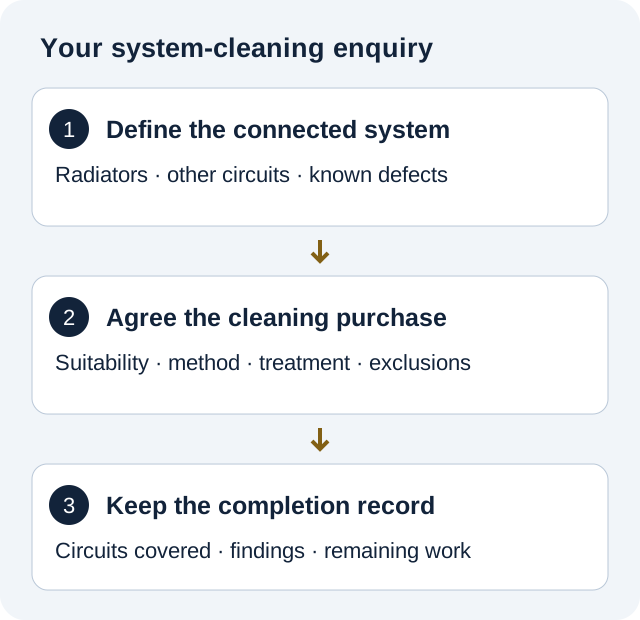
Cleaning enquiry: identify connected circuits, agree suitability and scope, and request the completion record
Use the system details, proposed cleaning scope and completion record to understand the purchase.
12 related services

Choose the power flushing job you need

Each page explains the useful pre-visit details, checks and qualification boundaries.

Power Flushing & System Cleaning

Central Heating Power Flush

Checks, booking details and next steps for central heating power flush.

Power Flushing & System Cleaning

Chemical Heating-System Flush

Checks, booking details and next steps for chemical heating-system flush.

Power Flushing & System Cleaning

Boiler-System Flush

Checks, booking details and next steps for boiler-system flush.

Power Flushing & System Cleaning

Individual Radiator Flushing

Checks, booking details and next steps for individual radiator flushing.

Power Flushing & System Cleaning

New-Boiler System Cleanse

Checks, booking details and next steps for new-boiler system cleanse.

Power Flushing & System Cleaning

Magnetite and Sludge Removal

Checks, booking details and next steps for magnetite and sludge removal.

Power Flushing & System Cleaning

Radiator Cold-Spot Treatment

Checks, booking details and next steps for radiator cold-spot treatment.

Power Flushing & System Cleaning

Central Heating Inhibitor Refill

Checks, booking details and next steps for central heating inhibitor refill.

Power Flushing & System Cleaning

Magnetic Filter Cleaning

Checks, booking details and next steps for magnetic filter cleaning.

Power Flushing & System Cleaning

Heating-System Water-Quality Testing

Checks, booking details and next steps for heating-system water-quality testing.

Power Flushing & System Cleaning

Commercial Heating-System Flushing

Checks, booking details and next steps for commercial heating-system flushing.

Power Flushing & System Cleaning

Post-Flush Radiator Balancing

Checks, booking details and next steps for post-flush radiator balancing.

All local routes

Power Flushing across 100 areas

Choose the location that matches the property, then share the full postcode when you call or message.

Power Flushing in West Bridgford01Power Flushing in Edwalton02Power Flushing in Gamston03Power Flushing in Lady Bay04Power Flushing in Compton Acres05Power Flushing in Wilford06Power Flushing in Silverdale07Power Flushing in Clifton08Power Flushing in Ruddington09Power Flushing in Tollerton10Power Flushing in Plumtree11Power Flushing in Keyworth12Power Flushing in Bunny13Power Flushing in Bradmore14Power Flushing in Gotham15Power Flushing in East Leake16Power Flushing in Costock17Power Flushing in Stanford on Soar18Power Flushing in Normanton on Soar19Power Flushing in Sutton Bonington20Power Flushing in Kegworth21Power Flushing in Rempstone22Power Flushing in Wysall23Power Flushing in Willoughby on the Wolds24Power Flushing in Widmerpool25Power Flushing in Stanton on the Wolds26Power Flushing in Normanton on the Wolds27Power Flushing in Cotgrave28Power Flushing in Cropwell Bishop29Power Flushing in Cropwell Butler30Power Flushing in Kinoulton31Power Flushing in Hickling32Power Flushing in Upper Broughton33Power Flushing in Owthorpe34Power Flushing in Radcliffe-on-Trent35Power Flushing in Shelford36Power Flushing in East Bridgford37Power Flushing in Newton38Power Flushing in Bingham39Power Flushing in Saxondale40Power Flushing in Aslockton41Power Flushing in Whatton42Power Flushing in Orston43Power Flushing in Bottesford44Power Flushing in Lowdham45Power Flushing in Nottingham City Centre46Power Flushing in The Meadows47Power Flushing in Sneinton48Power Flushing in Colwick49Power Flushing in Bakersfield50Power Flushing in Mapperley51Power Flushing in Gedling52Power Flushing in Carlton53Power Flushing in Netherfield54Power Flushing in St Ann's55Power Flushing in Sherwood56Power Flushing in Carrington57Power Flushing in Basford58Power Flushing in Bulwell59Power Flushing in Bestwood60Power Flushing in Arnold61Power Flushing in Woodthorpe62Power Flushing in Daybrook63Power Flushing in Top Valley64Power Flushing in Rise Park65Power Flushing in Hucknall66Power Flushing in Linby67Power Flushing in Papplewick68Power Flushing in Calverton69Power Flushing in Burton Joyce70Power Flushing in Lenton71Power Flushing in Dunkirk72Power Flushing in The Park73Power Flushing in Wollaton74Power Flushing in Beeston75Power Flushing in Chilwell76Power Flushing in Attenborough77Power Flushing in Bramcote78Power Flushing in Stapleford79Power Flushing in Toton80Power Flushing in Long Eaton81Power Flushing in Sawley82Power Flushing in Sandiacre83Power Flushing in Risley84Power Flushing in Breaston85Power Flushing in Draycott86Power Flushing in Borrowash87Power Flushing in Ockbrook88Power Flushing in Ilkeston89Power Flushing in West Hallam90Power Flushing in Heanor91Power Flushing in Kimberley92Power Flushing in Eastwood93Power Flushing in Nuthall94Power Flushing in Castle Donington95Power Flushing in Loughborough96Power Flushing in Quorn97Power Flushing in Southwell98Power Flushing in Newark-on-Trent99Power Flushing in Mansfield100
Complete service information

Power Flushing & System Cleaning: detailed service scope, booking and next steps

Explore this page

Start with the reason for cleaning your heating circuit

A recommendation needs an identifiable purpose

If another contractor has recommended a power flush, send the written recommendation and explain the decision you need to make. It may concern an existing heating complaint, preparation for replacement equipment or a finding during maintenance. These are different purchasing questions. A proposal to prepare an existing circuit for a new boiler should identify that installation and the relevant responsibilities. A proposal prompted by a cold room should address the actual symptom rather than simply attach a cleaning package to the enquiry. Ask what observation supports the recommendation and what outcome the proposed work is intended to achieve.

The answer can then be reviewed against the system, its condition and the scope being offered. You do not need to diagnose contamination yourself or purchase a treatment before speaking to the provider.

Describe the distribution of the problem

Tell us whether the concern affects one radiator, a group of rooms or the heating throughout the property. Identify rooms by names that an attending person will recognise, such as the front bedroom or the kitchen extension. Include when the problem became noticeable and whether it has changed since other work. A room-by-room description is more useful than labelling the whole system blocked. It helps distinguish a local complaint from a wider performance question without pretending that the pattern proves its cause. If some rooms heat adequately, include those observations as well.

Do not change valves, remove components or reproduce a fault to make the enquiry more convincing. Send what you have already noticed during ordinary use and let the professional decide what assessment is appropriate.

Separate the appliance complaint from the water-circuit question

A heating system includes the heat source, circulation arrangement, emitters and controls. An appliance error, a radiator complaint and an operating schedule problem do not automatically describe the same task. Tell us which part of the service you are actually requesting. If the boiler repeatedly stops, a boiler fault investigation may be the relevant starting discussion. If a specific radiator or valve requires attention, review radiator services. Power flushing should have its own justified purpose within the proposed work, rather than becoming a catch-all answer for any loss of comfort.

Where several tasks are recommended together, ask for the reasoning, sequence and price of each so you can understand what is being authorised.

Establish what is connected before selecting a cleaning method

Identify the heating arrangement without dismantling it

Provide the boiler make and model if visible, the approximate number of radiators and any other connected heating circuits you know about. Mention underfloor heating, a hot-water cylinder, an existing system filter or a separate plant area where relevant. Supply documents if they describe how the arrangement was installed or altered. A customer may not know whether every component is compatible with a proposed cleaning method, and the enquiry should not depend on that knowledge. Say explicitly when the layout is uncertain. The professional can identify what must be checked before accepting work.

Photographs of accessible equipment can support the discussion, but photographs do not establish the condition of concealed pipework or replace an appropriate on-site assessment.

Include additions that changed the original circuit

An extension, radiator replacement or heating alteration can mean that the current arrangement differs from an old installation record. Describe the additions you know about and attach the relevant invoice or drawing where available. Keep confirmed work separate from what a previous owner told you. For example, saying that two radiators were added under a dated invoice is stronger evidence than assuming all the pipework was renewed at the same time. Ask whether the proposed cleaning scope includes each connected circuit and how any excluded section will be identified.

A quote referring only to the original radiator count may need clarification before approval. This is particularly useful when a replacement boiler proposal and a cleaning proposal have been prepared by different people.

Report existing defects before equipment is connected

Mention known leaks, previously repaired joints, damaged valves and any part of the system that another professional has said needs attention. Share the actual report rather than describing it as a generally old system. Age alone does not establish suitability or unsuitability. The provider should consider the known condition and explain any preliminary work, access restriction or uncertainty that affects the cleaning proposal. If a component needs repair before cleaning can be considered, that repair should be a defined task with an approval route. Do not accept an assumption that cleaning will restore worn hardware to an as-new condition.

A proposal should be clear about what it can address and what remains outside the service.

Compare a specified cleaning service rather than a package name

Ask which method is being proposed for this system

Power flushing is a professional cleaning approach using dedicated equipment; other heating-system cleaning methods also exist. The commercial question is which approach is justified for the connected system and the reason for treatment. Ask the provider to name the proposed method and explain its relevant limitations. A manufacturer's product page is not a survey of your property. Fernox publishes system-cleaning guidance and product-specific instructions, illustrating why treatment and equipment must be considered together rather than chosen from a generic service label. The appropriate professional should select and carry out the accepted method.

This page does not give a customer a flushing procedure, chemical dose or equipment operating instruction.

Clarify the boundary around radiators and separate circuits

Ask how the written proposal identifies the radiators, towel rails and other circuits included in the work. An estimate based on a count supplied remotely may need confirmation where the layout is unclear. If a circuit cannot be accessed or assessed, the resulting limitation should be discussed before it is presented as part of an all-system service. The description should also distinguish cleaning from removal or replacement of an emitter. Those additional tasks may require another scope, materials and disruption. A useful quotation gives you enough information to compare like with like: the system covered, the method proposed, any preliminary work, the intended completion checks and the record supplied afterwards.

Identify treatment, checks and follow-up separately

Ask what the proposed service includes after the cleaning stage. Relevant questions concern the treatment used, any measurements the provider proposes, the record of work and any subsequent maintenance recommendation. These should be identified in the actual offer rather than assumed from a photograph of flushing equipment. If the recommendation refers to a manufacturer's requirement, ask which appliance or product document applies. Do not interpret an included treatment as a guarantee that every existing component will remain fault-free. Equally, a cleaning invoice should not be presented as proof that a separate gas-safety inspection or boiler service was completed.

The documentation needs to describe the work actually accepted and carried out.

Understand the effect on daily use before agreeing attendance

Plan around the proposed interruption to heating

Ask what interruption is expected for the agreed scope and which household activities may be affected. The answer depends on the arrangement and the accepted work; this website does not promise a universal completion time. Explain if an occupier relies on the heating or if losing service creates a particular practical problem. That information belongs in the appointment discussion before attendance is confirmed. If the work is part of a boiler replacement, the interruption may relate to the wider installation as well as cleaning. Ask which contractor is responsible for explaining the sequence and the point at which normal use can resume.

A guessed duration should not become the basis of a tenant notice or a promise to another contractor.

Provide access to the rooms included in the proposal

Discuss which rooms and equipment areas the provider needs to reach. A radiator behind fitted furniture or within a room being used for storage may require an access plan. Ask what preparation is appropriate before moving heavy items yourself. Include any locked rooms, shared spaces or controlled building access so an appointment is not accepted on the assumption that every part of the circuit is reachable. The enquiry should also distinguish the person opening the door from the person authorised to approve changes. Where the owner cannot attend, agree how decisions will be communicated if the planned scope cannot proceed as expected.

Access arrangements should reflect the actual household rather than a generic checklist.

Agree protection and reinstatement responsibilities

Ask how the proposed work addresses the occupied property and what preparation the customer is being asked to undertake. Discuss floor finishes, restricted circulation routes and any rooms with sensitive belongings. These are planning inputs, not a claim that a particular protection system or restoration service is included automatically. The provider should explain the responsibility for moving items, accessing equipment and leaving the agreed work areas ready for use. If removal of a radiator or other additional work is proposed, clarify what reinstatement means within that scope.

This helps prevent a customer from assuming that cleaning includes decorating, flooring repairs or unrelated building work that was never part of the offer.

Use the quotation to define the purchase

The system description should match the price assumptions

Request a quotation that identifies the property, relevant heating arrangement and accepted scope. If the price is based on a supplied radiator count, accessible layout or stated condition, those assumptions should be understandable. Ask what would require a revised proposal after assessment. A larger connected circuit, an inaccessible section or an existing defect may alter the work being considered, but no additional charge should be treated as agreed merely because it was foreseeable in general. The specific commercial arrangement needs to explain how changes will be proposed and accepted.

GasSafety 247 does not publish a universal power-flushing tariff on this page; use the quote discussion to request the actual offer for your system.

Compare what is included when considering two offers

Two prices can describe different purchases even when both use the words power flush. Compare the included circuits, proposed method, preliminary assessment, treatment, completion record and exclusions. Check whether another task, such as a valve replacement or boiler installation, has been bundled into one price and itemised separately in the other. Ask each provider to explain the difference in plain language rather than choosing on an assumed industry package. You are entitled to understand the proposed purchase before deciding. A lower or higher figure alone does not establish suitability, evidence of contamination or the quality of a particular contractor's work.

The useful comparison is the defined scope and its supported purpose.

Decide who can approve discoveries during the work

If you are arranging cleaning for someone else, identify the person authorised to accept a different scope or additional repair. Give an agent or landlord a practical contact route for decisions that arise during the appointment. Ask whether the provider can stop and explain a finding before proceeding beyond the original agreement. A purchasing limit or a requirement for written approval should be communicated before work begins. The customer should not rely on an occupier to negotiate an unfamiliar technical recommendation under time pressure. Conversely, an occupier needs to know whom to contact if the appointment cannot continue as planned.

Keep the decision route proportionate to the job and the actual management arrangement.

Coordinate cleaning with a boiler replacement or other heating work

Make the interface between contractors explicit

Where cleaning forms part of a boiler installation proposal, ask who selects the cleaning approach, who carries it out and who accepts its record as part of the installation. If one business cleans the circuit and another installs the appliance, the sequence should be agreed between the responsible parties. An invoice labelled power flush does not automatically satisfy every condition another contractor or manufacturer may specify. Supply the relevant written requirement so it can be considered before the cleaning is purchased. This avoids treating a separate contractor's expectations as something that can be reconstructed after the new appliance is fitted.

Any change to the installation plan should be communicated to the people responsible for the cleaning scope.

Avoid counting the same work twice

Review whether the installation quotation already includes system cleaning and what that inclusion means. If you request an additional standalone service, establish whether it duplicates, extends or precedes the included task. The answer should be based on the offers themselves. A customer should not have to infer inclusion from a broad phrase such as full installation. Ask the installer to identify the cleaning responsibility and ask the cleaning provider to state the separate scope if one is still required. The same care applies to proposed filter work or replacement radiators.

Each accepted task needs an identifiable purpose so the household can understand the sequence, the purchasing decision and the resulting records.

Keep unresolved heating faults visible in the project

If a heating complaint remains unresolved before cleaning or replacement, record it in the project brief. For example, a room that has never reached the requested comfort level deserves assessment rather than disappearing beneath a general promise of improved efficiency. Ask which part of the proposed work is intended to investigate the complaint and which part is intended to clean the circuit. Where the issue calls for central heating repairs or heating-control assessment, identify that separately. The project should not be described as complete solely because one included operation has finished.

A clear list of outstanding questions helps the customer judge what the combined work has actually achieved.

Arrange the service for the person responsible for the property

Homeowners can define the comfort problem and spending decision

For an owner-occupied home, start with the rooms affected, the history and what you want to decide. You may be considering a cleaning recommendation, comparing it with another assessment or incorporating it into planned improvements. Ask which information is needed before a useful offer can be prepared and whether a visit is required to establish the scope. Keep the enquiry focused on your own arrangement rather than the result reported at a friend's house. Their system, symptoms and accepted work may be different. A customer can reasonably ask for an explanation of why cleaning is being proposed without needing to choose chemicals or direct the professional method.

Landlords should identify the maintenance task accurately

When cleaning is proposed in a rental property, state the reported heating issue, the occupier's observations and who has authority to commission maintenance. Coordinate access through the actual tenancy or management arrangements. Describe the task as system cleaning where that is the proposed purchase; do not label its invoice a landlord gas-safety record. If an inspection or other statutory task is also required, discuss that distinct service and the appropriate documentation. The landlord service hub can help frame the wider enquiry. A deadline attached to another inspection should not become an unsupported promise that cleaning will be completed by a particular date or deliver the required record for a different task.

Agents need an instruction that can be handed over reliably

For a managed property, include the reference used by the owner or management team, the actual address and the person who will provide access. Send the recommendation as received so the provider can see what is being considered. Ask what findings or documents will be returned to the person who approves expenditure. If the occupier reports additional symptoms, preserve that information in the instruction rather than replacing it with the owner's assumed diagnosis. An agent can then distinguish the work commissioned from the concern reported and the outcome documented.

This is useful if the person arranging the appointment will not be the person reading the final invoice or deciding on later repairs.

Discuss Nottingham attendance using the actual address

Nottingham is the business base, not proof of every appointment

GasSafety 247's Nottingham base is the geographic starting point for this service enquiry. Provide the full postcode and the precise property address so the actual attendance request can be considered. The Nottingham and surrounding service-area hub connects the existing area pages; it does not establish a staffed branch at each location or promise an available cleaning team at every address. Ask about the work category, scope and appointment together. A property within a target area may still have equipment or access requirements that need further discussion.

Geographic relevance should make contacting the business easier while preserving a truthful distinction between the service area and an accepted job.

Access information should describe the property, not an assumed town profile

Explain if entry involves a shared hallway, a managed development, an internal courtyard or another arrangement relevant to bringing equipment to the agreed work area. Do not assume the provider already knows your building because an area page exists. Where parking or loading is controlled, provide the actual arrangements you can confirm and identify anything still to be checked. A customer's authority to grant access may differ from permission to use a particular parking space. The provider can discuss the implications for the appointment without inventing travel times or a guaranteed arrival window.

These details apply to the property being served, not to all homes in the named neighbourhood.

Surrounding locations connect to the same responsible business

Customers enquiring from West Bridgford or Edwalton should supply the same system-specific evidence and address details as a customer elsewhere in the existing target-area inventory. These links are geographic discovery paths, not claims of separate offices, completed local flushing jobs or a resident engineer. Where a named area has more than one possible address interpretation, the postcode helps prevent a mistaken assumption. The discussion should establish whether the proposed service can be accepted for that property and equipment. If the request needs another specialist or a different scope, that should be explained through the actual enquiry rather than hidden behind a blanket local-coverage promise.

Review the outcome using the agreed record

A completion description should say what was done

Ask what documentation is supplied for the accepted cleaning service. Useful information can include the property, date, relevant circuits, treatment identified by the provider, recorded checks and stated limitations. Request the actual record rather than assuming a universal certificate exists for the service. If the proposed work is supporting another contractor's installation, establish what that contractor needs before the service is carried out. A photograph or invoice may serve a different purpose from a detailed work report. The information should allow the customer and any later professional to understand the completed scope without claiming that every concealed component has been inspected or that future faults have been prevented.

Compare the original complaint with the reported findings

Return to the observations that prompted the enquiry. Ask how the provider's recorded findings relate to those observations and whether further assessment is recommended. A change noticed by the customer can be useful, but it should not be turned into a quantified fuel-saving claim without appropriate evidence. Likewise, a cleaner-looking sample does not by itself document the condition of every pipe or component. Discuss what the chosen checks establish and what they do not. If a particular room remains problematic, preserve that fact in the follow-up.

The outcome is more useful when the customer can see which question was addressed and which question remains open.

Keep future maintenance distinct from the cleaning purchase

If follow-up treatment checks or maintenance are recommended, ask what they involve, who is responsible and whether they are a separate purchase. Keep the cleaning record with the system history so subsequent decisions can refer to the actual work. A future contractor should not have to rely on an undated recollection that the system was flushed sometime before a boiler was replaced. Review any appliance-related maintenance requirement through the relevant manufacturer documentation and the boiler servicing hub. Cleaning, recurring appliance maintenance and diagnosis of a new fault serve different purposes even when they relate to the same heating arrangement.

Choose the next action from the finding, not the sales label

Proceed when the purpose and scope are understandable

An acceptable next step may be a property assessment, a revised proposal or an appointment for a specified cleaning task. Ask the provider to state which step is being offered now. If the arrangement has not been assessed, a request for a quote should not be described as a confirmed suitable method. If the scope has been agreed, keep the address, included circuits, access requirements and purchasing authority together with the appointment information. The appointment enquiry page explains the wider confirmation discussion. You can then make a commercial decision based on an identifiable task rather than a headline promise to restore all heating problems in one visit.

Reconsider where the evidence points to another task

The discussion may show that cleaning is not the right initial purchase or that another issue must be addressed first. Ask what information supports that conclusion and what service, if any, is being proposed instead. A cleaning enquiry should not be converted into a replacement installation without a separate explanation and agreement. Equally, deciding to investigate a control or component concern does not remove the customer's original heating complaint. Keep the outstanding issue visible so the next provider understands why the enquiry began. An explained limitation can be a useful outcome because it prevents an unsuitable purchase and gives the customer a more relevant question to pursue.

Request a system-specific proposal from GasSafety 247

Contact the business with the address, heating arrangement, observed problem and any written cleaning recommendation. State whether the proposed work is standalone maintenance or part of a boiler or building project. Tell us who can approve the scope and how access will be arranged. Ask for clarification of assessment, method, treatment, disruption, documentation and exclusions before deciding. The contact page provides the existing call and WhatsApp routes. There is no need to select a chemical, operate flushing equipment or promise that every radiator will behave differently after the service.

The useful next step is an enquiry that enables an appropriate professional to consider the actual system and offer a defined task.

Sources supporting this service information

Questions answered

Questions about power flushing & system cleaning in Nottingham

What information makes a power-flushing enquiry actionable?

Send the address and postcode, approximate radiator count, known heating arrangement and the reason cleaning is being considered. Include an existing contractor's recommendation or relevant report. Describe affected rooms and recent heating work without turning those observations into a diagnosis. GasSafety 247 can then discuss the information or assessment needed before a system-specific cleaning proposal is considered.

Does a cold radiator prove that the system needs flushing?

No. A cold radiator is an observation that requires an appropriate explanation. Tell the provider which emitter is affected, when you noticed it and whether other rooms behave differently. Ask what supports the proposed remedy. An enquiry about a single emitter may lead to radiator or wider heating assessment rather than an immediate purchase of whole-system cleaning.

Can I request assessment of a recommendation from another installer?

Yes, you can contact the business to discuss the written recommendation and the installation it relates to. Provide the original wording and the relevant system details. Clarify whether you want a cleaning quote, an assessment of suitability or help defining the scope. Acceptance of the actual task and any professional opinion must be agreed through that enquiry.

Are power flushing and every other cleaning method interchangeable?

They should not be treated as interchangeable package names. Ask which approach is proposed and why it is appropriate for the particular circuit, its known condition and the purpose of the work. The provider should explain limitations and applicable instructions. This page does not select a method remotely or provide instructions for customers to operate cleaning equipment.

Is a flushing appointment the same purchase as a boiler service?

No. A boiler service concerns an agreed appliance-maintenance scope, while this enquiry concerns heating-system cleaning. If both are proposed, ask for the scope, responsibilities and documentation for each. A single invoice heading should not be used to imply that an unrequested task was completed. Use the boiler servicing page when planned appliance maintenance is the actual requirement.

How should cleaning be coordinated with a new boiler quotation?

Ask the installer to identify any cleaning already included and any conditions the cleaning work needs to meet. If another contractor is involved, agree who specifies the task, who performs it and what record is needed. Compare the written offers before buying a separate service so that the same work is not paid for twice or left without a responsible party.

Can a power flush guarantee lower gas bills at my property?

This page makes no bill-saving guarantee. A general product claim does not establish a measured result for your household. Ask what the cleaning is intended to address and how its outcome will be documented. If you want to evaluate consumption, use actual records and appropriate context rather than attributing every later change to this one operation.

What should I report about old valves or existing leaks?

Describe known defects and provide earlier findings before the scope is accepted. Ask whether preliminary repair or further assessment is required and how that would be quoted. A provider should consider the actual condition rather than assume that all ageing systems are identical. Cleaning should not be sold as restoration of worn components to their original physical condition.

Does the quote automatically include every connected heating circuit?

Only the actual proposal can establish that. Check its description against the radiators, towel rails, underfloor circuits and other connected sections you know about. If an element cannot be accessed or assessed, ask how it is treated in the offer. Do not assume an all-system scope from a headline price or a remotely supplied radiator count.

Must I remove radiator covers before the visit?

Ask what access is required for the accepted work and explain any fitted covers or furniture that restricts it. The provider can discuss appropriate preparation. Do not dismantle equipment or move heavy fixtures merely to satisfy an assumed checklist. Agree who is responsible for any necessary access work and whether it changes the proposed task.

How long will heating be unavailable during cleaning?

Request an estimate for the actual scope and heating arrangement when attendance is discussed. This page does not state a fixed outage or completion time. Tell the provider about any practical dependency on heating and clarify whether hot water is also affected. If cleaning is within a larger installation project, the wider sequence needs to be considered too.

Can a landlord use the cleaning record as the gas-safety record?

No. Ask for documentation that accurately describes the cleaning work, and commission any required gas-safety inspection as a distinct task with its appropriate record. Combining visits does not make the tasks interchangeable. The landlord should coordinate tenant access, purchasing authority and records for the actual services agreed rather than relying on a generic maintenance invoice.

What if I cannot approve extra work during attendance?

Identify the authorised decision-maker before the appointment and explain the approval limits. Ask how discoveries outside the agreed cleaning scope will be communicated. A written instruction or available owner contact can prevent the occupier being asked to make an unfamiliar spending decision. Any revised task needs the commercial acceptance required by the actual arrangement.

Should treatment products be named in the proposal or record?

Ask what treatment is proposed and what product information will be recorded. The professional should consider applicable instructions and the connected equipment. A product name alone does not prove that the system was suitable, every section was cleaned or all recommended checks were performed. The record needs to describe the accepted work and relevant limitations together.

What evidence should I request when the cleaning is completed?

Discuss the documentation before booking. Ask for the property, work date, included circuits, stated treatment, checks and any outstanding issues to be identifiable in the record supplied. Where an installation contractor needs particular information, provide that requirement in advance. Do not assume that a photograph of equipment constitutes a complete system-condition report.

How are concealed or inaccessible sections handled?

Tell the provider about the known restriction and ask how it affects assessment, scope and documentation. An inaccessible part should not silently be treated as fully inspected. The appropriate professional can explain whether further access is required or a limitation remains. Decide on the purchase with that information rather than a promise that every concealed section is understood remotely.

Can you discuss cleaning for a managed property outside Nottingham itself?

Provide the address within the existing surrounding target areas and the details of the actual system. The Nottingham-based business can consider the enquiry without implying a branch or resident engineer at that location. Confirm appropriate scope and attendance through direct contact. A service-area link helps discovery but is not an accepted appointment or evidence of past local work.

What happens if one room still has a heating problem afterwards?

Keep the original complaint and the cleaning record available, and explain the remaining observation. Ask what the completed work established and whether another assessment is appropriate. Do not assume the unresolved room proves either a particular component fault or a failure of every part of the cleaning task. A follow-up discussion should distinguish the documented work from the question still unanswered.

Is ongoing treatment maintenance included in the initial purchase?

Check the actual offer. A one-off cleaning task does not automatically create a recurring maintenance agreement or future attendance commitment. If checks or subsequent treatment are recommended, ask about their scope, responsibility and commercial terms. Keep those recommendations with the work record so the next decision can refer to the actual system history.

What is the best next step before paying for a power flush?

Request a defined proposal for the actual heating arrangement and the reason cleaning was recommended. Clarify suitability assessment, included circuits, method, additional work, disruption and the completion record. Send any installation requirement or earlier finding with the enquiry. Decide when the purchase is understandable and its limits have been explained, rather than choosing solely from a service name.

Speak directly with GasSafety 247

Need to discuss power flushing?

Call or WhatsApp with the property postcode, appliance and the work or fault you need assessed.

Content updated:

Call nowWhatsApp