
Skip to content
Based in West Bridgford · Serving Nottingham and surrounding areas GasSafety 247: +44 7888 885791
11 related services

Request Gas Fire Installation, Servicing and Repair in Nottingham

Enquire about gas fire installation, servicing and repair in Nottingham. Identify the fire and flue arrangement to agree category-appropriate work.
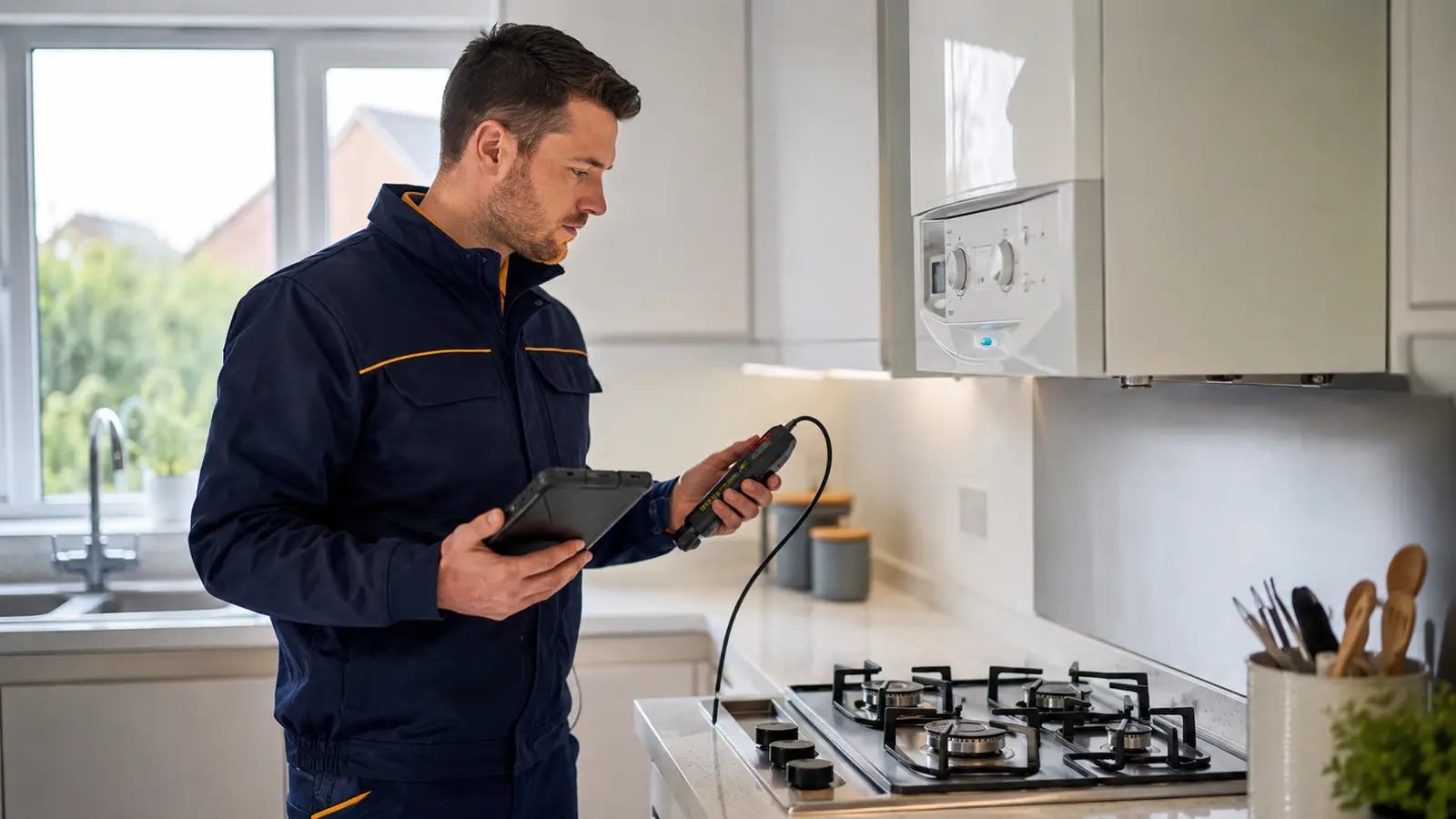
Gas engineer carrying out appliance and combustion checks in a UK homeCheck the ID card
and work category

Your service enquiry

Request work on an identified gas fire from Nottingham-based GasSafety 247. This service category covers enquiries about planned maintenance, an operating concern, a proposed installation or professional disconnection and removal. Tell us which fire you have, where it is installed and what you want the appointment to achieve. The appliance, associated arrangement and relevant work competence must be considered before a proposal is accepted. Homeowners, landlords and renovation customers can use Contact to discuss the next suitable step. We do not treat a decorative fireplace, an unused appliance or a proposed replacement as proof that the existing installation is safe or ready for use.
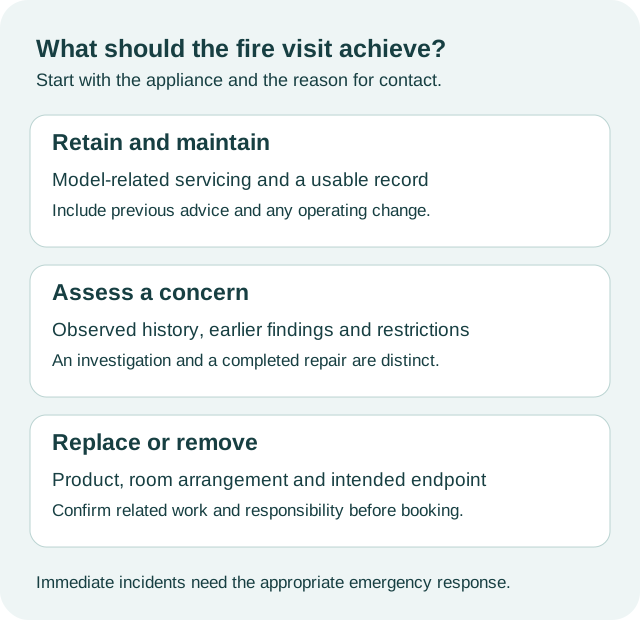
Gas fire enquiry choices: planned maintenance, assessment of an operating concern, or a proposed replacement or removal
Give the fire enquiry a defined outcome before deciding which work to commission.
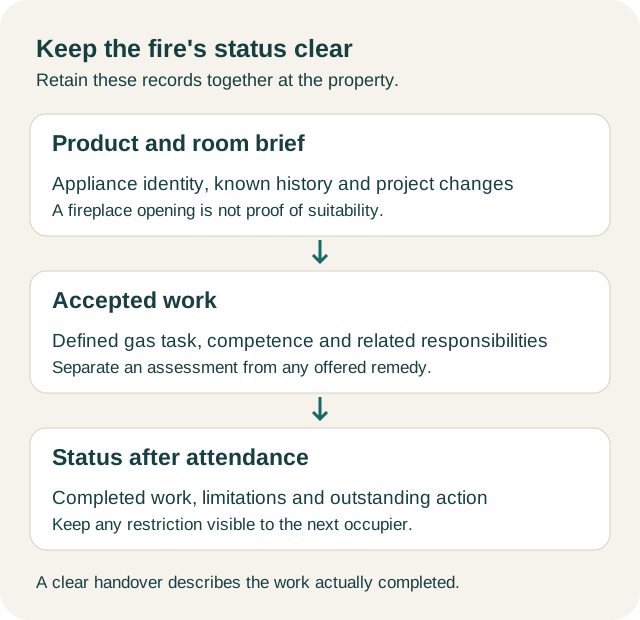
Gas fire project record: connect product and room information to the accepted work and appliance status after attendance
Keep the accepted scope and recorded outcome with the fire's product information and any outstanding action.
11 related services

Choose the gas fires job you need

Each page explains the useful pre-visit details, checks and qualification boundaries.

All local routes

Gas Fires across 100 areas

Choose the location that matches the property, then share the full postcode when you call or message.

Gas Fires in West Bridgford01Gas Fires in Edwalton02Gas Fires in Gamston03Gas Fires in Lady Bay04Gas Fires in Compton Acres05Gas Fires in Wilford06Gas Fires in Silverdale07Gas Fires in Clifton08Gas Fires in Ruddington09Gas Fires in Tollerton10Gas Fires in Plumtree11Gas Fires in Keyworth12Gas Fires in Bunny13Gas Fires in Bradmore14Gas Fires in Gotham15Gas Fires in East Leake16Gas Fires in Costock17Gas Fires in Stanford on Soar18Gas Fires in Normanton on Soar19Gas Fires in Sutton Bonington20Gas Fires in Kegworth21Gas Fires in Rempstone22Gas Fires in Wysall23Gas Fires in Willoughby on the Wolds24Gas Fires in Widmerpool25Gas Fires in Stanton on the Wolds26Gas Fires in Normanton on the Wolds27Gas Fires in Cotgrave28Gas Fires in Cropwell Bishop29Gas Fires in Cropwell Butler30Gas Fires in Kinoulton31Gas Fires in Hickling32Gas Fires in Upper Broughton33Gas Fires in Owthorpe34Gas Fires in Radcliffe-on-Trent35Gas Fires in Shelford36Gas Fires in East Bridgford37Gas Fires in Newton38Gas Fires in Bingham39Gas Fires in Saxondale40Gas Fires in Aslockton41Gas Fires in Whatton42Gas Fires in Orston43Gas Fires in Bottesford44Gas Fires in Lowdham45Gas Fires in Nottingham City Centre46Gas Fires in The Meadows47Gas Fires in Sneinton48Gas Fires in Colwick49Gas Fires in Bakersfield50Gas Fires in Mapperley51Gas Fires in Gedling52Gas Fires in Carlton53Gas Fires in Netherfield54Gas Fires in St Ann's55Gas Fires in Sherwood56Gas Fires in Carrington57Gas Fires in Basford58Gas Fires in Bulwell59Gas Fires in Bestwood60Gas Fires in Arnold61Gas Fires in Woodthorpe62Gas Fires in Daybrook63Gas Fires in Top Valley64Gas Fires in Rise Park65Gas Fires in Hucknall66Gas Fires in Linby67Gas Fires in Papplewick68Gas Fires in Calverton69Gas Fires in Burton Joyce70Gas Fires in Lenton71Gas Fires in Dunkirk72Gas Fires in The Park73Gas Fires in Wollaton74Gas Fires in Beeston75Gas Fires in Chilwell76Gas Fires in Attenborough77Gas Fires in Bramcote78Gas Fires in Stapleford79Gas Fires in Toton80Gas Fires in Long Eaton81Gas Fires in Sawley82Gas Fires in Sandiacre83Gas Fires in Risley84Gas Fires in Breaston85Gas Fires in Draycott86Gas Fires in Borrowash87Gas Fires in Ockbrook88Gas Fires in Ilkeston89Gas Fires in West Hallam90Gas Fires in Heanor91Gas Fires in Kimberley92Gas Fires in Eastwood93Gas Fires in Nuthall94Gas Fires in Castle Donington95Gas Fires in Loughborough96Gas Fires in Quorn97Gas Fires in Southwell98Gas Fires in Newark-on-Trent99Gas Fires in Mansfield100
Registration boundary: Requires the Gas Safe fires work category.
Complete service information

Gas Fire Services: detailed service scope, booking and next steps

Explore this page

Identify the fire and its associated arrangement

A product name should connect to the right instructions

Supply the model reference, available commissioning information and the instructions retained with the appliance. If a house purchase left several manuals, explain which one you believe belongs to the fire and where there is uncertainty. Do not remove parts or reach behind equipment to locate a hidden label. A safe external photograph or an existing document may help the provider decide what information is still required. Manufacturer documentation is model-specific; for example, Gazco's published Loft balanced-flue instructions distinguish user information, installation, commissioning and servicing. That example must not be used as a universal checklist for every fire.

Ask how the proposed work will be defined for your installed appliance, not for a similar-looking item from the same brand.

Explain what is known about the flue without trying to classify it yourself

Tell the provider about available installation records and the associated arrangement you can describe through ordinary access. You may know there is a chimney, an external terminal or a previous report referring to a particular fire type. Share the evidence rather than assuming those visible features establish that the appliance and flue are suitable together. The flue and ventilation assessment page provides a focused enquiry when that relationship is part of the concern. A flue description is not a customer instruction to inspect roofs, open specialist access or change ventilation.

The qualified professional needs to assess the applicable arrangement and explain any relevant limitation. Where a building manager or another owner controls part of the route, identify that party so the proposed work can account for permissions and practical access.

Include fuel and earlier installation changes in the brief

State the known fuel and share the actual product specification if the fire has been purchased recently or is being moved from another address. If there is uncertainty about fuel suitability or a claimed conversion, disclose it before requesting installation. The LPG services category concerns a distinct enquiry context; do not assume a gas-fire task can be accepted for any fuel merely because an appliance is advertised as adaptable. Mention previous changes to the fire, supply arrangement or associated building work when supported by records.

If nobody can explain an alteration, say that rather than describing it as professionally approved. The provider can identify which information and assessment are needed. Customers should not perform conversion, reconnection or component changes to resolve an uncertain appliance description themselves.

Establish the maintenance scope and the record you want

Ask for appliance maintenance rather than cosmetic attention alone

A gas fire can be a visible feature in a room, but a servicing request should describe professional maintenance of the equipment. Cleaning the surrounding hearth or wiping an accessible decorative surface does not establish that this service has been carried out. Explain why you are arranging maintenance and ask what the proposed scope addresses for the particular model. Any customer care should follow the applicable user instructions and must not become an instruction to undertake gas work. The service outcome should identify completed work and relevant findings, with a separate decision where additional attention is recommended.

This gives the customer a usable maintenance record instead of judging the visit only by whether the visible front looks cleaner. It also prevents a routine appointment being marketed as an unlimited repair or an assurance about every other gas appliance in the home.

Different fire arrangements need appropriately defined tasks

Describe the installed model and any reliable record of its arrangement when choosing a service category. The balanced-flue fire servicing page preserves a focused maintenance enquiry, while the general servicing route can begin with information that remains to be confirmed. The category selected on a website does not replace professional identification or competence checks. Ask how the provider will address the specific appliance and record any task that cannot be completed because its conditions or access are unresolved. An online generic list should not be presented as proof that all models require identical service actions.

A useful proposal is tied to the equipment, its available instructions and the accepted work boundary, allowing the eventual findings to be interpreted honestly without relying on a tick-box description chosen before the appliance was known.

Keep deferred recommendations associated with the same fire

If a service identifies further work, keep the recommendation with the maintenance record and ask what decision is needed next. It may concern a repair, additional assessment, access arrangement or another issue that is not included in the completed service. Do not close every action merely because the appointment has finished or a charge has been paid. When a different provider carries out follow-up, retain the completion information so the earlier finding has a documented outcome. If a safety restriction has been communicated, follow it while the responsible person considers the next step.

A future appointment benefits from a coherent fire history rather than a sequence of invoices with no description of unresolved conditions. The provider should make clear which accepted work is complete and what remains proposed, restricted or dependent on another party.

Prepare a fault brief without substituting a guessed part

Preserve the sequence of the operating concern

Explain whether the issue began suddenly, followed earlier work or had been noticed intermittently before the current request. Include what you observed during ordinary use and what the appliance status is now. If the controls or handset show information relevant to the report, share what is normally visible without recreating a fault. Avoid presenting a part name from an internet discussion as the required remedy. The pilot and ignition repair page allows a focused enquiry, but still requires professional assessment of the actual problem. A clear chronology helps the provider define the proposed investigation without asking the customer to perform technical testing.

Keep any previous diagnosis and actual completed work distinguishable so a professional recommendation is not mistakenly represented as a repair already undertaken.

Explain restrictions and incident history at the first contact

If the fire has been switched off, disconnected or restricted following a professional visit, share the relevant notice and explain the follow-up requested. Do not restart it because somebody wants to observe the symptom remotely. HSE's homeowner guidance says an appliance suspected to be unsafe should not be used and identifies 0800 111 999 for gas emergency reporting. Immediate incidents belong with the appropriate official response; this routine service enquiry does not replace it. Once the incident is addressed, the private work request may concern investigation, remediation or a permanent removal decision.

Those outcomes should be stated accurately. Keeping the notice and follow-up brief together helps prevent an ordinary servicing label from obscuring an unresolved safety-related finding.

Ask what an investigation can establish before approving a remedy

The initial proposal should distinguish assessment from a confirmed repair, including how the appointment is charged and how findings will be communicated. If additional work is recommended, ask for the problem identified, proposed remedy and commercial terms. Availability of a suitable repair or part must be established rather than assumed from an old catalogue entry. If the provider cannot complete a remedy within the first attendance, ask what the current appliance status is and what further arrangement would be required. A customer can then compare the proposed repair with a replacement or removal option using real information.

That decision must not rely on an unverified promise that a selected component will resolve the issue or that a service charge includes every possible further task.

Fit the fire proposal to the room and renovation project

Record changes around an appliance you plan to retain

Tell the provider about material room or building changes since the existing installation was assessed. New cabinetry, an altered fireplace surround, room reconfiguration or related building work may be relevant to the fire enquiry. Explain the actual project rather than assuming a decorative change cannot affect any equipment consideration. Ask the professional what must be assessed before you rely on the previous arrangement. If another contractor is planning work nearby, identify the fire and associated installation as something to coordinate with the relevant professional. Customers should not alter flue arrangements, ventilation or appliance components to fit a design concept.

The objective is a retained-appliance proposal based on the property as it is intended to be, with unresolved dependencies identified before the renovation is treated as complete.

Compare inset and outset proposals using the property information

The inset installation category and outset installation category identify different purchasing requests. Give the exact product and proposed location, then ask what site assessment and related work are required. A familiar marketing label or the presence of an existing fireplace does not establish that a replacement will fit or that the installation conditions are suitable. Include the relevant dimensions or plans supplied by your project team without turning them into customer installation instructions. Ask who accepts any surround, hearth, building or other non-gas work and how it is coordinated.

The quotation should address the proposed arrangement rather than describe every fire replacement as a simple exchange. Keep the accepted specification available if a contractor or retailer later changes the selected product.

Make the fire's intended use part of the customer brief

Tell the provider whether the fire is intended for occasional room warmth, frequent use or part of a wider home-heating arrangement. Describe the room and the practical reason for retaining or replacing it without claiming a particular appliance will solve every comfort complaint. If other heating equipment is also under consideration, keep those tasks visible through the central heating installation hub or radiator services, as appropriate. Buying a fire should not automatically become an undertaking to redesign the whole heating system. Equally, a product selected only for appearance may not address the outcome the customer actually wants.

A clear use brief lets the provider discuss the proposed work in context while avoiding unsupported promises about savings, heat output in the customer's room or performance before proper assessment.

Keep room safety and appliance condition in the same enquiry

Discuss protection needs using the actual appliance instructions

If children or other people who need additional protection use the room, explain that when requesting installation or a retained-fire assessment. Ask how the appliance's user information and relevant professional advice address the arrangement. For the published Gazco Loft example, the manufacturer warns that the casing, front and glass become hot during operation and addresses guard provision. That model-specific information should not become a generic clearance chart for unrelated products. The customer needs usable instructions for the fire actually installed, with any protection requirement explained in context.

A decorative glass front should not be presented as proof that an appliance has no hot-surface risk. Nor should a website photograph dictate where furniture or furnishings are placed in the customer's room. Ask for the applicable requirements and retain them with the handover information rather than relying on an attractive room layout as a safety assessment.

Raise damage or changes to the fire's visible condition

If you notice damage, missing items or a change to a normally visible part of the fire, describe it without attempting a repair. Do not substitute decorative materials, alter an internal arrangement or use online photographs as a fitting guide. Ask the provider which assessment is needed and follow any appliance or professional restriction. A product with a glass front must be considered under its actual instructions; the Gazco example prohibits use where the specified glass damage is present. That is not a remotely issued diagnosis of another model, but illustrates why a customer's concern should not be dismissed as cosmetic.

Share the appliance identity and relevant history so the proposed work addresses the real condition. Buying a replacement decorative component does not itself establish suitability, correct installation or readiness to use the equipment.

Treat alarms and maintenance as different parts of the enquiry

Tell the provider if a carbon-monoxide incident or alarm concern is part of the reason for contact. The carbon-monoxide safety hub gives that enquiry its own category; immediate danger needs the appropriate emergency action before private attendance is considered. An alarm should not be used as evidence that a fire or flue has been properly maintained or that a reported appliance condition can be ignored. If you are arranging a new installation, ask the professional to explain any relevant alarm provision and the documents supporting the accepted work.

Keep the appliance, room and incident context visible together rather than purchasing an isolated device and assuming all other requirements are resolved. This page does not supply a universal alarm-location or technical testing procedure for customers to apply without the relevant instructions and professional assessment.

Define disconnection, removal and retained fireplace work

State the condition you want left after professional disconnection

If you no longer want to use the fire, explain whether the immediate request is disconnection, physical removal or a larger fireplace project. The gas fire disconnection page addresses an identified professional gas task; gas fire removal concerns a broader removal enquiry whose accepted responsibilities need to be confirmed. Say whether another contractor will work on the surrounding opening, finish or building arrangement afterwards. Ask the proposal to identify what is left, what is removed and any relevant restriction or subsequent dependency. Simply deciding not to use the fire is not the same as having it professionally disconnected.

A clear endpoint is particularly important when the room will be redecorated and the appliance or connection may no longer be readily visible to a later occupier.

Do not assume the gas task includes all building reinstatement

A removal project may involve appliance handling, disposal and work to the fireplace, room finishes or associated building elements. Ask each provider to state the work it accepts rather than assuming the gas visit includes every part of making the room ready for decoration. If you intend to retain a surround or opening, explain the objective so the proposal can address it accurately. Tell the relevant contractor about the associated gas installation and any outstanding professional recommendation. Do not obscure or alter parts yourself in advance of assessment.

The customer should receive a coherent project sequence with the gas outcome distinguished from separate building work. That lets the room's future condition be planned honestly without marketing disconnection as automatic complete fireplace renovation or treating a newly decorated surface as evidence of a properly resolved installation.

Record the status for a future occupier or property sale

Keep the professional record associated with the address and appliance, particularly where the fire remains visible after disconnection or an opening is retained. A future occupier may reasonably ask whether it is connected, usable or merely decorative. The documents should allow that question to be answered using completed work and any relevant restrictions rather than a recollection that the fire was rarely used. If a sale or letting requires information, share the factual status instead of relabelling a removal invoice as a complete property gas safety record.

A later installation at the same opening needs its own assessment. Preserve any further-work recommendation so the next project starts from a clear position, not from an assumption that the presence of a fireplace means the old appliance or installation can simply be brought back into use.

Commission work for homeowners, buyers and landlords

Make an inherited fire's history an explicit uncertainty

When moving into a property, explain the equipment and records you have received. Ask for the appropriate condition or maintenance assessment if the history cannot be established; do not rely on a previous occupier's informal statement that the fire worked last winter. The gas fire safety-check route can help define an appliance-focused request. If an installation document names a different fire or predates an unrecorded replacement, highlight the inconsistency. The proposal should address the current appliance and the outcome sought, with missing evidence stated honestly.

A condition enquiry is not a legal opinion about the whole property transaction or a guarantee that every historic alteration complied with applicable requirements. It is a way to obtain a properly scoped current assessment and understand what further information or work may be needed.

Identify a landlord-provided fire in the property scope

A landlord or agent should include the fire when defining the actual appliance list and maintenance requirements for the property. State whether it is supplied for the occupier's use, whether it is connected and what relevant records are available. HSE's landlord guidance addresses landlord-provided appliances and distinguishes safety checks from effective maintenance. Use the landlord gas safety hub when the required outcome concerns the broader property check. Do not assume a boiler-only appointment describes the condition of a separate room fire. If a previous restriction applies, include the notice and the follow-up requested.

Clear equipment identification helps the proposed provider define appropriate work without inventing a maintenance history or claiming that one receipt covers every appliance at the address.

Arrange a decision-maker for recommendations at an occupied property

For work commissioned by an agent, owner or relative, say who provides access and who decides on further work. The person using the fire can contribute useful operating history without necessarily being authorised to purchase a remedy. Ask how findings will reach the responsible person and how the appliance status will be explained to the occupier. If a proposal is deferred, any communicated restriction must remain understandable while the commercial decision is pending. This avoids an access contact having to interpret a repair recommendation on behalf of an absent owner.

Confirm who retains the maintenance or completion record and how any separate follow-up will be logged. GasSafety 247 does not claim to manage the tenancy, property sale or client's maintenance diary merely because it receives a service enquiry.

Agree capability, supply and completion before accepting the proposal

Check relevant competence for the actual fire and task

Use the attending professional's current registration and work-category information to confirm suitability for the proposed gas work, fuel and appliance context. HSE's domestic gas information explains the need for appropriately competent Gas Safe registered work. A general boiler qualification, a logo or a brand name on a website must not be treated as evidence for every gas-fire task. GasSafety 247's applicable capability needs to be established for the actual request before acceptance; no unverified registration or manufacturer appointment is asserted here. Explain at enquiry stage if the equipment is non-domestic, uses LPG or is part of a more unusual installation.

A commercial page should help the customer commission appropriate work, not obscure a category boundary with an unsupported universal expertise claim.

Compare proposals for the same appliance and room outcome

Ask a quotation to identify the proposed maintenance, assessment, installation or removal, together with supplied items and any excluded work. Clarify how further findings, parts, access problems or another visit are priced and authorised. A service charge should not be mistaken for an all-inclusive replacement project, and a supply-only appliance price does not represent completed installation. There is no verified standard tariff presented for every Nottingham fire enquiry. When comparing options, keep the actual product, room arrangement and desired outcome consistent. One proposal may include a task another leaves with a different contractor, but that responsibility needs to be stated rather than inferred.

Retain the accepted scope so the completed handover can be assessed against the commissioned work instead of against an advertisement for an unrelated property or model.

Keep product support separate from the independent service agreement

If a manufacturer, retailer or existing plan is involved, establish its current terms and any authorisation requirement before purchasing independent work. GasSafety 247 does not claim to be an appointed service agent for a brand simply because it references a public manual. Explain what an earlier provider has offered or completed and identify any outstanding warranty or complaint matter separately. The proposed independent appointment should state what it will assess or do now, without promising a claim outcome under another organisation's agreement. If product supply is part of the request, clarify the exact item and responsibility for its delivery and condition.

This keeps the customer's remedy options understandable and prevents a maintenance enquiry being turned into an unsupported warranty-preservation promise.

Progress an appliance-specific Nottingham gas-fire enquiry

Request a proposal using the fire, property and purpose together

Send the property address, available fire identification, relevant records and the reason for contact. Describe the room or project condition when it affects the proposed work, and include any prior professional restriction. Ask for the applicable competence, scope, charge basis, appointment arrangement and resulting record to be confirmed. The service directory connects this request to related categories, while the Nottingham City Centre hub and coverage directory preserve the legitimate service-area paths. GasSafety 247 is based in Nottingham; those area pages do not establish separate offices or local appliance specialists.

A clear enquiry lets the actual task be considered and gives you a proposal to review before accepting attendance. It does not promise repair success, stocked components or a universal response time.

Sources supporting this service information

Questions answered

Questions about gas fire services in Nottingham

What is the first step when I want a gas fire serviced?

Provide the appliance identity, address, last known maintenance and any current operating concern. Ask for the proposed maintenance scope and resulting record to be specified for that fire. State whether earlier advice remains outstanding. The provider can then assess the correct appointment rather than accepting an undefined annual visit that omits an existing fault or unrecorded limitation.

Can I request servicing when I only use the fire occasionally?

Yes. Tell the provider about its use and history, but do not assume infrequent operation removes its maintenance needs. The actual appliance requirements should guide the proposed work. Share available instructions and records, then ask for an appropriate service scope. Appearance and occasional successful operation do not by themselves establish the present condition of the fire or associated installation.

Should a fire that fails to light be booked as routine maintenance?

Describe the failure before agreeing the visit. A fault-focused assessment may require a different scope from planned servicing. Explain what you observed and any previous findings without selecting a component yourself. The provider should distinguish investigation from a confirmed repair and explain what the proposed charge covers. Do not repeatedly reproduce a concern or operate restricted equipment to demonstrate it.

How do I identify a fire without reaching behind it?

Use retained product or installation documents and any information normally visible through safe access. A photograph of the external appearance can support the enquiry, but may not establish the model. Say when identification is uncertain and ask what further information is appropriate. Do not remove or move equipment to uncover a hidden label for the purpose of an enquiry.

Can a manual for a similar-looking fire define my service?

The document should correspond to the actual appliance and relevant version. Share it with the provider and explain any uncertainty instead of treating it as a universal procedure. Models can have their own installation and maintenance requirements. A manufacturer's public instructions are useful evidence, but do not establish that another appliance, provider or proposed installation is covered by the same specification.

Does a visible chimney prove a replacement gas fire is suitable?

No. Describe the existing fire and associated information, then request assessment of the proposed product and property arrangement. An existing opening or chimney is not installation acceptance. The provider needs to explain applicable requirements and any separate work or access dependency before you rely on a replacement proposal. Customers should not perform specialist inspection or alterations themselves.

What information helps with a balanced-flue fire enquiry?

Provide the actual model, available installation record and a description of the arrangement known to you. Explain the maintenance or condition concern and any access restriction. The category label on its own does not establish suitability or scope. Request work defined for the appliance, with relevant competence confirmed and any task that cannot be completed recorded honestly.

Can I replace an inset fire with an outset model at the same position?

Submit the proposed product and intended room arrangement for assessment. The existing position does not automatically establish suitability for another type or model. Ask what associated work, preparation and professional responsibilities would be required. Keep the accepted specification distinct from a design preference so the purchase and project sequence depend on actual findings rather than a presumed simple exchange.

Does gas-fire installation include a new surround or hearth?

Only surrounding work expressly accepted in the proposal should be assumed. Explain your intended finished room and identify other contractors involved. Ask who supplies and completes each related element and how the sequence is coordinated. The gas task must remain clear, particularly when installation readiness depends on building or finishing work that another party has not yet completed.

Can room refurbishment affect a retained fire enquiry?

Tell the provider about changes to the room, surround or associated building arrangement. Ask what assessment is needed for the intended condition instead of assuming a decorative project is irrelevant to the equipment. Do not alter ventilation, flues or appliance parts to suit a design. Keep relevant professional advice and any unresolved dependency available to the renovation coordinator.

Is a glass-fronted fire safe to place beside any furniture?

Do not infer placement requirements from the presence of glass or a showroom photograph. Use the instructions and professional advice for the actual appliance. The referenced Gazco example warns about hot surfaces, but its specific requirements must not be applied as a universal rule for every product. Ask for the relevant room-use and protection information to be explained at handover.

What if I notice visible damage to the fire's glass or front?

Describe the concern and obtain appropriate professional advice without dismantling or substituting items yourself. Follow the actual appliance instructions and any use restriction. The published Gazco example prohibits operation with specified glass damage; another appliance needs its own assessment. A purchased replacement part does not establish that the equipment is suitable for use or that the repair has been completed correctly.

Can I rearrange decorative fuel materials before the service?

Do not alter the fire's internal arrangement to prepare for attendance or to imitate a photograph. Explain any concern about missing or changed items and share the appliance identity. Ask the professional to assess the actual condition and applicable requirements. Decorative appearance must not be treated as a customer installation procedure or as evidence that the fire's operation is correct.

Does an alarm replace a fire inspection or maintenance visit?

No. Alarm-related questions, appliance maintenance and a reported incident should be described accurately and handled in their own context. Tell the provider if an alarm concern is part of the enquiry. Immediate danger requires the relevant emergency action. Do not use the presence or silence of an alarm as proof that an unexamined fire or flue is safe.

Can a restricted fire be relit to show an engineer the fault?

Do not restart equipment contrary to a professional restriction or when it is suspected to be unsafe. Share the notice and operating history for the follow-up enquiry instead. The proposed professional can assess the appropriate next work without asking the customer to recreate a dangerous condition. Keep the appliance's restricted status clear to everyone who might use the room.

Is professional disconnection the same as never using the fire?

No. An owner's choice not to operate it does not describe a completed professional disconnection. If you want that outcome, state the appliance and the intended condition afterwards, then obtain an accepted scope and record. A fire left in the room should have a clear factual status so a future occupier does not assume it is ready to use.

What extra responsibilities arise when I want the fire removed?

Explain physical removal, handling, disposal and any intended work to the opening or room finishes. Ask which responsibilities the proposal includes and which belong to another contractor. The gas task should have a defined endpoint, with dependencies stated. Do not assume a disconnection charge includes complete fireplace reinstatement or every task needed before the room can be redecorated.

Can an old fireplace be reused after the fire has been removed?

A later installation requires its own assessment of the proposed appliance and property arrangement. Retain the earlier removal or disconnection record and explain any outstanding work. The visible opening does not establish that a new gas fire can be installed without further considerations. Ask for a complete proposal before choosing a product or committing other work on an assumed reusable installation.

What should I request for a fire inherited with a house purchase?

Explain the appliance, records and uncertainty you have inherited. Request the appropriate condition or maintenance assessment rather than treating an informal history as verified. If documents refer to a different fire or an unexplained change, identify that discrepancy. The proposed scope should address the current equipment and state any limitation without promising a retrospective approval of the entire property transaction.

Does a landlord boiler service cover a separate gas fire?

Only equipment included in the accepted scope is covered. Identify the fire when defining maintenance and the relevant property gas safety-check request. The tasks and documents should be described accurately, with ownership and current status clear. A boiler-only receipt does not establish that a separate room appliance was maintained or included in the required inspection.

Who approves a fire repair when an agent arranges the visit?

Identify the authorised decision-maker before attendance and give a practical way to communicate findings. The occupier can supply history and access without automatically approving additional spending. Ask how a deferred proposal and appliance status will be recorded. Any safety restriction remains relevant while the owner or agent decides on the offered remedy.

Can you promise a particular brand's replacement parts are available?

Parts suitability and availability must be established for the actual appliance and proposed remedy. This page does not claim stocked components, manufacturer appointment or universal repair capability. Provide the model and earlier findings, then ask what can be confirmed in the proposal. Keep an investigation, a parts recommendation and a completed repair as distinct outcomes in the equipment history.

How should I compare a repair proposal with replacement?

Ask what the professional findings support, what uncertainty remains and what each option includes. Compare the accepted repair scope with a replacement proposal that addresses product, property and related work. Do not compare an assessment charge with a supply-only retail price as though both deliver the same outcome. The customer decision needs clearly defined responsibilities and the current appliance status.

What do I send to progress a Nottingham gas-fire appointment?

Send the address, available model information, relevant documents and the requested maintenance, assessment, installation or removal outcome. Include known restrictions and room-project changes where relevant. Ask for work competence, scope, commercial terms and availability to be confirmed. A defined proposal should precede acceptance, rather than an assumed booking based only on the words gas fire.

Speak directly with GasSafety 247

Need to discuss gas fires?

Call or WhatsApp with the property postcode, appliance and the work or fault you need assessed.

Content updated:

Call nowWhatsApp