
01
Call or WhatsApp
Send the postcode, appliance and the fault or service you need.
Based in West Bridgford and serving Nottingham and surrounding areas. Start with the appliance, the fault and your postcode.
A boiler fault is not only an error code. Pressure loss, ignition, circulation, controls, combustion and the flue route can all shape the diagnosis.
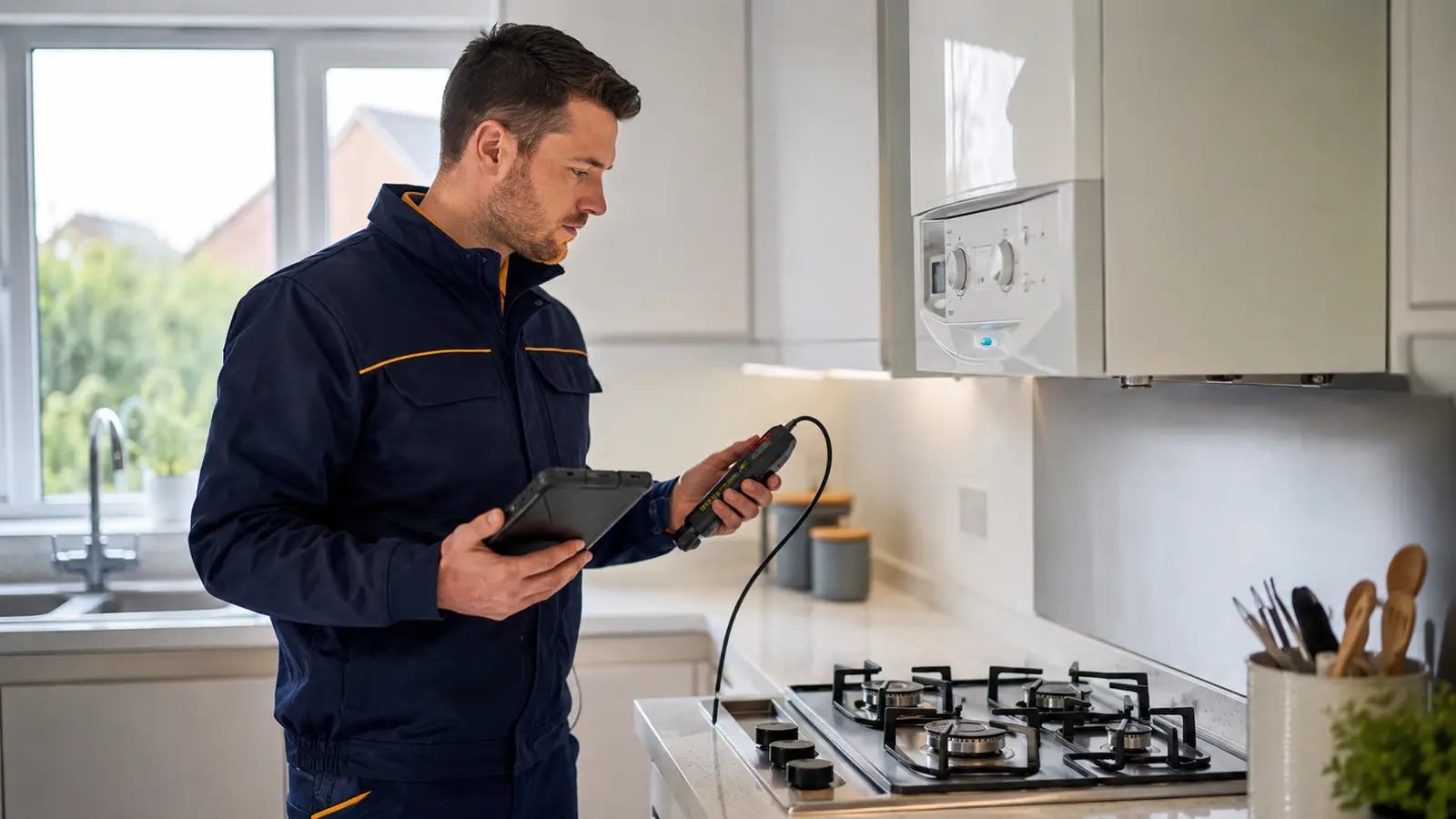
GasSafety 247 starts with the property, appliance and symptoms. Before work begins, check the attending engineer's Gas Safe ID and confirm the listed category covers the appliance and task.
 Check the ID and work category
Choose the appliance or heating service you need.
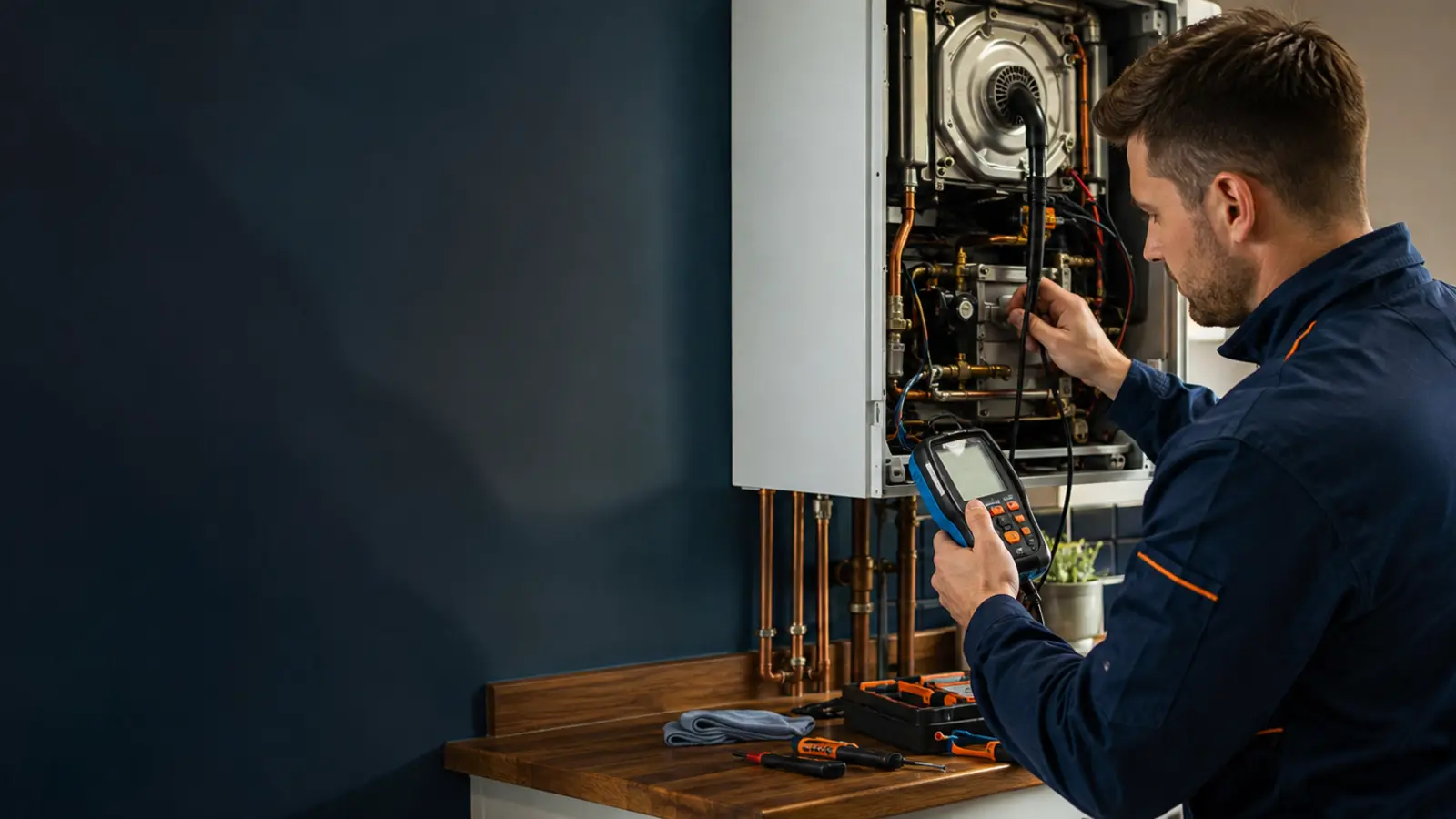
Practical diagnosis and repair for domestic boiler faults, failed components, leaks, ignition problems and recurring lockouts.
View 20 servicesRoutine boiler servicing with combustion, flue, condensate and operating checks explained clearly before any additional work.
View 15 servicesSurvey-led boiler installation and replacement planned around heat demand, system layout, flue route, controls and hot-water requirements.
View 18 servicesDomestic gas safety checks covering appliances, flues, ventilation, combustion, working pressure and installation tightness.
View 15 servicesA postcode, make and model, visible error code and short symptom description give the enquiry a useful starting point.
Choose your area for local service information and appointment guidance.
Send the postcode, appliance and the fault or service you need.
We check the job category, symptoms, access and appointment requirements.
Agree the date, arrival details and what should be available at the property.
The engineer checks the system and explains any additional work before proceeding.
Gas work depends on the appliance, engineer category, property conditions and findings at the visit. The website keeps those boundaries clear.
Check the attending engineer's Gas Safe ID card and confirm the listed category covers the appliance and work.
Speak to GasSafety 247 without a generic comparison-site handoff.
Make, model, error code and system symptoms help shape the first visit.
Boiler pressure, circulation, controls and radiators are considered together when relevant.
Plan Gas Safety Records, boiler servicing and property access through one clear contact.
Based in Nottingham, with 100 surrounding target areas. Confirm the appointment for the address and requested work.
Plain-English guides for homeowners, landlords and property managers.
Practical guidance on boiler servicing: understand the issue before arranging a visit. See what to record before booking.
Read the guidePractical guidance on boiler servicing: record useful symptoms without attempting unsafe work. See what to record before booking.
Read the guidePractical guidance on boiler servicing: understand the checks that may be relevant. See what to record before booking.
Read the guideChoose the right appointment, prepare the property details and agree the scope before work begins.
GasSafety 247 is based at 22 Franklin Drive, West Bridgford, Nottingham, NG12 4ER. Call +44 7888 885791 or send a WhatsApp message with the property postcode, appliance and reason for the visit. The target service area is Nottingham and the 100 surrounding locations listed in the area directory. An appointment, the work category and the attending engineer must be confirmed for the particular job.
Use these service details to help homeowners, landlords and property managers distinguish boiler repair, servicing, gas-safety checks and planned installation work. It is written for arranging professional attention, not for opening an appliance or carrying out gas work. You can make a useful enquiry without knowing which internal component has failed. A model name, a visible message and an account of what changed will usually be more helpful than a guessed diagnosis.
The website contains separate routes for different gas, boiler and heating tasks. A service name in the directory describes an enquiry category; it does not establish that every engineer can undertake every appliance, fuel type or commercial task. Check the person attending and the categories on their current Gas Safe identification before gas work begins. HSE explains how to check registration.
Boiler repairs are for an existing problem such as loss of heating, unreliable hot water or repeated lockout. Tell us when the fault appeared and whether it affects heating, hot water or both. If the boiler displays a code, write the complete code exactly as shown. Do not remove covers to find a label or try repeated resets to produce a more detailed report.
A repair appointment may begin with diagnosis. A visible code does not necessarily identify a part that should be replaced, and the same symptom can arise from different conditions. Ask what the initial visit includes, how further work will be approved and whether parts availability might require another appointment. Confirm these expectations before assuming that a callout price includes every repair needed to restore the system.
A planned service is about the appliance's maintenance needs and the manufacturer's requirements. A landlord gas-safety check has a separate purpose and produces a record of the checks undertaken. A service may identify a problem, and a safety check may lead to remedial work, but neither label should be used as a substitute for the other. Tell the booking contact which outcome you need.
If you want a service and a gas-safety check during the same visit, request both explicitly. Give the number and type of appliances and the property address. Ask whether the quoted scope covers each appliance and each record required. This is particularly useful when a boiler, hob and fire are in the same property, because “check the gas” may not describe the complete intended job.
Explain what the system was doing before the problem appeared. For example, heating may work while a hot tap runs cold, or an intermittent fault may appear only during the first morning demand. If you have already had a visit, provide the findings or job reference where available. Keep observations and previous advice separate so the next person can distinguish what you saw from what someone else suggested.
Useful context includes the make and model, whether the appliance is a combi or part of a system with a cylinder, the visible pressure reading if safely accessible, and the date of recent work. You do not need to know all of these details to call. Do not enter an unsafe loft or reach behind an appliance to complete a checklist. Explain what information is missing and let the engineer plan around it.
Tell us whether the property is a house, flat, rented room, shop or another premises type. State who will provide access and who can authorise work. In a flat, the boiler may be in an individual dwelling while a valve, flue route or plant area involves shared space. That affects access arrangements and the questions to resolve before the visit.
Mention any practical needs that affect appointment planning, such as a resident who needs advance notice, restricted parking, a secure entrance or a limited access window. You do not need to share a medical history. A clear description of the arrangement required is enough to start the discussion. Where a landlord, tenant and agent are all involved, agree one contact for approval and a separate resident contact if necessary.
Tell the booking contact which outlets or rooms are affected. “No hot water” could mean every hot outlet remains cold, only one shower is unreliable, or the water starts hot and then changes. “No heating” could mean the entire property is cold, one room is affected, or heating works only with a particular control setting. Describe the pattern without changing controls or opening equipment to investigate.
If there is a separate hot-water cylinder, mention it even if you normally refer to the whole installation as “the boiler”. A cylinder, programmer, room control and boiler may need to be considered as separate parts of the system. A photograph of the accessible controls can help identify the arrangement. It cannot replace inspection or determine that a component is safe to continue using.
Recent decoration, replacement controls, a newly fitted radiator or a change of occupant may provide useful context. State the date and the nature of the change without assuming it caused the fault. An engineer can then decide whether it is relevant. Avoid repeatedly operating a faulty system to reproduce a symptom for a video; an accurate account of its behaviour is enough to begin the booking.
If the fault is intermittent, record the circumstances when it occurs and when the system behaves normally. Include a visible message if one appears. A short record can be more useful than several isolated photographs with no sequence. Ask whether the engineer needs any existing manuals, service records or previous invoices available at the appointment.
Landlords have responsibilities for gas appliances and flues they provide for tenants, including an annual safety check by a suitably registered engineer. The precise responsibilities depend on the arrangement, including who owns the appliance. Use the HSE landlord guidance to check your position rather than assuming a boiler-service receipt covers every obligation.
For booking, provide the rental address, appliance list, current record if available and the contact who will arrange access. Explain whether there are multiple dwellings or shared areas. State whether you need a check only, servicing as well, or a quotation for known defects. These are separate scope decisions and should be visible in the appointment arrangement.
A record should identify the inspected property and the work undertaken. Check that the address and appliance details are correct when it is supplied. If a tenancy is about to change, coordinate the inspection, any necessary follow-up and distribution of the record with the person managing the tenancy. Government guidance explains the record requirements for tenants.
Do not ask for a certificate in advance of a visit or treat an appointment confirmation as a completed safety check. If defects are identified, discuss the findings and the proposed next action with the engineer. A booking system cannot promise a satisfactory result before inspection. HSE's guidance on gas-safety records explains that the record follows completion of the required checks.
When arranging a service, provide the boiler make and model and the last service date if known. Mention any existing symptom even if the visit is mainly routine maintenance. A service appointment should not be used to conceal a known breakdown, because the time, parts and scope may differ. If the appliance has not been used recently or the property has been vacant, explain that too.
Keep the manufacturer's literature available where you have it. Ask whether the proposed work follows the relevant appliance requirements and what documentation will be supplied afterwards. Do not assume that an unspecified “annual check” includes the same work as a full manufacturer-directed service. Ask the booking contact to describe the included task in plain language and identify anything charged separately.
An engineer may be unable to complete all planned work if access is restricted or a condition needs to be addressed first. Explain known access problems in advance, such as a cupboard that cannot be opened or an appliance above an inaccessible work surface. Make practical space where it is safe, but do not dismantle the appliance, move pipework or alter the installation yourself.
Ask how incomplete work, recommendations and follow-up appointments will be recorded. If a replacement part is proposed, clarify whether it is required for the agreed maintenance task or relates to a newly identified fault. This helps you understand what has been completed during the current visit and what still requires a separate decision.
A replacement enquiry should describe the current boiler, the number of bathrooms, how hot water is used and any existing cylinder or storage arrangement. Tell us what is unsatisfactory about the current system: reliability, usable hot water, controls or another issue. Avoid selecting a replacement solely from a model advertised online before the property and installation constraints have been assessed.
The proposed work may involve more than replacing an appliance in the same place. Ask about the flue route, condensate arrangements, controls, system condition and access for installation. These points require a property-specific assessment. A photograph may help prepare a survey, but it does not establish that a particular model, output or location is suitable.
When comparing proposals, check which appliance, controls, system work, disposal arrangements and records are included. Ask how the work will affect heating and hot water during installation and whether making good is included. A quote that names only a boiler leaves important decisions unresolved. Clarify exclusions before accepting, including any work dependent on conditions discovered later.
If you are arranging work for a tenant or family member, agree who chooses the appliance and who approves variations. Keep a reachable contact during the installation period. Confirm how the completed system will be demonstrated and which documents you should retain. Any manufacturer warranty conditions should be checked against the actual product documentation, not inferred from a general website promise.
Describe whether a room remains cold all the time, warms slowly or changes when other rooms are heated. Mention noises, visible leaks or recent radiator work without attempting to diagnose the cause. The enquiry should distinguish an individual radiator concern from a whole-system heating failure. Existing controls and the way the system is used may be relevant alongside the heating equipment.
If you want a radiator changed or moved, give its current location and the intended new position. Explain whether flooring or walls are being altered by another trade. Ask what preparation, pipework access and making good are included. Decorative work should be planned after the installation scope is clear, rather than assuming every pipe can be hidden without changing the job.
A control upgrade is most useful when the requirements are specific. Explain whether you want separate schedules, easier manual adjustment, remote access or a clearer display. Identify the existing boiler and control model if you can do so without opening equipment. Compatibility needs to be checked before a controller is selected. A familiar brand name does not establish that it suits the installation.
For a rented or shared property, discuss who will operate the controls and who owns any associated account. Agree what happens when a tenant changes. Do not put account passwords into a general enquiry or leave the installation dependent on a departing resident's login. The handover should make everyday operation understandable to the person who will actually use the heating.
An enquiry about a cooker could mean installation, disconnection, a fault, a safety check or a planned replacement. State which task you need and whether the appliance is already at the property. Give the model and fuel information from the product documents where available. Do not assume that an appliance bought for a different installation can be connected without checking suitability.
For a fire, provide the model if known and explain whether the request is maintenance, a fault or replacement. Mention the room and any access restrictions. The attending engineer must be qualified for the relevant appliance and work category. HSE explains that competency for the specific area of gas work matters; a registration check is not only a question of seeing a logo.
If an appliance is being replaced, confirm the delivery date before arranging connection work. Ask who removes the old appliance and whether disposal is included. Check whether kitchen installers or another contractor must complete preparatory work first. An engineer arriving before the site is ready may not be able to carry out the booked task.
Keep the product manual and installation requirements available. Discuss any proposed changes to the location before furniture or cabinetry is fitted around it. Do not ask the engineer to ignore a clearance or ventilation requirement because the kitchen has already been finished. Resolve the installation scope early so the surrounding work can be coordinated correctly.
For gas pipework services, explain whether the enquiry concerns an alteration, replacement, new appliance position or a follow-up assessment. State the property type, the intended appliance and any building work taking place. Pipework requirements depend on the installation and cannot be chosen only from an approximate length mentioned in a message.
If drawings or an existing report are available, share the relevant pages rather than an entire collection of unrelated documents. Identify who controls the property and who is coordinating other trades. An extension, kitchen change or commercial fit-out may involve several responsibilities, and the gas-work scope should be agreed alongside them rather than assumed to follow automatically.
Commercial premises, LPG appliances and unusual installations may need a different work category from ordinary domestic natural-gas work. State the fuel and premises type at the beginning of the enquiry. The booking contact should confirm whether an appropriately qualified person is available for the actual task. A directory entry is not a substitute for that check.
Do not adapt a domestic appointment description to fit a different job simply because it appears easier to book. Accurate information protects the scheduling process and prevents the wrong assumptions about tools, documentation and competence. If the proposed scope falls outside the available service, the next step is to clarify the appropriate route, not to proceed under an inaccurate description.
A useful photograph shows the accessible appliance and enough of the surrounding space to understand its position. A separate picture can show a readable model label or visible message if these are safely accessible. Avoid opening covers, removing panels or climbing into difficult spaces. You can explain that a label is unavailable; you do not need to put yourself at risk to complete the booking.
Before sending an image, check it does not reveal unrelated personal paperwork, security information or another person's private details. Share access codes only with the person who needs them and only when the appointment is confirmed. WhatsApp is a conversation channel, not a requirement to upload evidence from every room in the property.
Confirm the entrance, parking arrangements and the name of the person providing access. In a managed block, find out whether a caretaker or agent must open a plant area. If the occupant cannot stay for the entire visit, discuss the arrangement in advance. Do not assume an engineer can accept keys from an unconfirmed neighbour or enter a property without the appropriate permission.
Where possible, clear ordinary belongings from around the working area without moving equipment or pipework. Tell the booking contact about any known access limitation that cannot be resolved. If pets, children or a vulnerable occupant require a different appointment arrangement, explain the practical need. The aim is a workable visit, not a perfectly staged home.
GasSafety 247 does not use a single website price to describe every appliance and property. Ask whether the initial quote covers attendance, diagnosis, the specified service or a defined repair. Clarify the treatment of parts, additional labour, parking and a return visit. If the work requires a survey, distinguish that step from an installation quotation.
For a known fault, explain any previous findings or proposed parts. Do not purchase a component solely because an internet search links it to the displayed code. Compatibility and diagnosis should be checked by the person doing the work. Ask whether customer-supplied parts are accepted before making a purchase, and understand who would be responsible for product suitability and warranty questions.
If additional work is identified, ask what it is, why it is proposed and whether it changes the price or appointment plan. A landlord or agent may need to approve it separately from the tenant who provides access. Agree a reachable authorising contact before the visit so a decision does not depend on conflicting messages from several people.
Keep the agreed scope, appointment information and any subsequent written findings together. That record helps distinguish completed work from a recommendation. If a part must be obtained, ask how the next appointment will be arranged and what information you need to retain. Avoid treating a proposed follow-up as a confirmed booking until its details are agreed.
Some properties have a separate hot-water cylinder, several heat sources or an arrangement that a new occupant does not yet understand. Describe what you can identify from accessible controls and documents. State whether the enquiry concerns water temperature, supply at outlets, a visible leak or planned replacement. The booking should reflect the system present rather than assume every property has a combi boiler.
An appliance that includes both water-side and electrical components may require more than one work category. Ask which part of the job is being assessed and whether another qualified trade is needed for a separate task. Do not describe electrical connection work as ordinary plumbing to simplify the appointment. Equally, a water-side symptom should not be labelled a gas fault without evidence that the gas appliance is involved.
Bring together any existing service records, installation documents and previous recommendations. Highlight the entries that relate to the current symptom. A history of work can help the engineer identify the system and understand earlier decisions, but it should not be used as a substitute for inspecting the current condition. Tell the booking contact if documents are missing; there is no benefit in guessing an installation date or model.
If the property is being purchased or transferred to a new manager, request documents through the person authorised to supply them. Avoid treating a seller's description as a professional inspection result. Keep questions about an appliance's current condition separate from the commercial arrangements for buying or letting the property. The appropriate scope and records should be agreed for the visit itself.
For a portfolio booking, list each address with its appliance types, requested tasks, access person and current record date. A spreadsheet is useful only if those fields remain connected to the right property. Do not combine several addresses into one generic instruction such as “service all boilers” when some require repairs, some need gas-safety checks and others have different appliances.
Agree how appointments and findings will be reported back to the responsible manager. Specify who can approve additional work and how tenants will receive appointment information. If the first property takes longer because a separate problem is found, the remaining schedule may need adjustment. Confirm a workable communication route rather than assuming every occupant will be available for an unscheduled visit later that day.
Kitchen fitting, building work and gas work may depend on each other. Explain which contractor controls the programme and what will be ready at the intended appointment. If access, cabinetry or a required route is incomplete, discuss that before committing to an installation date. The engineer needs an accurate description of the site, not an optimistic assumption that preceding work will finish on time.
After the work, retain separate records for separate responsibilities. An invoice for one trade should not be treated as evidence that another trade's work has been inspected. Ask the person coordinating the project to identify the completed tasks, unresolved items and responsible contacts. This makes later maintenance enquiries more precise and helps a future owner or tenant understand the installation history.
The areas directory contains the established local service map around Nottingham. The business address remains the West Bridgford base; the town pages do not represent additional branches. Provide the exact property postcode even when the area is listed. Outer-area appointments, unusual appliances and access constraints need to be confirmed for the actual visit rather than assumed from the presence of a location page.
A postcode can cover different property types and entrances. Mention if the appliance is in an outbuilding, above a shop, in a basement or in a managed flat. These details affect planning more directly than a general neighbourhood description. If more than one property needs work, give each address and appliance list separately instead of treating several inspections as one undifferentiated booking.
Ask the engineer to explain what was checked or changed, any unresolved issue and any operating instructions relevant to the completed work. Keep the invoice, service entry or safety record as appropriate. If several appliances were present, check which ones were included. A document should not be read as covering an appliance or task that was outside the agreed visit.
For replacement controls, ask for a demonstration of the normal functions you will use. For work in a rented property, make sure the occupant receives the practical operating information they need and the responsible person receives the relevant records. Do not rely on the tenant to reconstruct the installation brief for the landlord after the engineer has left.
If a concern returns, contact the service with the date of the visit, the work reference and a description of what has changed. State whether the current symptom is the same as before or something different. Keep the account factual. A recurrence needs to be assessed against the work undertaken; a website cannot decide remotely whether it has the same cause.
Avoid modifying the installation before the follow-up conversation. If another contractor has attended, provide their findings where you have permission to share them. Clear records help the next person understand the sequence and decide what should be examined. Any warranty, callback or additional-work arrangement should be confirmed against the actual agreed terms.
Request both tasks and identify every appliance you want included. A boiler service and a landlord gas-safety check have different purposes, so the booking should say which work and records are required. Provide the property address, access contact and existing record where available. Ask whether the quoted scope covers the full appliance list, and clarify how any defects or additional work will be handled before the appointment.
A code is useful information, but it is not a complete diagnosis. Include the make and model, the symptom and when the code appeared. The engineer may need to assess the appliance and connected system before deciding what caused it. Do not assume that a code authorises replacement of a particular component. Ask what the diagnostic appointment includes and how any proposed repair will be explained and priced.
No. Check the actual engineer's current Gas Safe identification and the listed categories for the appliance and task. Give the booking contact the fuel type, premises type and appliance in advance so the right qualification can be confirmed. The website's service directory describes enquiry routes; it is not an individual engineer's licence record. Use the official register or HSE guidance when you need to verify registration details.
Either can start the conversation, but the access and approval responsibilities need to be clear. A tenant may provide the symptom and access while the landlord or agent authorises the work. Give one reachable authorising contact and the occupant's agreed availability. If the visit is for a landlord record, provide the correct property and appliance information. Do not assume a resident can approve every additional cost simply because they open the door.
No. The symptom may involve an individual radiator, the controls, hot-water equipment or another part of the system. Describe which rooms or outlets are affected and whether the problem is continuous or intermittent. Mention recent work without assuming it caused the issue. The booking can then be framed around the observed problem rather than an unproven component diagnosis, leaving the engineer to decide what needs inspection.
No. A booking confirmation is not evidence that the required inspection has been completed. Arrange access for the relevant appliances and spaces, then retain the record supplied after the checks. If a property or appliance cannot be accessed, discuss what remains outstanding. Do not treat an incomplete visit as covering areas that were not inspected. The record should correspond to the actual work and findings.
Do not remove the panel to find it. Send the details available from the user manual, a previous service record or an accessible external label. You can also describe the visible controls and appliance position. Tell the booking contact that the precise model is unconfirmed. An incomplete model description is preferable to disturbing the installation or entering a difficult space to obtain information for an initial enquiry.
It is better to establish the property requirements and installation scope before committing to a specific appliance. Explain your hot-water demand, the current system and the reason for replacement. Ask how appliance selection, controls, associated system work and documentation will be addressed. A product advertised as suitable for a general property size may still need a site-specific compatibility and installation assessment.
Confirm the entrance, occupant contact and any access arrangements involving an agent or building manager. Tell us where the appliance is and whether any relevant area is shared or locked. Obtain the necessary permission rather than assuming the engineer can access communal spaces. Keep the person authorising the work reachable, especially if that person is different from the resident who will be present.
The initial contact details are the same, but the work category must be identified accurately. State the fuel, appliance and premises type at the beginning. Ask whether an appropriately qualified engineer is available for that specific task. Do not book a commercial or LPG job under an ordinary domestic description. Equipment, competence and records may differ, and the appointment needs to reflect the actual installation.
Ask which work has been completed, which part or further assessment is proposed, and how the return appointment will be arranged. Clarify the price or approval needed for that next stage. Keep the visit reference and any written findings. A proposed follow-up is not automatically a confirmed appointment, and a parts discussion should not be mistaken for a guarantee that every other possible fault has been ruled out.
No. GasSafety 247's published base is in West Bridgford. The area directory describes the established service map, not separate offices. Provide the exact postcode and the type of work, including for a listed location. The booking contact will confirm the appointment and any outer-area requirements. A location page does not promise an immediate arrival or an engineer already waiting in that neighbourhood.
The arrangement depends on the controls and account setup. Before an installation or tenancy handover, establish who owns any account and who needs everyday control access. Ask for instructions that suit the incoming occupant. Do not share passwords through a general booking message or leave normal heating operation dependent on a previous tenant's personal account. Discuss the handover requirements with the installer or property manager.
Ask for the finding, the proposed work, the consequence of leaving it unresolved and the separate price or scope. Keep the discussion with the person authorised to make the decision. You can ask for clarification before approving additional work, while following any safety instructions issued for the installation. Record what was completed and what remains recommended so a later conversation starts from the same facts.
No. You can call with the information you have. Photographs are optional aids when they can be taken safely and without exposing private information. A postcode, appliance description and account of the problem are enough to begin the conversation. If a model, label or location cannot be accessed safely, say so. The engineer can determine what further information is needed when planning the visit.
Yes, you can describe several properties in the same initial message, but give each address its own appliance list and requested work. Use a numbered list so a boiler fault at one property is not mistaken for a servicing request at another. Identify the access contact and decision-maker for each address. Ask how separate appointments and records would be organised before assuming that a portfolio enquiry can be completed in a single visit. Our landlord and agent services explain the enquiry route.
Provide the boiler make and model, installation date if known, and any installation or warranty paperwork already available. Explain whether you want routine maintenance, investigation of a new fault, or help understanding an earlier recommendation. Do not assume that changing service provider transfers an installer's warranty obligations. If a manufacturer or installer is already handling the issue, mention the reference and agreed next step so you can decide whether another appointment would duplicate work already arranged.
Include the address, how long the property has been unoccupied and the reason you want the system checked. Explain who holds the keys and what you know about electricity, water and gas availability. Do not turn on an unfamiliar appliance just to complete the enquiry. A visit before a new tenancy, work during a renovation and an investigation after a prolonged shutdown may need different scopes. Confirm which records or findings you need before arranging access.
Tell us that you want the initial diagnostic or assessment scope explained before committing to remedial work. Ask what that first appointment would cost, what findings you would receive and how any repair proposal would be priced. Identifying a fault and supplying a replacement part are different stages. If someone else pays for the work, agree who can approve expenditure and how they can be reached. See our pricing and quote factors for the information to discuss.
Use the property's postal address and full postcode in your message, then mention the local name you normally use. Neighbourhood, village and postal descriptions can differ; the correct address matters more than selecting a perfect label from the directory. Ask us to confirm whether the particular job can be arranged there. An area listing is not evidence of a separate branch, an available appointment or an engineer already nearby. The contact page gives the direct enquiry options.
Have these three details ready when you call or message:
Share the property postcode, appliance details and the service or fault you need us to discuss.
Content updated: