When discussing gas work with Nottingham-based GasSafety 247, identify the appliance and task, then ask for the information needed to check the person who would carry it out. Gas Safe registration is relevant to the actual work category, not simply a broad description of a heating business. Use the engineer's identity card and the official register to resolve questions before work begins. Call or WhatsApp with your proposed job if you need to clarify which equipment and scope the appointment concerns.
Check Our Gas Safe Credentials: detailed service scope, booking and next steps
Explore this page
01
Begin with the task that needs verification
Describe the appliance, fuel and proposed operation
The useful question is whether the proposed person is suitable for the particular gas work you are commissioning. Identify the appliance and the operation being discussed, such as servicing an existing boiler or work on a gas cooker. Explain a different fuel or non-domestic installation rather than assuming it belongs to an ordinary household-boiler enquiry. This description gives the competence check a clear subject. You do not need to interpret a technical category code yourself before asking for clarification. The provider should make the connection between the actual request and the information being presented about the attending engineer.
Separate gas work from other parts of the project
A heating project can involve gas work alongside building, electrical, plumbing or control-related tasks. Ask who is responsible for each part and what the proposal includes. The check for gas-work competence should not be turned into an unsupported assurance that one credential covers every activity on a project. Equally, describing the job as a general home improvement should not hide the gas work within it. The installation page connects a broader project enquiry with its scope decisions. Keep the person and task relationship clear when several contractors or different kinds of work are involved.
02
Read the identity card as current information
Check the identity details before relying on the card
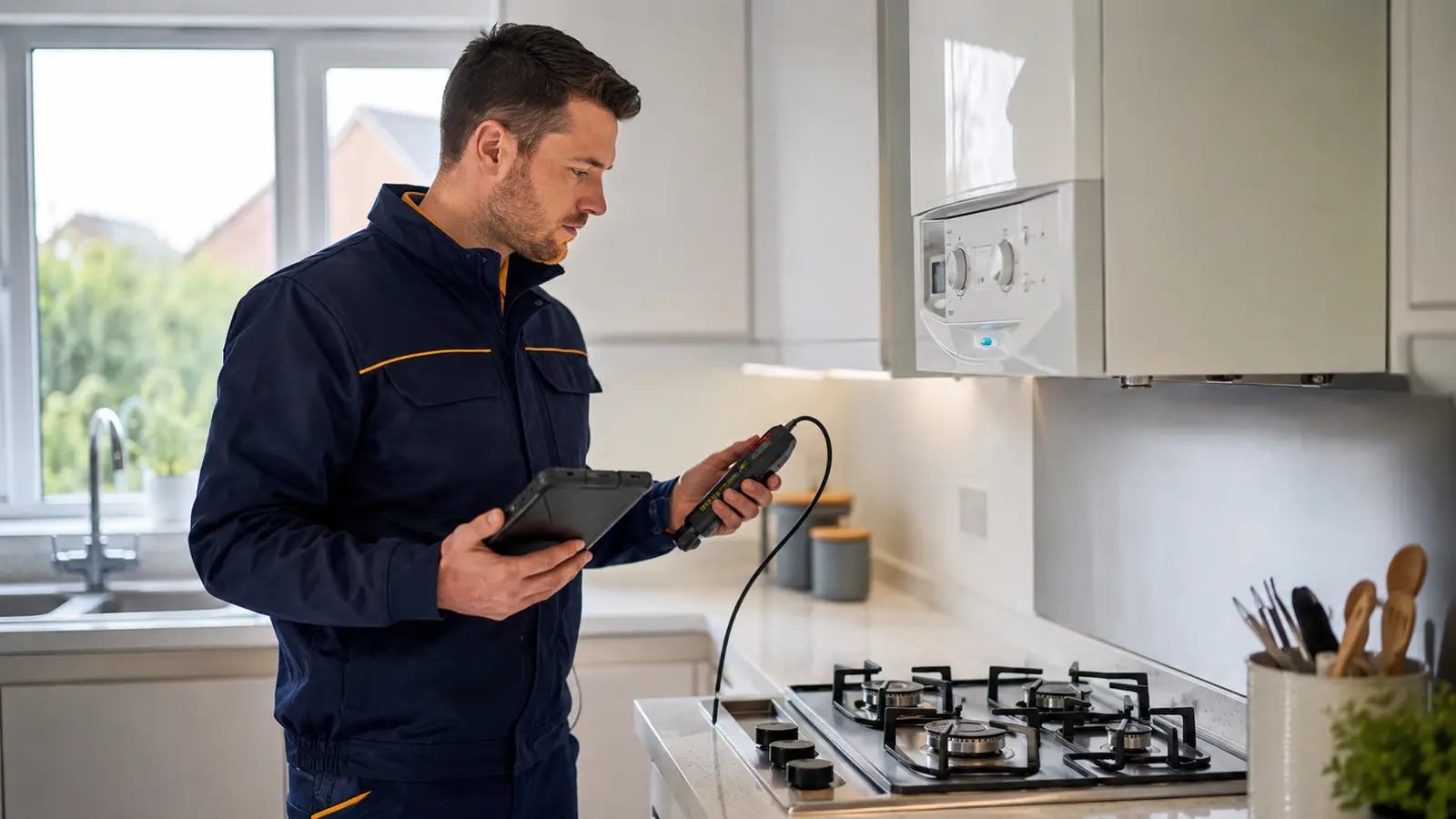
HSE's Gas Safe information describes an engineer's card as containing a photograph, registration information and an expiry date, with work categories on its reverse. Ask to see the card and relate it to the person attending. An old photo of a card in a previous message is not a substitute for checking the current appointment. If the identity or date is unclear, resolve that question before authorising gas work. Do not rely on a card belonging to someone who is not the person proposed for the task.
Look at the work categories as well as the front
The reverse of the card matters because the enquiry concerns specific equipment and work. Ask how the relevant category relates to your request, especially if a broad term such as heating repairs was used in the initial conversation. An engineer's card should not be treated as a universal permission for every gas appliance. The gas-cooker category and gas-fire category illustrate why the appliance relationship matters. The customer should be able to understand the relevant scope without being expected to infer it from a logo or a business's list of services.
A changed attending person requires a fresh check
If a different engineer is proposed after the original conversation, check that person's relevant information. A satisfactory check for one individual does not identify someone else who arrives later. Ask whether the change affects the task, scope or arrangements already agreed. This is a practical appointment decision rather than an assumption that every substitution is unsuitable. The point is that the information used to authorise gas work should match the real person who would perform it. Keep the revised identity and appointment details with the current proposal so earlier messages do not become misleading evidence of the new arrangement.
03
Use the official register when a point remains uncertain
Navigate to the real verification source
HSE's domestic questions direct consumers to Gas Safe Register for checking an engineer or business. Use the official Gas Safe Register website to obtain current verification guidance. A search result, vehicle sign or image of a badge is not the same as checking the relevant record. If you cannot resolve the question through the available information, ask the register for clarification. This website is the business's enquiry channel; it is not the official register and should not be used as the sole source for an independent credential check.
Distinguish the business from the individual
When requesting registration information, make clear whether you are checking the business identity or the engineer who would undertake the work. Those questions are related, but they should not disappear into one unexplained number in a message. Identify the proposed individual and task, then follow the register's current verification process. If the business name in a quotation differs from the name used during the enquiry, ask for an explanation before relying on the proposal. A clear commercial identity and the relevant individual competence both matter; neither should be inferred solely from the heading on a service page.
Do not fill an information gap with a reassuring assumption
If the provider has not supplied the relevant information, ask for it. An unanswered question about the engineer or category does not become resolved because the requested appointment is convenient or a price is attractive. Equally, a customer should not invent an adverse conclusion from a partial message without seeking clarification. The decision needs usable evidence for the actual task. Keep unresolved points explicit so somebody arranging the job on your behalf does not mistakenly treat them as completed checks. The booking route should follow clarification of the proposed person and scope, rather than replace it.
04
Match specialist enquiries to their real context
Commercial premises need an accurate equipment description
Tell the business if the request concerns commercial equipment or premises, and identify the appliance and intended work. A category relevant to a household boiler should not be assumed to cover commercial catering or another specialist installation. The commercial-gas page provides an enquiry route for that distinction. Ask which individual would perform the task and how suitability would be established. The existence of that route does not constitute confirmation that every commercial enquiry can be accepted. The proposal must deal with the installation you actually describe.
LPG should be identified before the task is agreed
If the installation uses LPG, state that in the enquiry instead of allowing a generic gas description to hide it. Use the LPG service category to describe the equipment and property context. Request the relevant competence information for the proposed work rather than relying on experience of a natural-gas appliance elsewhere. This page does not announce an independently verified LPG category for a named engineer. Its purpose is to make the customer's verification decision specific enough to avoid commissioning specialist work on the basis of an unrelated general assurance.
More than one appliance can mean more than one suitability question
A property may have a boiler and another gas appliance that the customer wants included in a visit. Identify each item and ask whether the proposed person and scope address all the requested work. Adding a second appliance in a later message should not silently expand the agreement. If a provider proposes different attendance arrangements for different tasks, keep those distinctions clear. This is particularly useful where an owner or agent approves a combined request but the person granting entry knows only about the first appliance.
The relevant check needs to match the complete agreed request.
05
Give the person at the property a useful verification brief
Delegated access should not erase the checks
If someone else will be present, explain who is expected, what gas work has been proposed and which information needs checking. A keyholder should not be left to infer the purpose of attendance from an unlabelled appointment time. Separately identify the person permitted to authorise additional work. An absent owner may need a record of what was confirmed, while the occupier needs a clear account of the attendance arrangement. The landlord enquiry page supports this coordination without assuming that responsibility has automatically transferred to the person opening the door.
Make doubts understandable before work starts
If something does not match the arrangement, pause the authorisation decision and seek clarification. Describe the actual discrepancy: a different individual, unexplained business identity, unclear card information or a category question. A precise concern is easier to resolve than a vague statement that the paperwork looks wrong. Do not ask someone to continue gas work merely to avoid an awkward conversation. The contact page is available for a business enquiry, while the official register supplies independent verification guidance. Use the route appropriate to the unresolved issue rather than assuming every question belongs to the same organisation.
06
Keep qualification, findings and commercial agreement separate
Registration does not decide a fault diagnosis or quotation
A relevant credential check addresses suitability for gas work. It does not by itself establish which component failed, whether replacement is the best option or whether a proposed price matches your preferred scope. Those decisions require the actual findings and commercial proposal. For an uncertain fault, the diagnostics category describes the investigation enquiry. Ask the provider to explain the basis for any remedy rather than using a credential as a substitute for an understandable recommendation. A useful purchasing decision combines the appropriate person, defined task and supported explanation.
A later concern needs the original appointment evidence
If you question completed work, keep the relevant proposal, findings and identity information available. State which installation and task the concern relates to. Use the business complaints route for the appropriate service discussion and the register's current guidance for questions about gas-work safety or registration. HSE identifies Gas Safe Register as a contact for concerns about a gas installation or engineer's work. An immediate safety concern still needs its appropriate response; collecting administrative evidence should not delay it. Do not disregard an existing warning or restriction while a complaint is being considered.
Questions about check our gas safe credentials in Nottingham
What am I checking when I ask to see a Gas Safe ID?
You are connecting the proposed gas work with the real attending person's identity and relevant categories. The check should answer a specific suitability question, rather than simply confirm that a card was shown.
Why does the reverse of the card matter?
It identifies work categories relevant to the engineer. Ask how the appropriate category relates to the appliance and task you are commissioning instead of relying only on the photograph or registration information.
Should I rely on a card photo sent for an earlier appointment?
Check the current attendance and information. A previous image may relate to another person or earlier date. It should not replace confirming the person and relevant details for the new job.
Does the website display a verified registration number for this business?
No independently verified number is asserted in this replacement page. Ask the business for the relevant registration information and use the official register to perform the appropriate check.
Where should I look up an engineer or business?
Use Gas Safe Register's official website and current verification guidance. HSE links to that route. A business's own page is useful for contact but is not an independent verification result.
Is a logo on a quotation sufficient evidence?
A logo alone does not answer the person-and-task question. Identify the proposed engineer, request the relevant information and check suitability for the work described in the actual proposal.
What if the engineer changes before the visit?
Confirm the replacement individual's details and relevant scope. Keep that change with the appointment information; an earlier check for another person should not be treated as identifying the new attendee.
Can one boiler-related category be assumed to cover a cooker?
Do not make that assumption. Identify the second appliance and ask about the relevant category and proposed work. The scope should address each item you want included.
How should I describe LPG during verification?
State that the installation uses LPG and identify the equipment and task. Ask for the relevant suitability information instead of treating a generic gas enquiry as confirmation of that specialist category.
Does a domestic enquiry establish commercial-catering competence?
No. Describe the actual commercial equipment and operation. The individual and category check should address that request rather than rely on information supplied for an unrelated domestic appliance.
What if I do not understand a category description?
Ask the provider to explain its relevance to the requested work and seek clarification through the official register if uncertainty remains. You are not expected to guess the answer from a code.
Can an agent arrange the checks for an absent owner?
Clarify who will obtain the information and who will be present at the property. The arrangement should preserve the relevant checks while keeping authorisation and access responsibilities distinct.
Does registration mean a proposed repair diagnosis is certainly correct?
It is not a substitute for findings that support the recommendation. Ask what was established, what remains uncertain and how the proposed remedy relates to the assessed installation.
Is a convenient appointment time a reason to skip verification?
No. Timing and suitability are separate decisions. Ask the relevant questions before commissioning gas work even when heating loss makes an early appointment desirable.
What should I do if a business name does not match the quotation?
Request an explanation of the relationship before relying on the proposal. Keep the clarified commercial identity together with the individual and work-category information relevant to the intended task.
Should a keyholder be expected to approve additional gas work?
Only give that role where it is actually authorised. Explain who can grant access and who can approve changes, so an identity check at the door does not become unintended spending authority.
Does checking an ID remove an existing appliance restriction?
No. Follow the issued restriction and arrange the relevant follow-up. A credential check concerns the proposed person; it does not itself establish that restricted equipment is safe to use.
Where do I raise a question about gas-work safety?
Follow Gas Safe Register's current consumer guidance for concerns about a gas installation or engineer's work. Use the appropriate immediate safety route where necessary rather than waiting for administrative correspondence.
Should I keep the scope when recording the engineer's details?
Yes. The information is most useful when it identifies the appointment and work it relates to. An isolated name or number does not explain what was proposed or carried out.
What is the next step after suitability has been clarified?
Review the actual task, attendance arrangement and charging basis before accepting the proposal. The credential check is one part of commissioning work, alongside a clear scope and commercial agreement.

 Check the ID card