
Skip to content
Based in West Bridgford · Serving Nottingham and surrounding areas GasSafety 247: +44 7888 885791
15 related services

Book Gas Safety Checks and Inspections in Nottingham

Arrange gas safety checks in Nottingham. Identify appliances, inspection purpose and access so the accepted checks and resulting records are defined.
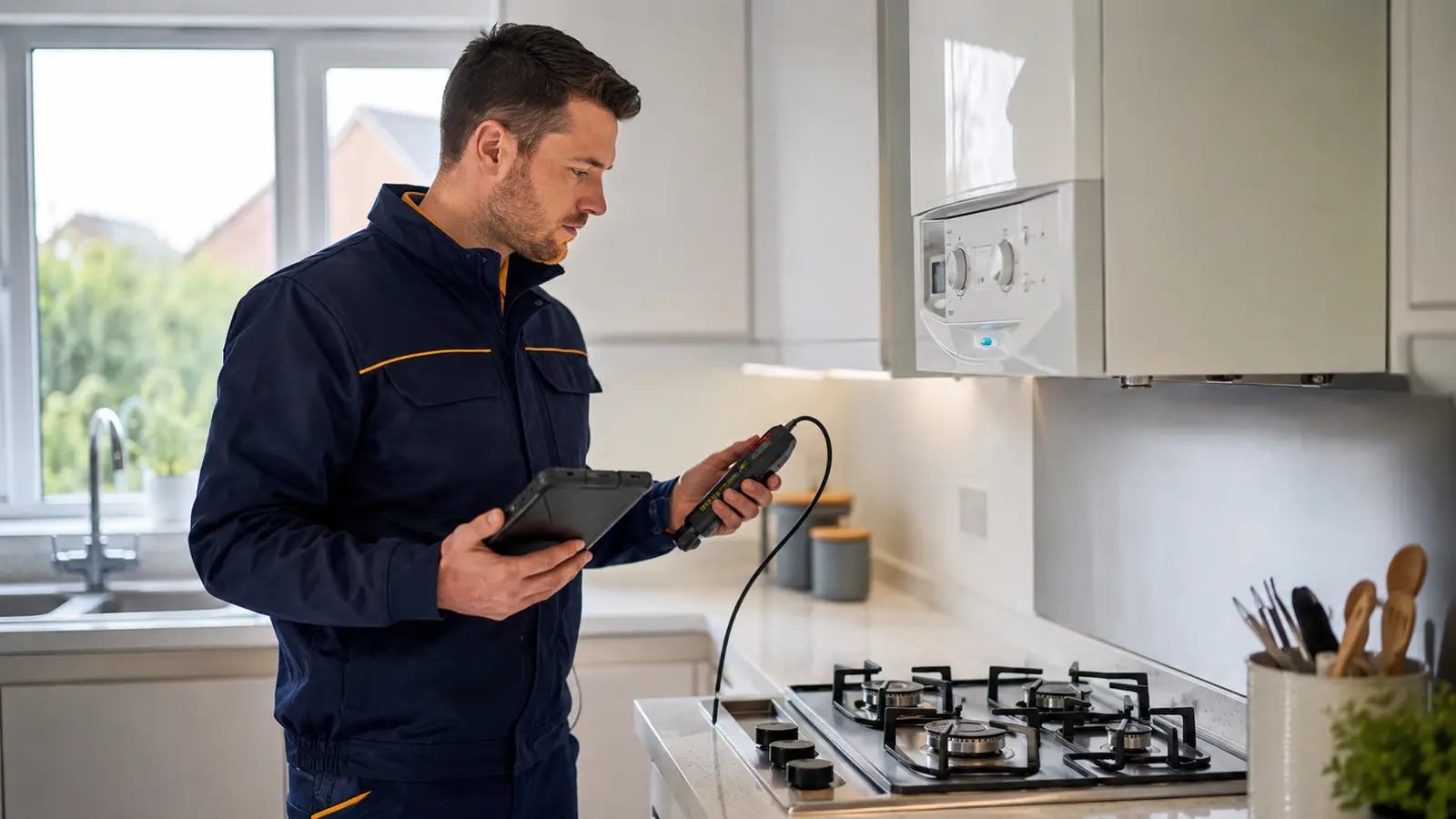
Gas engineer carrying out appliance and combustion checks in a UK homeCheck the ID card
and work category

Your service enquiry

Request a gas safety inspection for a Nottingham property or one of our surrounding target areas. GasSafety 247 can discuss the appliances involved, the purpose of the inspection and the record you need before an appointment is agreed. Tell us whether you are arranging a landlord check, investigating an appliance concern or seeking an assessment before taking responsibility for a property. Include the full address, appliance list, previous paperwork and access contact. Inspection, maintenance and repairs are different tasks: the booking should state which you are requesting and what happens if the checks identify further work.

15 related services

Choose the gas safety checks job you need

Each page explains the useful pre-visit details, checks and qualification boundaries.

Gas Safety Checks & Inspections

Domestic Gas Safety Inspection

Checks, booking details and next steps for domestic gas safety inspection.

Gas Safety Checks & Inspections

Domestic Gas Safety Record

Checks, booking details and next steps for domestic gas safety record.

Gas Safety Checks & Inspections

Homeowner Gas Safety Check

Checks, booking details and next steps for homeowner gas safety check.

Gas Safety Checks & Inspections

Annual Gas Appliance Inspection

Checks, booking details and next steps for annual gas appliance inspection.

Gas Safety Checks & Inspections

Boiler Safety Inspection

Checks, booking details and next steps for boiler safety inspection.

Gas Safety Checks & Inspections

Cooker and Hob Safety Inspection

Checks, booking details and next steps for cooker and hob safety inspection.

Gas Safety Checks & Inspections

Gas Fire Safety Inspection

Checks, booking details and next steps for gas fire safety inspection.

Gas Safety Checks & Inspections

Flue Safety Inspection

Checks, booking details and next steps for flue safety inspection.

Gas Safety Checks & Inspections

Gas Appliance Ventilation Check

Checks, booking details and next steps for gas appliance ventilation check.

Gas Safety Checks & Inspections

Combustion-Performance Analysis

Checks, booking details and next steps for combustion-performance analysis.

Gas Safety Checks & Inspections

Gas Tightness Testing

Checks, booking details and next steps for gas tightness testing.

Gas Safety Checks & Inspections

Gas Working-Pressure Testing

Checks, booking details and next steps for gas working-pressure testing.

Gas Safety Checks & Inspections

Complete Gas Installation Inspection

Checks, booking details and next steps for complete gas installation inspection.

Gas Safety Checks & Inspections

Post-Installation Gas Safety Verification

Checks, booking details and next steps for post-installation gas safety verification.

Gas Safety Checks & Inspections

Whole-Property Gas Safety Audit

Checks, booking details and next steps for whole-property gas safety audit.

All local routes

Gas Safety Checks across 100 areas

Choose the location that matches the property, then share the full postcode when you call or message.

Gas Safety Checks in West Bridgford01Gas Safety Checks in Edwalton02Gas Safety Checks in Gamston03Gas Safety Checks in Lady Bay04Gas Safety Checks in Compton Acres05Gas Safety Checks in Wilford06Gas Safety Checks in Silverdale07Gas Safety Checks in Clifton08Gas Safety Checks in Ruddington09Gas Safety Checks in Tollerton10Gas Safety Checks in Plumtree11Gas Safety Checks in Keyworth12Gas Safety Checks in Bunny13Gas Safety Checks in Bradmore14Gas Safety Checks in Gotham15Gas Safety Checks in East Leake16Gas Safety Checks in Costock17Gas Safety Checks in Stanford on Soar18Gas Safety Checks in Normanton on Soar19Gas Safety Checks in Sutton Bonington20Gas Safety Checks in Kegworth21Gas Safety Checks in Rempstone22Gas Safety Checks in Wysall23Gas Safety Checks in Willoughby on the Wolds24Gas Safety Checks in Widmerpool25Gas Safety Checks in Stanton on the Wolds26Gas Safety Checks in Normanton on the Wolds27Gas Safety Checks in Cotgrave28Gas Safety Checks in Cropwell Bishop29Gas Safety Checks in Cropwell Butler30Gas Safety Checks in Kinoulton31Gas Safety Checks in Hickling32Gas Safety Checks in Upper Broughton33Gas Safety Checks in Owthorpe34Gas Safety Checks in Radcliffe-on-Trent35Gas Safety Checks in Shelford36Gas Safety Checks in East Bridgford37Gas Safety Checks in Newton38Gas Safety Checks in Bingham39Gas Safety Checks in Saxondale40Gas Safety Checks in Aslockton41Gas Safety Checks in Whatton42Gas Safety Checks in Orston43Gas Safety Checks in Bottesford44Gas Safety Checks in Lowdham45Gas Safety Checks in Nottingham City Centre46Gas Safety Checks in The Meadows47Gas Safety Checks in Sneinton48Gas Safety Checks in Colwick49Gas Safety Checks in Bakersfield50Gas Safety Checks in Mapperley51Gas Safety Checks in Gedling52Gas Safety Checks in Carlton53Gas Safety Checks in Netherfield54Gas Safety Checks in St Ann's55Gas Safety Checks in Sherwood56Gas Safety Checks in Carrington57Gas Safety Checks in Basford58Gas Safety Checks in Bulwell59Gas Safety Checks in Bestwood60Gas Safety Checks in Arnold61Gas Safety Checks in Woodthorpe62Gas Safety Checks in Daybrook63Gas Safety Checks in Top Valley64Gas Safety Checks in Rise Park65Gas Safety Checks in Hucknall66Gas Safety Checks in Linby67Gas Safety Checks in Papplewick68Gas Safety Checks in Calverton69Gas Safety Checks in Burton Joyce70Gas Safety Checks in Lenton71Gas Safety Checks in Dunkirk72Gas Safety Checks in The Park73Gas Safety Checks in Wollaton74Gas Safety Checks in Beeston75Gas Safety Checks in Chilwell76Gas Safety Checks in Attenborough77Gas Safety Checks in Bramcote78Gas Safety Checks in Stapleford79Gas Safety Checks in Toton80Gas Safety Checks in Long Eaton81Gas Safety Checks in Sawley82Gas Safety Checks in Sandiacre83Gas Safety Checks in Risley84Gas Safety Checks in Breaston85Gas Safety Checks in Draycott86Gas Safety Checks in Borrowash87Gas Safety Checks in Ockbrook88Gas Safety Checks in Ilkeston89Gas Safety Checks in West Hallam90Gas Safety Checks in Heanor91Gas Safety Checks in Kimberley92Gas Safety Checks in Eastwood93Gas Safety Checks in Nuthall94Gas Safety Checks in Castle Donington95Gas Safety Checks in Loughborough96Gas Safety Checks in Quorn97Gas Safety Checks in Southwell98Gas Safety Checks in Newark-on-Trent99Gas Safety Checks in Mansfield100
Complete service information

Gas Safety Checks & Inspections: detailed service scope, booking and next steps

Explore this page

Choose an inspection that answers your actual property question

Annual record, condition concern or change of responsibility

The right starting point is the outcome you need. A landlord preparing an annual record has a different brief from an owner worried about an old gas fire, or a buyer asking what can be established before moving in. These enquiries may involve some of the same equipment, but they do not automatically have the same scope or produce interchangeable documents. When you contact GasSafety 247, describe the purpose in ordinary language. For example, explain that the letting agent has requested a landlord record, that a newly discovered appliance has no paperwork, or that you want an existing installation assessed before planning alterations.

The appliance list and property circumstances then help establish which inspection is appropriate. An appointment confirmation should identify that task rather than relying on the loose phrase gas certificate. This avoids ordering a document that does not answer the question you actually have.

Let the appliance inventory define the enquiry

Count appliances by what is installed, not only by what you normally use. A boiler, cooker and gas fire can require different attention even when they share one meter. An unused appliance should still be mentioned; so should a disconnected item if its status is unclear. Write down the appliance location and any accessible identification, without removing covers or moving connected equipment. If an agent is arranging the inspection, ask the occupier to confirm the list rather than copying an old inventory unquestioningly. A kitchen replacement, removed fire or changed boiler can make that inventory inaccurate.

Give the booking contact the corrected information and ask which items are included in the proposed inspection. A clear list supports a useful quotation and reduces the chance that the engineer discovers an additional appliance after the scope has already been agreed.

Understand what the inspection can and cannot provide

A defined assessment at the property

An inspection is a professional assessment of the relevant equipment and installation within an agreed scope. It is not a remote promise that every appliance will pass or that no maintenance will be necessary. Before attendance, ask which appliances and associated arrangements are being assessed, what access is required and what record will describe the findings. A useful confirmation also distinguishes the checks from optional servicing, fault diagnosis or replacement work. If your enquiry combines several needs, list them separately: a landlord record, a boiler service and investigation of an intermittent shutdown should not disappear into one unclear line on a booking.

The provider can then explain what can be combined and whether the tasks require different preparation. You should be able to compare the work actually completed with the scope you accepted, including any limitations that prevented part of the assessment.

Findings do not become repairs without an agreed change

An inspection can uncover a condition that needs further attention. That does not mean the original inspection price automatically includes parts, extended fault finding or a return visit. Ask how additional findings will be communicated, who can authorise work and what happens if the decision maker is unavailable. A landlord who lives elsewhere may need a separate approval contact from the tenant admitting the engineer. A homeowner may want an explanation before choosing between repair and replacement. The important commercial distinction is between an observed finding and an authorised remedy.

Request a description of the issue, the recommended next step and any cost or access implications. Where an immediate safety restriction is necessary, follow the engineer's instructions; routine approval discussions must not override it. Keep the inspection evidence and subsequent repair evidence together so the property history remains understandable.

Prepare the landlord and letting-agent brief

The regulatory essentials in one place

HSE landlord guidance describes landlord duties for relevant gas appliances and flues provided for tenants, including annual safety checks and separate maintenance responsibilities. It states that records must be retained for two years, supplied to existing tenants within 28 days and given to new tenants before occupation. It also explains an early-check arrangement of up to two months that can preserve the original deadline where its conditions apply. An annual check does not replace maintenance, and a service should not be assumed to include all required safety-check points.

Use the linked HSE guidance to confirm the requirements for your arrangement. For an enquiry, provide the last record, the due date, the appliances supplied and the tenancy or management contacts. Complex shared, mixed-use or ownership arrangements need a specific assessment of responsibility rather than a general assurance from a website.

Separate the person granting access from the person approving work

A letting appointment often involves several people. The tenant controls entry, the agent schedules the visit, the owner approves expenditure and a different team stores the record. Put those roles in the booking brief with current contact details. State whether the engineer may discuss findings directly with the occupier and how approval for additional work is obtained. If the owner needs a written proposal, arrange that channel before the appointment rather than leaving the engineer to locate it from the doorstep. Also decide where the completed paperwork should go.

A record sent only to an outdated agency address may be technically issued yet still fail to reach the people managing the property. Keeping responsibility clear makes the visit easier to arrange and gives everyone a reliable route for follow-up, without implying that an access contact has authority to agree every cost.

Arrange a homeowner's assessment around the concern

Explain the trigger rather than requesting a generic pass

Homeowners may seek an inspection after discovering missing records, changing how a room is used or becoming concerned about an appliance. Describe the event that prompted the request. A cooker being replaced, a fire that has not been used for years and a boiler affected by nearby building work each raise different questions. You do not need to diagnose the cause or decide which technical test is necessary. Provide the timeline, the equipment involved and any relevant documents, then ask what can be assessed during the proposed visit.

If you are planning other work, explain the sequence and which contractor is responsible for it. The resulting inspection brief should answer your practical concern and identify any boundaries. Avoid asking for a blanket guarantee about the whole home when only one appliance or part of the installation is being examined.

Property purchase and handover enquiries

For a purchase or ownership handover, make clear who can authorise attendance and release existing paperwork. The current occupier may have different information from the seller's agent, and a survey may have raised a question without identifying the appliance accurately. Share the relevant extract rather than asking an engineer to infer the issue from a short headline. State any decision deadline and ask whether the proposed assessment can provide information in time; do not assume a particular appointment or report turnaround. If access to a communal plant room or concealed route is controlled by another party, raise that early.

A visit with restricted access may produce useful findings but leave an important question unresolved. Ask how such limitations will be documented, and distinguish inspection evidence from warranties, future repair estimates or assurances about equipment that was outside the agreed scope.

Set out the appliance and installation context

Boilers, cooking appliances and fires

A booking that lists only a boiler may miss a cooking appliance or fire included in the property's responsibilities. Give each item its own entry, especially where equipment has changed since the previous record. Identify the room and whether the item is used, unused or believed to be isolated. You can share an accessible label or ordinary photograph if it helps identify the appliance, but identification does not establish condition. If the enquiry includes a cooker installation or a fire service, treat that as an additional task rather than assuming an inspection includes it.

The related service categories on this site let you describe those requests more precisely. For a boiler that also needs maintenance, use the boiler servicing route to explain that requirement. The goal is one accurate property brief with distinct work items, rather than several bookings that describe the same equipment differently.

Flue access, alterations and shared arrangements

Tell the provider about known building changes near an appliance or its associated route. Examples include a new enclosure, changed kitchen layout or work controlled by a building manager. This is preparation information, not a conclusion that the alteration is unsafe. If access beyond the ordinary appliance area may be needed, ask who must arrange it and what is required before the appointment can proceed. In a flat, a visible boiler does not mean every relevant area is within the occupier's control. In a house, storage or fitted furniture may affect ordinary access.

Do not dismantle panels or expose hidden parts to solve the problem yourself. Provide the facts, allow the professional to specify suitable access and clarify whether the initial visit can establish the full position. Any outstanding limitation should be explained rather than concealed by an apparently complete document.

Make Nottingham-area appointment information useful

Full address before neighbourhood shorthand

GasSafety 247 is based in Nottingham and targets the existing surrounding service areas shown on this site. The neighbourhood or town page helps select a relevant route, but the booking still needs a complete address and postcode. A familiar area name can cover more than one access arrangement or be used differently by an occupier and an agent. Include the property number, building or flat identifier, entrance information and a contact who can resolve uncertainty. If the address appears differently on the tenancy file and the door entry system, explain the difference.

That practical detail is more useful than repeating a location keyword. It helps establish where the inspection is requested and how the attending person can reach the correct property. A service-area page is not evidence that GasSafety 247 has a separate office or resident engineer in that neighbourhood.

Parking, keys and managed entrances

Give information that applies to the actual address. If parking is controlled, specify the arrangement that the occupier or building manager can confirm; do not assume a provider's vehicle has permission to use a resident bay. If entry requires a concierge, code or signed-in visitor, explain the procedure through an appropriate private booking channel. For a vacant rental, confirm where keys will be collected and who can answer questions once the engineer is inside. A narrow access window or shared entrance is relevant to scheduling even when the appliance itself is straightforward.

Ask what needs to be organised in advance, and avoid sending sensitive access details in publicly visible comments. These preparations help make an appointment workable without inventing local travel times, parking entitlements or guaranteed arrival windows for any of the 100 target areas.

Confirm the quotation before approving attendance

Compare the same scope across quotations

The meaningful price question is what the proposed charge covers. Ask whether the quote is for one defined inspection, how many appliances are included and which document is supplied. Also clarify whether a boiler service, extended diagnostic work or a return visit is separate. If one quotation includes additional work and another does not, their headline prices are not a fair comparison. Explain unusual access, an uncertain appliance inventory or a requirement for several record recipients before requesting the quotation. Those details may affect the work needed, even when no defect is ultimately found.

GasSafety 247 should confirm the relevant scope and commercial terms for your enquiry rather than relying on a price inferred from another customer's property. This page does not publish an unverified fixed fee, imply free extras or promise that inspection and remedial work can always be completed together.

Decide how changes will be approved

Agree the approval route for work beyond the original inspection. For a managed property, a spending limit and named authoriser can be useful, provided the instructions are clear and actually agreed. For an owner-occupied home, you may prefer a separate proposal once findings are available. Either way, ask what information you will receive before making a decision: the issue, recommended action, scope, price basis and likely need for further attendance. A refusal to approve an optional improvement should not be confused with permission to use equipment the engineer has restricted for safety.

Likewise, a budget limit cannot determine whether an inspection finding exists. Keep the commercial choice and the safety position clear. Written confirmation of changes helps avoid later uncertainty about what was requested, what was necessary and which work the original booking price included.

Follow the inspection from arrival to documented outcome

Reconcile the brief at the start of the visit

When the engineer arrives, check that the property and appliance list match the accepted booking. Mention changes made since the enquiry, including new symptoms, an appliance replacement or a previously unreported item. The person admitting the engineer should know which parts of the property can be accessed and who to contact if further permission is required. If several tasks have been booked, ask how they will be distinguished in the records. The inspection itself must be carried out by someone competent for the relevant work; the Gas Safe card's applicable categories matter, not simply the presence of a logo on a website.

You do not need to supervise technical procedures or request particular readings. Focus on ensuring the agreed scope, responsible contacts and available information are accurate so the professional can assess the real installation.

Understand completion, limitation and follow-up

At the end of attendance, ask what was assessed, whether anything could not be checked and what action remains. A useful handover distinguishes an inspection finding from a completed repair and from a recommendation that has not yet been accepted. If the appliance cannot be used, make sure the occupier and property manager understand the restriction. If another appointment is needed, identify its purpose rather than booking an undefined revisit. Request the relevant paperwork through the agreed channel and confirm that the inspected property and listed appliances are correct.

Keep quotations, work records and follow-up evidence linked to the inspection date. This produces a usable history for the next person managing the equipment. It also avoids treating a document title as a substitute for reading its findings or assuming that a later repair automatically changes every earlier entry.

Deal with incomplete access and unexpected findings

When the visit cannot cover the whole requested scope

An inaccessible appliance, missing key or unavailable shared area can prevent completion of part of the requested assessment. Ask what was achieved and what remains outstanding. Arrange the access needed for the next step rather than describing the visit as fully complete because someone attended. For an agent, record the reason and the responsible contact so the issue is not passed between departments without action. For an occupier, explain any practical constraint before another appointment is offered. There may be commercial implications for further attendance; these should be clarified with the provider.

Keep the communication factual, particularly if a due date is approaching. Attendance, attempted attendance and completed inspection are different events. A clear distinction supports the next booking and makes the property record easier to interpret without creating a false assurance about unexamined equipment.

When the inspection raises a repair decision

If a finding requires remedial work, request an explanation of the affected equipment and proposed response. The engineer should identify any immediate restrictions separately from longer-term options. You may need the landlord or another decision maker to approve the repair, but that approval process cannot remove a safety restriction. Ask whether a suitable repair can be planned, what evidence is needed and which work category applies. If the original enquiry was only an inspection, do not assume replacement components have already been selected or reserved.

For a recurring boiler fault, a boiler diagnostic assessment may be relevant; for ageing equipment, a boiler replacement survey may be a separate option. The appropriate next service depends on the finding. Keep the request specific so follow-up attendance is organised around a known question rather than repeating the whole initial inspection without a clear purpose.

Coordinate more than one property without merging their records

A portfolio schedule with property-specific briefs

A landlord or agent can prepare one enquiry covering several Nottingham-area addresses, but each property needs its own appliance list, access contact and requested record. Do not use the easiest property's details as the default for the whole portfolio. One address may have a tenant-supplied cooking appliance, another an agent-controlled key and a third a building-managed access requirement. List the due dates separately and identify any priority driven by the actual documents. The provider can then discuss an appropriate schedule, subject to real availability and scope.

Combining administration should not erase property differences or imply that all visits can occur on the same day. A simple address-by-address brief reduces uncertainty about what is being quoted. It also helps distinguish an inspection that has been completed from a booking, cancelled appointment or address still awaiting access arrangements.

Share only the information required for the next action

Keep portfolio communications useful and proportionate. The booking contact needs the inspected address, equipment information, responsible contacts and necessary access arrangements; they do not need unrelated tenant documents to understand the inspection request. Send sensitive details through a suitable private channel and make clear who is authorised to receive records. If an agent's team changes, update the distribution information instead of assuming previous instructions remain current. After each completed visit, check the property identifier and file the record with its own follow-up actions. A portfolio summary can track progress, but it should point to the individual evidence rather than replace it.

This approach supports reliable administration across the surrounding target areas while respecting that inspections, findings and commercial decisions remain tied to real properties and the people responsible for them.

Request the inspection with a complete booking brief

Information to send when you call or message

Contact GasSafety 247 with the property address and postcode, your role, the inspection purpose and an appliance-by-appliance list. Add the date of the previous relevant record if you have it, the decision deadline and the person arranging access. Mention known restrictions and any separately requested maintenance or fault investigation. A concise factual message is enough to start; you do not need to provide a technical diagnosis. If you are unsure which document has been requested, describe who asked for it and share the relevant wording privately.

Ask for confirmation of the service scope, record, commercial terms and appointment arrangements before treating the enquiry as a booking. This gives the provider a practical brief and gives you a clear basis for deciding whether the proposed visit addresses your actual property requirement.

What to confirm before the date is agreed

Check the inspected address, included appliances, access plan and the person who can authorise any change. Confirm whether servicing or repairs are separate, which paperwork is expected and where it will be sent. Ask how you will be informed if the original assessment cannot be completed or further work is required. If the provider proposes a different task from the one you initially requested, ask why it better fits the circumstances. Keep the answer with the booking confirmation so the occupier and approving contact work from the same brief.

For Nottingham and each surrounding target area, the final appointment depends on the real address, relevant work categories and availability discussed for that enquiry. Your next step is to call or WhatsApp those facts and request an appropriate inspection, rather than infer a confirmed booking from the existence of a local landing page.

Sources supporting this service information

Questions answered

Questions about gas safety checks & inspections in Nottingham

Can I request an inspection without knowing the name of the document I need?

Yes. Explain who has requested the paperwork and why. An agent's renewal request, a buyer's concern and a homeowner's condition enquiry are useful starting descriptions. Share the relevant wording and previous record privately if available. GasSafety 247 can discuss the appropriate task before a date is agreed. Do not order a document solely because its title sounds familiar; the assessment and record should answer the purpose of your enquiry.

Should an unused gas fire appear on the booking appliance list?

Include it and explain its status. A fire that has not been used recently should not simply disappear from the enquiry because the household relies on the boiler. State whether it remains connected, is believed to be isolated or has uncertain history. The provider can clarify how it affects the inspection scope. Do not attempt to establish its condition by lighting it or altering its connection before the visit.

What if my previous record names an appliance that has been removed?

Provide the previous document and a current description of the property. Identify the removed item, any replacement and what paperwork records that change. The old list is useful history but should not be treated as a current inventory without checking. Ask that the inspection request reflects the installation now present. If you do not know how the removal was carried out, make that uncertainty explicit rather than describing it as professionally completed.

Can one enquiry cover both a boiler and a gas cooker?

Yes, list both as separate items and ask what the quoted inspection covers. Include any other connected appliances rather than limiting the message to the two most frequently used. A multi-appliance enquiry may involve different access and work-category considerations. If the cooker also needs installation or repair, describe that additional request separately. Agreement to inspect an appliance does not automatically include making changes to it.

How do I avoid confusing a safety inspection with a boiler service?

State the two requested outcomes separately in the booking. Ask which checks and record relate to the inspection and which maintenance tasks relate to servicing. If you want both considered at one attendance, say so before agreeing the scope and price. Do not rely on a general phrase such as annual visit to define the work. The confirmation should allow you to understand which task was completed and which remains outstanding.

Does a gas safety enquiry confirm that GasSafety 247 can work on LPG?

No. Identify LPG explicitly and request confirmation of suitability for the equipment and work involved. The presence of an LPG category on the site allows the enquiry to be routed; it does not establish the categories of a specific attending engineer. The same principle applies to commercial equipment. Confirm the relevant capability before relying on a booking rather than assuming all fuel types are covered by a domestic inspection description.

What details help when the inspection is for a flat rather than a house?

Provide the flat identifier, building entrance, access contact and the appliance locations. Mention any relevant area controlled by a concierge, manager or building owner. Explain who can arrange permission if the engineer needs access beyond the flat. These details help establish the workable scope and appointment arrangements. They should describe the actual building rather than presume that every Nottingham flat has the same heating system or access restrictions.

Can the tenant let the engineer in while the landlord approves additional work remotely?

That arrangement can be discussed, but the roles must be clear before attendance. Give the provider a current approval contact and explain how that person can be reached. Confirm whether expenditure requires a written proposal or has an agreed limit. The tenant granting entry should not be assumed to have authority to approve every charge. Any immediate equipment restriction must still be understood by the occupier and property manager.

Should I send my entire tenancy file with an inspection request?

Usually the useful starting information is much narrower: address, appliances, purpose, previous relevant record, due date and responsible contacts. Do not send unrelated identity or financial documents simply to make the enquiry appear complete. If a specific document is needed, ask why and use an appropriate private channel. A focused brief helps the provider understand the task while keeping tenant information separate from material needed to arrange the inspection.

What if the agent's office address appears where the inspected property should be identified?

Raise the discrepancy and provide the exact address of the property requiring attendance. Administrative, invoice and inspected-property addresses serve different purposes and should not be substituted for each other. Ask the provider to confirm the correct property identifier in the booking and review the completed record when received. If an earlier document appears inaccurate, seek clarification rather than silently editing professional findings yourself.

Can I book several surrounding-area properties in one message?

Yes. Use a separate entry for each address, with its own appliance list, deadline and access contact. That allows GasSafety 247 to discuss a schedule and scope based on real property differences. Do not assume that grouping the enquiry guarantees one attendance day or a particular discount. Keep the records and follow-up actions distinct even when the same agent or owner manages the whole portfolio.

What should I ask if the quotation mentions only a certificate fee?

Ask which inspection that fee represents, how many appliances are included and what limitations or extras apply. Establish whether servicing, diagnosis, remedial work and further attendance are separate. A document name alone does not explain the work behind it. Request confirmation of the commercial terms for your actual property so you can compare like-for-like quotations and understand what you are agreeing to purchase.

Should furniture or fitted panels be removed before the inspection?

Describe any known access restriction first and ask what preparation is appropriate. Clear ordinary clutter where safe, but do not dismantle an appliance, fitted enclosure or connected equipment to make the inspection easier. Some access arrangements need competent work or another responsible party's permission. If preparation cannot be completed, tell the provider before attendance so the possible limitation and next step can be discussed.

What happens if a communal area cannot be opened on the inspection day?

The provider must explain what can be assessed and what remains inaccessible. Contact the person responsible for that area and arrange the access required for the next step. Keep a factual record of the limitation and do not assume the original scope has been completed simply because the engineer attended. Ask whether further attendance has a separate charge and what needs to change before another appointment is useful.

Is a due-date reminder the same as a confirmed appointment?

No. A reminder identifies an administrative task; it does not establish an accepted booking, workable access or completed inspection. Contact the provider with the current property details and request confirmation of the agreed date and scope. An agent should track due dates, appointment status and received records separately. That makes it easier to see which address still needs action rather than treating every reminder response as completed compliance work.

Can I request a guaranteed pass before agreeing to pay for the inspection?

No appropriate inspection can guarantee findings before the installation is assessed. You can ask what the charge covers, which record is produced and how defects or limitations will be explained. Those are reasonable commercial questions. A promised outcome regardless of the appliance condition would undermine the purpose of the assessment. Plan for the possibility that the inspection produces further actions rather than assuming the preferred result can be purchased in advance.

Will a follow-up repair erase the original inspection findings?

Keep the original record and the evidence of subsequent action together. Ask the engineer what documentation will describe the repair and whether any further assessment is needed. Do not overwrite a historical finding to make the file look simpler. A property history is more useful when it shows the inspection, the decision taken and the work completed. The responsible professional should clarify how the relevant records relate to one another.

What if the person approving the quote cannot be reached during attendance?

Agree an alternative contact or approval process beforehand. If neither is available, the provider should clarify how work outside the accepted scope will be handled. Do not assume the occupier can make an unlimited spending decision or that an engineer must wait indefinitely. Any safety restriction remains separate from the commercial approval question. A clear escalation contact makes follow-up easier when an inspection produces an unexpected finding.

Does a Nottingham neighbourhood page mean there is a branch in that area?

No. GasSafety 247 is Nottingham-based; the location pages identify target service areas and relevant enquiry routes. They do not establish separate offices, locally resident engineers or previous jobs at those addresses. Use the full property postcode when enquiring and confirm the proposed appointment directly. Local page availability should not be interpreted as a promise of attendance time, equipment eligibility or a particular engineer's proximity.

Which information is most useful for requesting the next inspection now?

Send the complete address, your role, the reason for the inspection, the current appliance list and the previous relevant paperwork if you have it. Add the practical deadline, access contact and any additional service request. Ask GasSafety 247 to confirm scope, commercial terms and arrangements. This gives you a concrete basis for an appropriate booking and avoids spending time trying to diagnose the installation or select a document without enough context.

Speak directly with GasSafety 247

Need to discuss gas safety checks?

Call or WhatsApp with the property postcode, appliance and the work or fault you need assessed.

Content updated:

Call nowWhatsApp