
Skip to content
Based in West Bridgford · Serving Nottingham and surrounding areas GasSafety 247: +44 7888 885791
15 related services

Request Landlord Gas Safety Checks and Records in Nottingham

Book a landlord gas safety enquiry in Nottingham. Coordinate appliances, due dates and tenant access; commission maintenance separately where required.
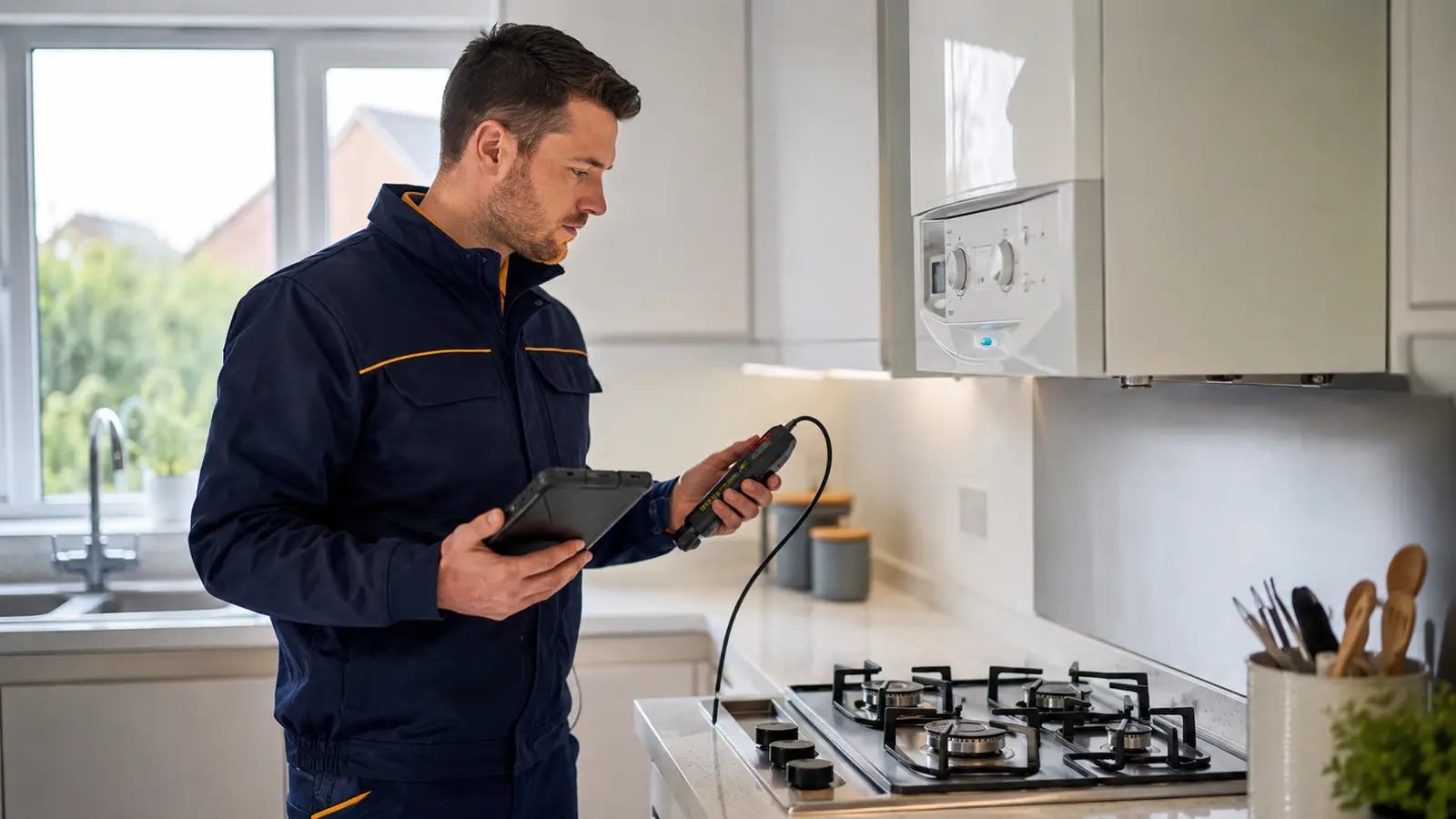
Gas engineer carrying out appliance and combustion checks in a UK homeCheck the ID card
and work category

Your service enquiry

Request gas safety checks, appliance maintenance or repairs for a Nottingham rental property through GasSafety 247. Give the business a property-specific brief: the supplied appliances, required task, existing records, access contact and person approving expenditure. Landlords, letting agents and portfolio coordinators can discuss a defined appointment or an appropriate sequence of work. Inspection, servicing and remedial work should remain separate in the agreement even when attendance is coordinated. Call or WhatsApp with the actual address and management requirements to arrange the next suitable step.

15 related services

Choose the landlord gas safety job you need

Each page explains the useful pre-visit details, checks and qualification boundaries.

Landlord Gas Safety & Compliance

Landlord Gas Safety Record

Checks, booking details and next steps for landlord gas safety record.

Landlord Gas Safety & Compliance

Annual Landlord Gas Safety Inspection

Checks, booking details and next steps for annual landlord gas safety inspection.

Landlord Gas Safety & Compliance

Multiple-Appliance Gas Safety Record

Checks, booking details and next steps for multiple-appliance gas safety record.

Landlord Gas Safety & Compliance

HMO Gas Safety Inspection

Checks, booking details and next steps for hmo gas safety inspection.

Landlord Gas Safety & Compliance

Letting-Agent Gas Safety Inspection

Checks, booking details and next steps for letting-agent gas safety inspection.

Landlord Gas Safety & Compliance

Portfolio Landlord Gas Safety Checks

Checks, booking details and next steps for portfolio landlord gas safety checks.

Landlord Gas Safety & Compliance

Change-of-Tenant Gas Safety Check

Checks, booking details and next steps for change-of-tenant gas safety check.

Landlord Gas Safety & Compliance

Pre-Tenancy Gas Safety Inspection

Checks, booking details and next steps for pre-tenancy gas safety inspection.

Landlord Gas Safety & Compliance

Boiler Service with Landlord Record

Checks, booking details and next steps for boiler service with landlord record.

Landlord Gas Safety & Compliance

Cooker Check with Landlord Record

Checks, booking details and next steps for cooker check with landlord record.

Landlord Gas Safety & Compliance

Gas Fire Check with Landlord Record

Checks, booking details and next steps for gas fire check with landlord record.

Landlord Gas Safety & Compliance

Gas Safety Remedial Work

Checks, booking details and next steps for gas safety remedial work.

Landlord Gas Safety & Compliance

Gas Safety Renewal Reminders

Checks, booking details and next steps for gas safety renewal reminders.

Landlord Gas Safety & Compliance

Urgent Expired Gas Safety Record Appointment

Checks, booking details and next steps for urgent expired gas safety record appointment.

Landlord Gas Safety & Compliance

Digital Gas Safety Record Management

Checks, booking details and next steps for digital gas safety record management.

All local routes

Landlord Gas Safety across 100 areas

Choose the location that matches the property, then share the full postcode when you call or message.

Landlord Gas Safety in West Bridgford01Landlord Gas Safety in Edwalton02Landlord Gas Safety in Gamston03Landlord Gas Safety in Lady Bay04Landlord Gas Safety in Compton Acres05Landlord Gas Safety in Wilford06Landlord Gas Safety in Silverdale07Landlord Gas Safety in Clifton08Landlord Gas Safety in Ruddington09Landlord Gas Safety in Tollerton10Landlord Gas Safety in Plumtree11Landlord Gas Safety in Keyworth12Landlord Gas Safety in Bunny13Landlord Gas Safety in Bradmore14Landlord Gas Safety in Gotham15Landlord Gas Safety in East Leake16Landlord Gas Safety in Costock17Landlord Gas Safety in Stanford on Soar18Landlord Gas Safety in Normanton on Soar19Landlord Gas Safety in Sutton Bonington20Landlord Gas Safety in Kegworth21Landlord Gas Safety in Rempstone22Landlord Gas Safety in Wysall23Landlord Gas Safety in Willoughby on the Wolds24Landlord Gas Safety in Widmerpool25Landlord Gas Safety in Stanton on the Wolds26Landlord Gas Safety in Normanton on the Wolds27Landlord Gas Safety in Cotgrave28Landlord Gas Safety in Cropwell Bishop29Landlord Gas Safety in Cropwell Butler30Landlord Gas Safety in Kinoulton31Landlord Gas Safety in Hickling32Landlord Gas Safety in Upper Broughton33Landlord Gas Safety in Owthorpe34Landlord Gas Safety in Radcliffe-on-Trent35Landlord Gas Safety in Shelford36Landlord Gas Safety in East Bridgford37Landlord Gas Safety in Newton38Landlord Gas Safety in Bingham39Landlord Gas Safety in Saxondale40Landlord Gas Safety in Aslockton41Landlord Gas Safety in Whatton42Landlord Gas Safety in Orston43Landlord Gas Safety in Bottesford44Landlord Gas Safety in Lowdham45Landlord Gas Safety in Nottingham City Centre46Landlord Gas Safety in The Meadows47Landlord Gas Safety in Sneinton48Landlord Gas Safety in Colwick49Landlord Gas Safety in Bakersfield50Landlord Gas Safety in Mapperley51Landlord Gas Safety in Gedling52Landlord Gas Safety in Carlton53Landlord Gas Safety in Netherfield54Landlord Gas Safety in St Ann's55Landlord Gas Safety in Sherwood56Landlord Gas Safety in Carrington57Landlord Gas Safety in Basford58Landlord Gas Safety in Bulwell59Landlord Gas Safety in Bestwood60Landlord Gas Safety in Arnold61Landlord Gas Safety in Woodthorpe62Landlord Gas Safety in Daybrook63Landlord Gas Safety in Top Valley64Landlord Gas Safety in Rise Park65Landlord Gas Safety in Hucknall66Landlord Gas Safety in Linby67Landlord Gas Safety in Papplewick68Landlord Gas Safety in Calverton69Landlord Gas Safety in Burton Joyce70Landlord Gas Safety in Lenton71Landlord Gas Safety in Dunkirk72Landlord Gas Safety in The Park73Landlord Gas Safety in Wollaton74Landlord Gas Safety in Beeston75Landlord Gas Safety in Chilwell76Landlord Gas Safety in Attenborough77Landlord Gas Safety in Bramcote78Landlord Gas Safety in Stapleford79Landlord Gas Safety in Toton80Landlord Gas Safety in Long Eaton81Landlord Gas Safety in Sawley82Landlord Gas Safety in Sandiacre83Landlord Gas Safety in Risley84Landlord Gas Safety in Breaston85Landlord Gas Safety in Draycott86Landlord Gas Safety in Borrowash87Landlord Gas Safety in Ockbrook88Landlord Gas Safety in Ilkeston89Landlord Gas Safety in West Hallam90Landlord Gas Safety in Heanor91Landlord Gas Safety in Kimberley92Landlord Gas Safety in Eastwood93Landlord Gas Safety in Nuthall94Landlord Gas Safety in Castle Donington95Landlord Gas Safety in Loughborough96Landlord Gas Safety in Quorn97Landlord Gas Safety in Southwell98Landlord Gas Safety in Newark-on-Trent99Landlord Gas Safety in Mansfield100
Complete service information

Landlord Gas Safety & Compliance: detailed service scope, booking and next steps

Explore this page

Turn the property-management requirement into named work items

An annual record, a service and a repair are different requests

Start by listing the outcomes you need at the property. A safety-check record answers an inspection requirement, planned maintenance concerns the equipment's service scope, and a repair addresses an identified or investigated fault. These tasks may involve the same boiler but should not collapse into one undefined annual visit. Tell GasSafety 247 which document, function or maintenance requirement prompted the enquiry. If an agent's system uses a short label, add the actual equipment and outcome behind it. The gas safety checks hub provides the inspection route, while boiler servicing and boiler repairs describe those separate tasks.

A coordinated proposal should name what is included and what would require another agreement, leaving the management record accurate about the work actually commissioned.

A property ticket should preserve the occupier's practical concern

A maintenance system can reduce a detailed tenant report to a headline such as boiler issue. Include the original observations that matter: which function is affected, when the change was noticed and any visible message. State what is reported by the occupier and what a professional has already established. If the request is purely planned, say that instead of presenting it as a fault. The provider can then distinguish inspection, maintenance and diagnosis in its proposed scope. A clear brief avoids commissioning an ordinary service when the customer needs restoration of hot water, or asking for a repair when the main requirement is a particular record.

It also allows the responsible person to explain the appointment accurately to the occupier rather than promising every gas-related issue will be resolved in one attendance.

Establish the duties and the actual letting arrangement

Keep the regulatory essentials concise and sourced

HSE landlord guidance describes maintenance duties and annual safety checks for relevant appliances and flues supplied for tenants. It explains retention of safety-check records for two years, copies for existing tenants within 28 days and copies for new tenants before occupation. Maintenance and the annual inspection are separate responsibilities; neither should be assumed to replace the other. Use the current HSE material to confirm the requirements applying to the letting arrangement. The scope guidance on this site supports a service enquiry, not a legal determination for every lease, shared or mixed-use property.

Tell the provider what equipment and record you are requesting, and seek appropriate advice where responsibility is unclear.

Complex ownership or shared equipment needs specific clarification

If the rented unit uses equipment or routes managed by another owner or building manager, describe that arrangement and the information you hold. A private appliance list may not explain a shared plant room or common access requirement. Identify who can provide relevant records and permission for the assessment. Do not assume that a property-management contract, a tenant's description or a page on this website determines every party's duties. The appointment needs a clear commissioning instruction and scope, while unresolved legal responsibility should be addressed through the applicable authoritative guidance and advice.

Keeping those questions visible helps prevent a limited visit from being represented as proof that all shared arrangements have been assessed. The provider should know which items are within the request and what evidence or access remains outside it.

Build an inventory from current equipment

Correct the list when the installation has changed

Check the appliances against current information from the property rather than copying a previous record unquestioningly. A removed fire, new cooker or replacement boiler can make an older list inaccurate. Identify each known item, its location and whether it is supplied by the landlord or has another ownership arrangement. You can record uncertainty without resolving it by guesswork. Ask the occupier for ordinary identification or accessible photographs where appropriate, not customer gas work. Send relevant installation or repair documents with the inventory. The proposed inspection or maintenance scope can then address actual equipment instead of repeating an outdated count.

If an additional item is discovered during attendance, the provider should explain how it affects the agreement and any necessary further decision.

Unused items should be described by their known status

Tell the provider about an appliance that is unused, believed to be disconnected or has unclear paperwork. The phrase not used should not be treated as a technical finding that resolves its status or responsibility. Share the document supporting a professional change where you have one. If the status is unknown, explain that as part of the enquiry so suitable assessment can be considered. Do not ask a tenant to disconnect equipment or inspect concealed fittings to settle the question. A current inventory should separate observed use from recorded work and uncertainty.

That helps the professional define the scope and gives the landlord a usable property history, without falsely representing an appliance as removed, isolated or assessed on the basis of a casual description.

Connect the owner, agent and occupier roles

Entry, purchasing authority and record handling can belong to different people

Name the person arranging the appointment, the person granting entry, the person authorising work and the recipient of completed records. These may be one individual or several. Give reliable contact details directly through the agreed channel and explain any spending or approval boundary. A tenant's consent to attendance does not automatically authorise additional expenditure on the owner's behalf. An agent may have delegated authority that should be made clear rather than inferred from its title. The provider needs a practical route for discussing findings and obtaining a commercial decision.

This is particularly helpful when the owner lives elsewhere. The visit can then proceed against a defined task while any further proposal is sent to the right person, instead of leaving the occupier to interpret an estimate they are not authorised to accept.

Record responsibility should survive a change of contact

If an agent, owner representative or management team changes, update the recipients and provide the current property reference. Records sent to a former contact can be difficult to retrieve even when the professional work was completed. Ask where the new documents will be supplied and who ensures they reach the people who need them. Keep access arrangements and record distribution separate in the brief. A person admitting the engineer may not maintain the landlord's files, and a head-office inbox may not communicate promptly with the occupier.

The management arrangement should specify the actual workflow without this page inventing a portal, automated reminder or delivery guarantee. Accurate contacts make the service useful beyond attendance by connecting the findings with the responsible party's next action.

Agree access with the occupier before treating a visit as confirmed

The available window and authorised entry need practical coordination

Ask the occupier about a workable appointment window and identify how entry will be arranged. The provider should receive a confirmed access contact rather than only an owner's instruction to attend. If an agent holds keys, explain the agreed handover and permission directly, keeping sensitive details out of public content. Mention a managed entrance or another area requiring separate consent. An appointment request is not evidence of entry or completed work. If access changes, update both the occupier and provider with the revised arrangement. HSE guidance addresses landlords' access duties and says not to force entry; use its current advice for the actual circumstances rather than treating a service booking as legal authority.

The practical aim is a legitimately arranged visit with clear communication about who will be present.

A failed attendance needs a recorded next action

If entry cannot be obtained, keep the actual attendance or correspondence record and ask what arrangement is needed next. Do not mark the inspection or maintenance complete merely because a visit was requested or an engineer attended the address. Clarify the provider's terms for the unsuccessful attendance and another appointment. The landlord should follow the relevant guidance and advice for unresolved access, while the service enquiry identifies the practical obstacle. Avoid a universal claim that a particular number of messages or attempts satisfies every legal situation.

A useful management record explains what happened and what remains outstanding. The next booking can then address the real access issue instead of reproducing the same unsuccessful arrangement without any change.

Plan dates from real records and requirements

Distinguish a due date from an appointment request

Use the actual previous document and applicable requirement to establish the date you are working towards. State that date in the enquiry, along with any relevant uncertainty about the record. A reminder generated from an old management file may no longer reflect the equipment or latest completed work. Ask for realistic appointment arrangements rather than assuming the preferred date is already available. Keep a requested slot, a confirmed appointment and a completed task as separate statuses in your administration. This prevents a calendar entry from becoming false evidence of compliance.

If further work is identified, record its own next step and timing rather than treating the original inspection date as proof that the remedy has also been completed.

Coordinate tasks without merging their records

An owner may want a boiler service and an inspection arranged near the same time for convenience. Discuss coordination but preserve each work item, equipment scope and completed record. A convenient combined date does not mean every maintenance or inspection requirement has an identical deadline or content. If the property has other appliances, specify whether they are included in the inspection and whether you also want maintenance for them. The provider should state what can be proposed and what needs another arrangement. Keep any separate recommendation in the file with its approval status.

This allows the landlord or agent to benefit from practical coordination while retaining a truthful account of which tasks were performed and which still need attention.

Arrange fault investigation and repairs for occupied properties

The tenant report should inform the diagnostic scope

Provide the visible symptoms, affected function, relevant history and previous reports when requesting a breakdown assessment. If the cause is unclear or the fault recurs, the boiler diagnostics category can support a defined investigation. State whether the occupier has heating, hot water or a particular outlet complaint, without interpreting the cause remotely. The provider can then propose an assessment and explain its charging basis. A landlord should not select a component solely because several tenants described similar problems. The next decision should follow findings at the actual installation.

If an existing provider offers follow-up for earlier work, review its real terms before commissioning another intervention. Keep that history available so a new appointment does not lose the evidence behind previous decisions.

Additional expenditure needs an approval route

Set out who can authorise a remedy after diagnosis and whether written approval is required. If an agent has a limit, state it in the booking brief and explain how a larger proposal reaches the owner. An occupier should not be expected to decide costs beyond their authority simply because they are present. Ask the provider to distinguish findings, recommended work and anything already completed under the agreed scope. Safety instructions remain relevant while commercial approval is obtained. Retain the accepted proposal and any variation with the completed repair record.

A clear route makes the response practical without promising unlimited repairs, automatic authorisation or a restoration time that has not been confirmed for the appliance and circumstances.

Make warning notices and remedial work traceable

The complete notice belongs in the follow-up brief

If another professional or emergency service has issued a notice, supply it in full and identify the equipment concerned. Explain which remedial assessment or work is being requested and which restrictions remain. Do not describe the property as cleared for ordinary use unless the relevant evidence supports that statement. The provider should begin from the documented position rather than a shortened management-ticket headline. Ask what the proposed scope will address and whether another responsibility or access requirement remains. Keep emergency response separate from commercially arranged follow-up.

For a suspected gas leak, contact the national gas emergency service on 0800 111 999 rather than wait for a routine service message. The appointment should be considered only with the relevant safety context understood.

Completion evidence should connect to the identified issue

When remedial work is completed, retain the record describing the task and its outcome alongside the finding that prompted it. A repair invoice alone may not make that relationship clear if it lists only a component. Ask what limitation or separate recommendation remains. If another provider performs the remedy, keep its evidence without altering the original inspection or diagnostic record. The property's history should show the initial finding, the approved work and the actual follow-up result. This prevents a recommendation from being remembered as completed simply because a quotation was issued.

It also helps future professionals understand what has changed and which question was resolved, rather than repeating a general request to recheck everything without the relevant documents.

Keep inspection, maintenance and management evidence usable

Label records by task and actual equipment

Store the completed documents against the property and appliance or inspection scope they describe. An inspection record, service record, diagnostic report and installation handover can serve different purposes. Keep those distinctions visible in filenames or the management system, using dates and real references where available. If a document appears to identify the wrong appliance or address, query the issue rather than filing it as adequate because a visit occurred. A useful record should support the next appointment and responsible person's decisions. The service provider can explain what it supplies, but the landlord or agent must also know where the evidence is kept.

This page does not promise an automated compliance platform or claim that every record has been reviewed professionally before you provide it.

Distribution and retrieval should be planned before the appointment

Identify the recipients and any practical document requirement when booking. If the occupier needs an accessible copy or the owner uses a particular management reference, explain that directly. Ask the provider what form it can supply and how a missing or unclear record should be queried. Keep completed-work evidence distinct from a reminder, booking confirmation or payment receipt. A record that cannot be located later makes continuity difficult even when attendance took place. The management workflow should support retrieval without changing the original findings or removing their limitations.

If you move records between systems, preserve the complete documents and associated references. That creates an accurate history rather than a green status imported without the evidence explaining what actually happened.

Prepare for a tenancy, ownership or agent handover

Update the equipment and outstanding-work position

Before transferring management information, establish which appliances are currently present and which recommendations remain unresolved. Use existing documents and current reports instead of copying an inventory with no check for changes. State the next work being requested and the decision deadline, while avoiding a promise that every issue can be resolved before it. If an appliance was replaced or removed, include the relevant evidence so the next responsible person does not inherit an inaccurate list. Keep a handover bundle that distinguishes historical records, completed follow-up and future tasks.

A service enquiry can then address the actual gap. It should not be used to manufacture a clean history by describing every previous recommendation as complete without proof.

A vacant property still needs a defined brief

Explain whether the property is empty, how authorised entry is arranged and what equipment or condition has changed since the last record. If the history raises a concern, provide the facts and ask what assessment is appropriate. An unoccupied address does not automatically remove equipment questions or mean that access is unrestricted. Identify who can authorise work and receive findings while no tenant is present. The proposed appointment should say whether it is an inspection, maintenance, diagnosis or a survey for a planned change. If another contractor is preparing the property, provide the sequence and relevant contacts.

This helps the next occupier's requirements connect with real completed work rather than a general statement that the property was ready because a booking appeared on the calendar.

Supply purchasing details without obscuring the service instruction

References and invoicing arrangements should be settled at enquiry

Tell GasSafety 247 if your organisation requires a purchase-order reference or written instruction before attendance. Identify the commissioning party and the invoice contact rather than leaving the provider to infer them from a tenant's message. If a management platform uses a ticket number, include it alongside the address and actual requested task. A reference identifies a transaction; it does not describe the work or establish permission for every subsequent remedy. Ask whether the proposed arrangement can accommodate your purchasing requirements before treating the appointment as approved.

Where several departments are involved, keep the professional brief understandable on its own. The equipment, required outcome and approval boundary should remain clear even if the accounting reference changes. This allows an owner to reconcile the eventual charge with an agreed task instead of discovering that a general maintenance authorisation was interpreted more broadly than intended.

Query an apparent discrepancy against the agreed and completed scope

If a charge or document appears inconsistent with the instruction, compare it with the accepted proposal, any authorised variation and the actual work record. Ask a specific question about the difference instead of relying on a shortened ticket description. Inspection attendance, diagnostic time and a separately accepted repair can represent distinct items; the particular agreement determines what was commissioned. Preserve the relevant correspondence so both parties can identify the point needing clarification. Do not change a professional finding to make it fit an accounting category.

Conversely, an invoice description should not be used to extend the technical scope of a limited visit. A clear query gives the provider a practical opportunity to explain or correct the record while the landlord's administration continues to show what is known and what remains unresolved.

Communicate with the occupier in a usable, proportionate way

Explain the purpose and access arrangements in ordinary language

Give the occupier a clear description of why attendance is requested and what access is needed. The appointment can be communicated as an agreed inspection, service or assessment rather than an unexplained compliance visit. Ask about communication or access needs that affect the arrangement, sharing relevant details with consent through an appropriate channel. Where another person helps organise the visit, establish that person's role instead of assuming they can approve entry or expenditure. A tenant should know which provider is expected and how a changed arrangement will be communicated.

Avoid promising that a planned inspection includes every repair or that an assessment guarantees immediate restoration. Accurate expectations reduce avoidable confusion and help the occupier provide useful information, such as an intermittent symptom or a recently changed appliance, before the professional arrives.

Share the necessary property information without circulating sensitive details

Provide the records needed to understand the equipment and requested work, but consider whether unrelated personal information needs to accompany them. Access instructions, key arrangements and personal circumstances belong in direct communications rather than public reviews or website forms intended for general enquiries. Ask the provider how documents should be supplied if they contain information requiring particular handling. A concise brief can identify the task, appointment contact and authority without copying an entire tenancy file. Keep the full original technical record available where its findings are relevant, while avoiding informal edits that remove a limitation or warning.

The aim is usable evidence and legitimate coordination, not unrestricted circulation of a tenant's details. Confirm recipient changes when management responsibility transfers so the next communication reaches the current authorised person.

Treat portfolio coordination as individual property work

One management contact can coordinate several distinct briefs

For several properties, provide a separate full address, equipment inventory, required task and current records for each. The same owner or agent can act as the central contact while access depends on different occupiers. Ask how appointments might be coordinated without assuming a fixed batch price or timetable is available. Properties with apparently similar boilers may have different histories, layouts or unresolved findings. The provider should confirm the scope for each address rather than apply one unchecked template. Keep the approval and document recipients clear so results reach the correct file.

Coordination is useful when it reduces administrative confusion; it should not reduce the professional work to an assumed uniform condition across every appliance in the portfolio.

Exceptions must remain visible in portfolio reporting

A summary can show the overall work status, but retain exceptions such as unavailable access, a pending repair, missing equipment information or an incomplete scope. Do not mark every property complete because most visits succeeded. The next action and responsible contact should be clear for each exception. If dates or equipment change, update the individual brief without erasing its history. Ask the provider to explain limitations in its records so the management summary can be based on evidence. A truthful portfolio workflow connects appointments with actual outcomes and keeps remaining work measurable.

It does not turn a scheduled batch or a service invoice into a universal compliance guarantee for properties and equipment that were not fully assessed.

Consider installation and planned maintenance without invented entitlements

A replacement proposal has a property-specific survey scope

If a landlord is considering replacement after repeated faults or changed requirements, request a boiler installation survey with the relevant history. Explain whether the property remains occupied and which parties approve the proposal and grant access. A repair finding can inform the decision, but a complete installation scope may need other information about layout, equipment and planned building work. Ask what is retained, changed and documented. If several properties are being considered, do not assume one model or specification fits all of them. The survey proposal should preserve the actual conditions and responsibilities at each address, allowing the owner to compare a defined repair option with a defined future installation rather than a generic age-based replacement recommendation.

Ongoing arrangements need real scope and terms

Use the planned-maintenance hub if you want coordinated recurring work, and provide the equipment and administration requirement. Ask which tasks are actually available and how scheduling, changes and findings are handled. This page invents no insured cover, subscription or unlimited repair entitlement. If an existing plan or manufacturer arrangement may apply, check its terms before purchasing overlapping work. A recurring appointment proposal should not be represented as proof of services already completed. Keep equipment changes, new tenancies and management-contact changes visible in the arrangement. A useful plan supports actual property work and records rather than replacing evidence with an attractive package name.

Request landlord services for the actual Nottingham-area address

Use the local hierarchy without implying branches

The Nottingham area hub connects landlord enquiries with the existing surrounding target locations, and West Bridgford anchors the business-base cluster. Area pages describe service enquiries from one Nottingham-based business; they do not create separate offices or dedicated property teams in every neighbourhood. Provide the full address and actual access arrangement directly. If several target locations are involved, keep the work requirements distinct and ask about practical coordination. A page's local relevance does not guarantee availability for every appliance or work category. The provider must confirm the proposed task and attendance after the real management brief is understood.

Ask for an appointment and next-action agreement

Call or WhatsApp GasSafety 247 with the property, current equipment list, required task and existing records. Add the access, approval and document contacts, together with a real deadline if relevant. Ask what the proposed appointment covers, the charging basis and how additional findings will be communicated. If responsibility, access or evidence is unresolved, identify the missing step rather than treating the work as confirmed. Keep the resulting agreement with the property file and explain it accurately to the occupier. The intended outcome is a defined professional task with traceable records and follow-up, not a generic promise that one visit automatically resolves every landlord responsibility.

Sources supporting this service information

Questions answered

Questions about landlord gas safety & compliance in Nottingham

Can I arrange inspection, servicing and repairs through one enquiry?

List them as separate work items with the equipment and outcome required for each. Ask what can be coordinated and how the completed tasks will be recorded. One message or attendance does not automatically include every task. The proposal should identify the actual scope, any further decision and who may authorise it, so the property file remains accurate about what has been commissioned and completed.

What should the appliance inventory include if equipment changed recently?

Provide the current known appliances, their locations and relevant installation or removal documents. Correct the old list rather than assuming it still applies. State uncertainty about ownership or status instead of inventing a technical conclusion. The provider can discuss the appropriate scope with the actual inventory, and any newly identified item should have its effect on the agreement explained.

Should an unused gas fire be omitted from the enquiry?

Describe its known status and provide any professional record concerning it. Not used is an observation, not proof that every equipment or responsibility question is resolved. Do not ask the tenant to disconnect or inspect fittings to settle the issue. The booking conversation can identify the assessment needed and preserve uncertainty where documentation is missing.

Who should approve additional work when the tenant is providing entry?

Identify the owner, agent or other person with purchasing authority and state any limit or written-approval requirement. Entry and expenditure are separate roles. The provider should know where to send findings and how a remedy is authorised. A tenant should not be expected to accept costs beyond their authority simply because they are present for the visit.

What if our managing agent has changed since the last appointment?

Update the access, approval and document contacts and supply the current property reference. Preserve the previous records so the equipment history is not lost with the administrative change. Ask where new documents will be sent and how they will reach the responsible people. An outdated email recipient should not silently remain the destination for important findings.

Does requesting a slot count as completing the required work?

No. Keep the request, confirmed appointment and completed task as separate statuses. A calendar entry or reminder is not evidence of an inspection or service result. Retain the actual completed document and any limitations or follow-up. If attendance does not proceed, record the next action rather than marking the property complete because the job was arranged.

How should we handle an appointment where entry was unavailable?

Keep the factual attendance and correspondence record, identify the obstacle and agree a legitimate next arrangement. Ask about the provider's actual terms for another visit. Follow the relevant authoritative guidance and advice for unresolved access; this page does not declare that a universal number of messages satisfies every legal situation. The required work remains distinct from an unsuccessful attendance.

Can I treat boiler servicing as the requested landlord safety record?

Do not treat different task records as interchangeable. Specify the inspection and document you need, then list maintenance separately where wanted. The scope must identify the relevant appliances. A coordinated date can be convenient, but the agreement and resulting records should preserve the different outcomes so a boiler-only service is not represented as an inspection of unrelated equipment.

What helps when a tenant reports a fault after earlier repairs?

Combine the new observation with previous professional reports and completed-work records. Explain whether the same function and message have returned. The next scope may be follow-up with the existing provider or a defined investigation; check real terms before commissioning another intervention. A recurring symptom should not automatically become a request to fit the same component again without supporting findings.

Can an agent set a spending limit for a diagnostic appointment?

State the authority and required approval route before attendance, then ask how the provider's terms fit that arrangement. Findings and a proposed remedy should remain distinguishable from work already authorised. If a larger decision must go to the owner, provide a reliable contact or written channel. Safety instructions are separate from the routine commercial approval decision.

Which parts of a warning notice should we send for follow-up?

Send the complete notice and identify the equipment concerned. Explain the requested assessment or remedy while respecting existing restrictions. A shortened management ticket may omit conditions important to planning the work. The provider should start from the documented position, and an active suspected gas leak should use the official emergency route instead of waiting for a routine message response.

How do we show that a recommended remedy was actually completed?

Keep the original finding, accepted proposal and completed-work evidence together. Ask for the task and result to be clear, including any remaining limitation. A quotation or parts recommendation is not proof of completion. If another provider undertakes the work, retain its evidence without altering the original assessment. The property history should show the real sequence and next action.

Should different types of property document be filed under one status?

Use clear labels for inspection, servicing, diagnosis, repair and installation records. A summary can be useful, but preserve the complete documents and actual scope behind it. Query a wrong address or appliance reference rather than assuming any record is adequate because attendance occurred. The file should support the next decision without removing findings, conditions or outstanding work.

What if a new owner asks for the property's gas history?

Provide the actual records and identify equipment changes and unresolved recommendations. Do not reconstruct missing visits from an assumed annual pattern or describe unapproved work as completed. A new assessment request can address the genuine gap. Keep historical evidence distinct from future plans so the receiving party understands what has been established and what still needs attention.

Is a vacant rental automatically easier to arrange?

It still needs authorised access, equipment information and a clearly named task. Explain any change since the last record and who approves work and receives findings. An empty property does not establish unrestricted entry or resolve an uncertain appliance status. If other contractors are preparing it, provide the sequence so the professional visit addresses the actual requirement at the appropriate stage.

Can similar portfolio properties use a single appliance brief?

Give each address its own equipment identity, history, task and access arrangement. Similar descriptions do not prove identical conditions or justify one remedy everywhere. Coordination can be discussed after the individual briefs are understood. Keep findings and approvals linked to each property so a successful visit at one address does not become unsupported evidence for another.

How should portfolio reports show remaining exceptions?

Retain the unresolved issue, next action and responsible contact against each address. Examples include unavailable access, missing documents or a repair awaiting approval. A batch booking or invoice should not make every property appear complete. The summary needs the evidence and limitations behind its status, allowing management to act on real remaining work rather than an assumed universal result.

Can repeated breakdowns lead to a separately considered replacement survey?

Yes. Share the history and request a property-specific installation proposal, keeping it distinct from the current fault assessment. Explain occupancy and access and ask what equipment is retained or changed. A repair report can inform the decision without specifying the full installation. Each portfolio property still needs its actual requirements considered rather than a universal model chosen for all addresses.

Does an ongoing maintenance arrangement include insured breakdown cover?

Only real terms can establish an entitlement. Ask what tasks, scheduling and commercial provisions are actually offered, and review any existing plan before commissioning overlapping work. This page creates no insurance, subscription or unlimited repair promise. Keep scheduled future work separate from completed service evidence and update the arrangement when equipment or management responsibilities change.

What is the most useful first landlord-service message?

Give the full property address, current appliances, required work, existing records and the distinct access, approval and document contacts. State a relevant deadline and any uncertainty. Ask GasSafety 247 about the proposed scope, charges and communication of findings. The enquiry should lead to an agreed task or concrete preparation step, rather than an unsupported assurance about every duty at the property.

Speak directly with GasSafety 247

Need to discuss landlord gas safety?

Call or WhatsApp with the property postcode, appliance and the work or fault you need assessed.

Content updated:

Call nowWhatsApp