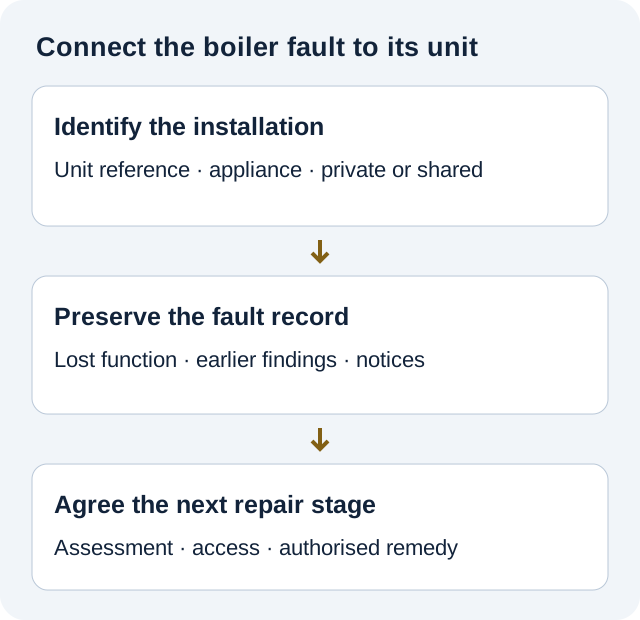
Arrange a property-specific boiler repair enquiry with Nottingham-based GasSafety 247. Tell us which city-centre dwelling or premises is affected, identify the appliance from available records and explain the lost heating or hot-water function. The proposed first step should establish the fault-assessment scope; a repair purchase follows the findings, suitable competence and an agreed remedy. Owners and authorised property managers can enquire with the actual unit reference, access contact and relevant previous report. Call or WhatsApp to discuss that assessment and its commercial terms. The business must confirm the task and attendance; this page does not promise a fixed response time, a city-centre branch or completion of every repair on the first visit.
Boiler Repairs: detailed service scope, booking and next steps
Explore this page
01
Establish whether this is a repair enquiry or an immediate gas incident
Use the emergency route for a suspected gas escape
For a suspected gas leak, phone the national gas emergency number, 0800 111 999, immediately rather than waiting for a repair-message reply. Follow HSE's current emergency guidance and the responder's directions. HSE also says an appliance thought unsafe must not be used until checked by an appropriately registered engineer. The commercial enquiry on this page is for a properly scoped assessment or remedial task; it does not replace incident response. When a responder has attended, retain the complete notice for the subsequent provider. A later repair discussion should reflect the actual restrictions and identified equipment, rather than assume the emergency attendance has approved ordinary operation or completed every follow-up task.
Name the actual post-incident task when a notice exists
If you hold a warning notice or an earlier engineer's restriction, send the whole document and identify the property unit to which it applies. Explain whether the next request is investigation, a remedy to a stated finding or review after work by someone else. Those instructions can differ even when the customer simply wants heating restored. The provider should establish what it can undertake and which authority or access is needed for the recorded issue. Do not describe restricted equipment as ready for use because another appointment is being discussed.
Keep the notice associated with the proposed work, including any part of the installation that belongs to the building manager or another responsible party.
02
Identify the boiler serving the instructed unit
Connect the appliance record to the right city-centre property
Send the full building and flat or premises reference, together with the boiler identity from safely available paperwork. If a manager holds equipment records for several units, check that the supplied document concerns the appliance actually reported. A boiler model associated with a neighbouring unit should not become the basis for ordering a part for this one. State if the equipment reference is unconfirmed and ask how it will be established during assessment. The Nottingham City Centre service hub connects this instruction to other existing local categories, but the accepted repair proposal should still identify the particular property and appliance.
That provides a usable boundary for attendance, findings and later parts discussions.
Explain the distinction between a private boiler and building plant
Tell the provider if the dwelling has its own boiler, relies on a shared installation or contains equipment whose responsibility is not yet clear. Do not select private-boiler repair solely because heat is missing inside the flat. A building-wide issue may require the managing contact and a different appropriately capable provider. Supply the records you hold and identify who controls relevant equipment access. The scope discussion can then separate an assessment of an individual appliance from an instruction involving communal plant. This page does not claim eligibility for every shared system.
Its purpose is to help the customer commission the actual task through the right responsible parties rather than rely on a domestic repair label for an unestablished arrangement.
Preserve make and version details through the enquiry
Keep the appliance reference, earlier invoice and any relevant serial information together where they are already accessible. Similar product names do not establish identical components. If the label cannot be read without removing a cover or creating access work, tell the provider and leave identification to the appropriate professional. A preliminary quote should say which input remains unresolved. When a supplier or another contractor suggests a component, record the actual reference and whether it was professionally selected for this appliance. The customer should not be expected to certify compatibility from an online listing.
Accurate identification helps make the next repair decision understandable without inventing a stock promise or manufacturer authorisation for the business.
03
Describe the loss of function as a short event record
Record what the occupier experienced before contacting management
For an agent-arranged enquiry, retain the occupier's description of what stopped working and when it was noticed. Do not translate every message into boiler replacement or a particular component diagnosis. Include whether heating, hot water or both are affected, and whether the behaviour is continuous or intermittent. If the managing contact has not seen the equipment, label the information as the occupier's observation. The provider can decide what assessment is appropriate and explain the next step. This keeps the original complaint intact when several people pass a request between them, which is more useful than a brief derived only from an invoice category or an assumed fault associated with the boiler's age.
Record visible information without recreating the fault
Send an exact display message already observed during normal use and a safely accessible photograph if useful. Do not keep resetting equipment, remove a case or alter controls to obtain a more convincing demonstration. A code supports identification of the reported condition but does not, by itself, select a replacement part. Include whether the observation occurred after ordinary heating demand, hot-water use or another relevant event, without treating timing as proof of cause. If a problem is intermittent, keep the chronology available even if it is absent during attendance.
The professional should distinguish a confirmed finding from a further question needing assessment so the customer understands the basis of any proposed remedy.
Keep individual outlet and room complaints separate from total failure
Say whether every normally used outlet or room is affected, or whether the complaint is confined to a particular space. The provider should establish whether a boiler-focused assessment is appropriate or whether the request involves connected equipment. A customer in a managed building should also identify any known shared arrangement rather than infer the boundary from the room that feels cold. Where the complaint concerns wider heating distribution, the city-centre heating repair route may support the appropriate scope discussion. The aim is to purchase an assessment of the actual lost function, not to make the customer choose an internal boiler component from the symptoms.
04
Bring previous work into the current assessment
An earlier parts invoice needs its associated finding
Supply the previous repair report alongside the invoice where available. Explain what changed after that work and whether the current complaint is the same or different. A list of components fitted does not necessarily explain why they were selected or which original issue was assessed. Ask the new provider how it will consider the records within the proposed attendance. If a prior contractor has already offered follow-up, state that fact without assuming the new company inherits its obligations. The customer should be able to distinguish a review of earlier work from a fresh fault assessment.
Keeping the evidence with the appliance reference supports a considered next instruction rather than an unverified demand to replace the same item again.
Existing warranty or cover may affect the purchaser's route
If the appliance or an earlier repair may be covered by another provider's terms, obtain the applicable information before arranging independent work. Explain any active claim or accepted follow-up and give the response already received. GasSafety 247 cannot infer coverage from the brand, age or a customer's statement that the boiler is insured. The purchaser should establish which route they want to commission and any relevant condition imposed by their existing arrangement. A separate assessment offer can then be understood against that decision. No universal warranty length, claim acceptance or reimbursement is promised here.
Product, insurance and independent attendance terms should remain distinguishable rather than blended into an assumed entitlement.
Renovation history is context rather than a remote diagnosis
Tell the provider about recent work affecting the equipment area, controls or relevant building services, and send the actual work record where one exists. The timing of a fault after another project does not establish blame or identify the remedy. For a city-centre converted or managed building, explain which contractor and responsible contact hold the relevant information. The assessor can then decide what it needs to consider and which interface is outside the initial appliance task. The customer's role is to preserve the known sequence, not to perform comparative tests or reopen finished work.
A clear distinction between observed events and professional findings makes the repair proposal easier to evaluate.
05
Define access to the fault-assessment area
Managed entry should lead to the appliance, not just the lobby
Explain the route to the actual unit and the position of the boiler within it. Give the authorised access contact and any building-managed arrangement relevant to the proposed assessment. An appointment to enter a lobby does not establish access to a locked flat or a concealed equipment area. Ask what ordinary preparation is appropriate and explain if it cannot be provided. Do not dismantle storage or equipment to make an initial enquiry look complete. The provider should assess what additional access responsibility is needed for the task.
This allows a repair appointment to be discussed on realistic property facts rather than an assumed unobstructed visit inferred from a city-centre street address.
The approach should reflect the work actually proposed
Use current council information where the building's approach involves parking or restricted access, and identify any confirmed loading or entry arrangement. A fault assessment and later component work may have different practical requirements. The council's parking information does not confer a particular unloading right or confirm a carrying route to your unit. Tell the provider what the building contact has agreed and which issue is unresolved. This is relevant to arranging the actual task, without claiming a privileged route, a fixed arrival interval or engineers already stationed nearby.
Keep an attendance estimate separate from confirmed property access and the accepted commercial scope.
Concealed or shared routes need the responsible building contact
If a finding or suspected issue may involve a concealed route, common area or external part of the installation, identify the party controlling access or permissions. The appropriate professional must establish the actual concern and required work; a customer should not open a surface or choose an external route remotely. Where a proposed remedy could affect building features, bring the relevant property information and project contact into the discussion. Nottingham's council conservation information can support checking context, but it does not approve a repair alteration for every address.
A quotation should distinguish an established remedy from an access or permission question still needing resolution.
06
Ask for a fault finding that supports an understandable remedy
The first attendance should have an agreed purpose
Clarify whether the proposed visit assesses the complete reported behaviour or an already identified issue. Ask what the initial commercial charge covers, including how further diagnostic work is handled. A narrow instruction to fit a named item can differ from an assessment intended to find the cause of repeated failure. The provider should explain that distinction before the customer accepts attendance. If another company has supplied a diagnosis, send its report so the new proposal can identify the evidence it relies on. The initial visit should not be represented as a guarantee that the appliance will operate normally afterwards when parts, access or a further decision remain to be established.
A remedy should connect the finding to the offered work
Request a proposal that identifies the appliance, the finding and the task intended to address it. The customer should be able to see what is confirmed and what still depends on another assessment or component identification. Ask whether connected controls or another part of the installation is included, retained or excluded. The main boiler repairs hub supports the broader category, while this page retains the city-centre property and managed-access instruction. A repair offer should remain specific enough to compare with another recommendation without requiring the purchaser to decide a technical installation method.
Scope clarity is especially useful when several parties have discussed different possible causes of the same complaint.
A finding outside the private appliance needs its own instruction
Ask how the assessor reports a concern involving equipment outside the agreed boiler boundary. If responsibility rests with a building manager, another owner or a different service provider, keep that distinction with the finding. A private-boiler quote should not silently purchase remedial work on a shared system. Equally, an open shared-system question should not be presented as proof that the private appliance needs replacing. The customer can then direct the report to the person able to arrange the next step. This preserves a useful commercial sequence: the agreed assessment, the documented finding and a separately considered remedy undertaken by appropriately capable parties.
07
Agree the repair purchase through the authorised decision-maker
The price needs the appliance and remedy boundary
Ask for the agreed remedy, relevant component and attendance terms to be identifiable in the offer. Where the part reference or further access remains unresolved, the price should show that dependency rather than imply a confirmed complete purchase. Compare proposals against the same fault finding and property instruction. One offer may purchase assessment only, while another includes an identified repair and separate conditions. Use the pricing contact route to discuss the actual commercial factors with GasSafety 247. No fixed city-centre repair total or discount is asserted without those inputs.
The customer should understand what the accepted price covers and what would need a new decision if the assessment changes the proposed remedy.
An agent's access contact and spending authority may differ
Identify the person who can accept the repair proposal and how findings should reach them. A tenant, key holder or reception contact may make attendance possible without holding purchasing authority for replacement parts. If an agreed spending limit or approval process applies, communicate it before the assessment. The provider should not need to infer that process from whoever answers the door. Keep the property reference with any revised proposal, especially when the same manager handles several city-centre units. This allows the documented finding to reach the responsible purchaser and makes it clearer which work has been accepted, rather than leaving an occupier to interpret an unfamiliar technical recommendation as a payment instruction.
A return stage needs its own practical confirmation
If suitable parts, further access or approval prevent completion during the assessment, ask what the next stage involves and how it will be confirmed. Keep the actual component or remedy reference with the proposal so a return appointment addresses the intended task. Reconfirm any building-managed access relevant to that work; an earlier visit does not automatically reserve a later entry or loading arrangement. No first-visit completion or universal return period is promised here. The customer should be able to distinguish a useful diagnostic result from a completed repair, and understand the commercial and practical conditions that remain before the proposed remedy is undertaken.
08
Review completion against the original fault instruction
The record should name the work actually carried out
Request documentation that identifies the appliance attended, accepted work and any open recommendation. It should be possible to relate the completed task to the earlier finding and the proposal you approved. Where an assessment found more than one concern, clarify which was addressed and which remains outside the completed scope. Keep the record with the unit reference and existing equipment history. A parts invoice does not necessarily describe every inspection or result, so ask for any needed explanation rather than infer a whole-system approval. This is particularly useful for an agent handing the property back to an occupier who needs to know the recorded position and appropriate everyday operating information.
Restrictions need an explicit recorded resolution or remaining position
When the instruction began with a warning or restricted-use notice, ask the appropriately qualified provider to explain the position after the agreed work. Do not assume every restriction affecting the building disappears because one component was replaced. Keep the relevant notice and completion information together, with the identified equipment clear. Where another party is responsible for follow-up outside the repair boundary, the purchaser should know that a separate task remains. The customer should not be invited to override a safety restriction to demonstrate that heating is working.
An understandable record distinguishes the remedial work completed from any outstanding issue, avoiding a broad assurance unsupported by the actual attendance.
Everyday operating information should match the retained arrangement
Ask for the relevant user instructions where the accepted repair or control-related work changes ordinary operation. The occupier should know which functions the actual installed controls manage and where the manufacturer's information is available. Keep professional adjustments distinct from routine use. If the person receiving commercial documents is not the occupier, establish how the useful operating information reaches the household. This handover requirement does not create a promise of a particular fuel saving or freedom from every future fault. It connects the completed task to the customer's normal use of the appliance and gives a clear starting point if a later concern differs from the complaint assessed during this repair.
09
Choose the next service only when the findings support it
Replacement is a separate property decision
If the assessment raises replacement as an option, ask for the reason and the actual alternative scope. Relevant existing records and the confirmed repair proposal can inform that discussion; a boiler's age or city-centre location alone does not decide the purchase. The Nottingham City Centre boiler installation route supports a distinct survey for that project. Include managed-building and alteration responsibilities where relevant. The customer should not treat a replacement quote as a remedy already installed or an approval of every proposed position. Keeping assessment, repair and installation decisions distinct makes it possible to compare the real alternatives without relying on a predicted appliance lifespan invented for this page.
Further diagnostics should identify the unresolved question
If the reported behaviour remains unexplained, ask what the next assessment is intended to establish and which scope it covers. Use Nottingham City Centre boiler diagnostics to discuss that unresolved question. A recommendation for more investigation should explain why the earlier information was insufficient, rather than present another component as a certain cure. Keep the earlier findings and current observations together. The next task may require different access or involvement from the building manager, so those dependencies should remain visible. The purchaser can then accept a considered assessment instead of paying for a succession of unrelated visits built on increasingly vague descriptions of the original fault.
Start from the actual city-centre address and the repair objective
GasSafety 247 is based in Nottingham. Use the existing contact options with the building and unit reference, appliance records, fault chronology and responsible purchaser. Include known access conditions and any warning notice before the proposed attendance is discussed. Ask what the next appointment covers and retain the actual confirmation. The appointment enquiry is a route to that conversation rather than an automatic booked repair. Other target-area pages remain available through the area directory; they do not imply separate repair branches or a technician already at another address.
The intended purchase is a defined assessment and an understandable remedy for the particular installed appliance.
Questions about boiler repairs in Nottingham City Centre
What should an owner send for a city-centre boiler repair assessment?
Send the exact building and unit reference, appliance identification from available records and a short account of the lost function. Include relevant earlier reports and identify who can grant access and accept a repair proposal. If some information is unknown, say so instead of guessing. The provider should establish the appropriate assessment scope and confirm actual capability and attendance. A boiler repair enquiry can start without the customer choosing a replacement component.
Is WhatsApp the right route for a suspected gas leak?
An ordinary repair message must not delay emergency action. Phone the national gas emergency number, 0800 111 999, immediately for a suspected leak and follow the responder's guidance. HSE's safety information also addresses appliances suspected unsafe. A later repair enquiry should carry the complete notice and identify the follow-up task. This commercial page does not replace emergency response or promise that a provider will monitor every message during an incident.
Which document matters if an earlier engineer restricted boiler use?
Supply the complete notice rather than only its headline, with the appliance and property reference identifiable. Explain what follow-up is being requested and whether another contractor has already carried out work. The provider must establish the appropriate scope against that recorded position. Keep the notice with later completion information so any remaining issue is understandable. A discussion about a repair date does not itself remove the restriction or approve ordinary appliance use.
How do I avoid sending records for another flat's boiler?
Check the unit reference, equipment identity and date on the record before attaching it. If a management system holds several similar appliances, label the relevant file with the instructed property and preserve any uncertainty. Ask the provider to confirm identification where necessary. The same street address or product name does not establish that the document applies to this boiler. Accurate records help the assessment and prevent an unconfirmed component reference from becoming the basis of the repair purchase.
Can a no-heating complaint be assumed to concern my private appliance?
Explain whether the dwelling has a private boiler or a shared heating arrangement, and send the relevant information you hold. The provider should establish the work boundary before selecting a boiler-focused task. If building plant or another party's equipment is involved, the managing contact and a different scope may be needed. Heat being missing in one flat does not, by itself, establish a fault or authority to alter communal equipment.
What if my apartment's hot water works but heating does not?
Record those functions separately and explain when the change was observed. Include the accessible appliance information and any relevant earlier finding. The assessor can decide whether the requested visit is appropriately boiler-focused or needs a broader system boundary. Do not select a component simply from that pattern. A clear description should support a considered assessment, with any proposed remedy linked to actual findings rather than a remote assumption about the installed arrangement.
Does a displayed fault code select the part to order?
Treat the code as reported information, together with the correct model, rather than a component order. The professional should establish the cause and suitable remedy through the appropriate assessment. Tell the provider if another contractor has already identified a part and provide its supporting report. A customer should not remove covers or repeatedly recreate the fault for an enquiry. The offer should distinguish a confirmed selection from identification still awaiting investigation.
Can the agent's summary replace the occupier's original observations?
Keep the original account where possible, especially the affected functions, timing and behaviour noticed during normal use. An agent can add the property and purchasing information without turning the observation into an assumed technical diagnosis. Label a second-hand description accordingly. The provider can then scope the assessment on a clearer record. This helps avoid a request for replacement or a named component that no professional has actually recommended for the instructed appliance.
What should I include when the same fault returned after a repair?
Supply the earlier finding, invoice and description of the result after that attendance. Say whether the present complaint matches the original one or has changed. Clarify any existing follow-up offer from the previous provider. The new assessment should identify its purpose and the evidence it considers. Repeated behaviour does not automatically establish that the same part needs replacing again or that another company inherits the original contractor's commercial obligations.
Should I consult existing boiler cover before independent repair work?
Check the actual terms and contact the relevant provider if you think the request may be covered. Keep the response and any accepted claim or follow-up with the enquiry. GasSafety 247 cannot confirm entitlement from an appliance brand or age. If you choose an independent assessment, clarify the purchase and any relevant condition of the existing arrangement. Coverage, reimbursement and future attendance should not be assumed from an informal under-guarantee description.
How does managed entry affect the first assessment appointment?
Identify who authorises building and unit access, the actual entrance and any timing or carrying-route condition. Explain which arrangement is confirmed and which is still requested. Access to a lobby is not necessarily access to the appliance. Ask what ordinary preparation is suitable without opening equipment or creating an invasive test. The provider should consider the practical brief before the customer treats a discussed assessment time as an accepted attendance.
Can visitor parking confirm the approach for later repair work?
A public parking option does not confirm unloading, restricted vehicle entry or the internal carrying route. Explain what has actually been arranged for the building and consult relevant current council information. A diagnostic visit and a return stage may have different practical needs. The provider should understand those dependencies. No privileged parking right or fixed route is created by a city-centre repair page or by a previous attendance at the same property.
Who arranges access if the finding involves a common or concealed area?
Identify the building contact or other party responsible for that area. The qualified professional should establish the actual concern and required assessment; the customer should not open finishes or select a route from an online suggestion. The proposed remedy should show any access or permission condition still unresolved. That keeps a private appliance instruction distinct from shared-building work and allows the purchaser to direct the finding to the correct responsible party.
Does an assessment visit mean the boiler will be repaired that day?
The agreed first attendance should say what it covers. A finding can be useful even if suitable parts, further access or approval are still needed for the remedy. Ask how the next stage and its price will be confirmed. No universal first-visit completion promise is made. The customer should understand the distinction between the assessed problem, an accepted repair proposal and work actually completed, rather than infer all three from an appointment description.
What makes the repair offer clear enough to compare?
Look for the identified appliance, finding, proposed task or component and relevant attendance terms. Check connected work, exclusions and any input awaiting confirmation. Compare offers against the same reported fault and property boundary. Assessment-only pricing and a specified repair total can purchase different things. Ask for those differences to be explained through the quotation discussion, so the selection reflects an understandable remedy rather than the lowest unqualified headline.
Can a tenant accept extra parts work during the agent's appointment?
Establish the purchasing authority in the instruction. A tenant may supply observations and access without being the person authorised to approve extra expenditure. Give the provider a workable route to the responsible decision-maker and explain any actual spending limit. The findings and revised offer should remain connected to the property reference. Clear authority supports the next commercial decision without making whoever opens the door automatically responsible for a changed purchase.
What should I confirm for a return attendance after parts identification?
Keep the agreed remedy and component reference with the accepted terms, then confirm the practical access needed for that stage. A building's earlier entry arrangement does not automatically reserve another date or loading slot. Ask what task the return visit covers and retain its actual confirmation. The original assessment, proposed remedy and return attendance should remain distinguishable, particularly where a different key holder or managing contact needs to coordinate access.
What can show that an earlier restriction has been addressed?
Ask the appropriately qualified provider to explain the recorded position after the agreed work and supply the relevant completion information. Keep it with the original notice. Do not assume every building-wide issue is resolved from an invoice for one replacement item. If another part remains outside the repair scope, the document and next instruction should make that clear. The customer should never override a restriction simply to demonstrate that a room now feels warmer.
Should a repair record identify the city-centre unit?
Yes, keep the actual property and appliance reference associated with the findings and completed task. A manager handling several units needs to distinguish their equipment histories. Ask for clarification if a street-only record leaves the instructed installation uncertain. The useful record should reflect work performed and an open recommendation separately. It should not be presented as proof that another appliance or every shared component in the building was examined during this attendance.
When is a replacement survey a better next enquiry?
Discuss the actual assessment findings, proposed repair and any relevant history before selecting the next purchase. If replacement is being considered, use the existing city-centre installation route for a separate property-specific survey. The survey should address its own scope and building responsibilities. Appliance age or a central location does not decide every case remotely. The customer can compare real repair and replacement options with their inputs and limitations explained.
How can I check competence for the boiler task offered?
Verify the actual responsible engineer's Gas Safe registration and applicable work categories for the task. HSE explains that registration and relevant competence are required for domestic gas work. The business must confirm its real supported scope; this page does not invent a registration number or universal qualification. If the proposal also involves shared or specialist equipment, ask how the responsible parties and categories are identified before authorising that additional work.
Where does this repair page sit in the Nottingham service structure?
It connects to the main boiler-repair category and the Nottingham City Centre area hub, with related local diagnostics, heating repairs and installation enquiry paths. Those existing URLs describe different purchases through the Nottingham-based business. They do not create separate branches or engineer allocations. Start with the task and actual unit information, then use the appropriate route to obtain a defined assessment or proposal with capability and attendance confirmed for the property.
Speak directly with GasSafety 247
Need boiler repairs in Nottingham City Centre?
Send the property postcode, appliance details and the work or fault you need assessed.

 Check the ID card