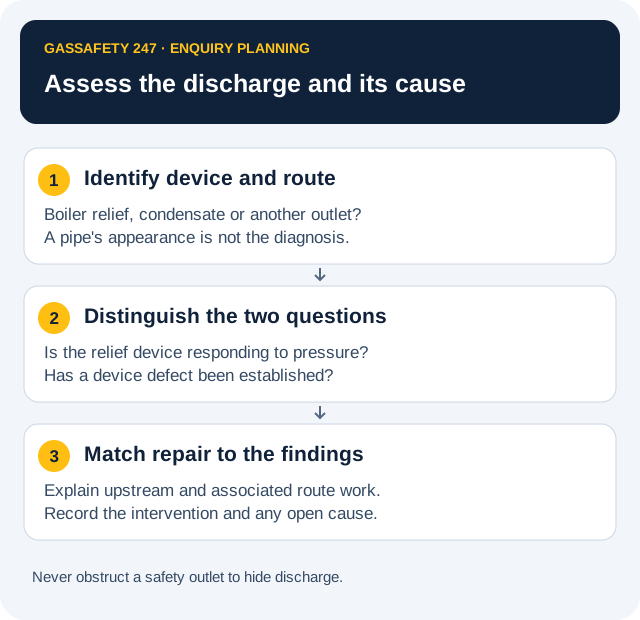
Request a professional assessment and corrective proposal for a boiler water-pressure relief device or reported discharge from its associated route. Nottingham-based GasSafety 247 can review the appliance identity, ordinary observations and previous findings before confirming accepted work. Use Contact to say where water was noticed and whether a professional has identified the device. The quotation should address the assessed fault and any related pressure-control concern. A discharge observation does not by itself prove that replacing the valve will resolve the cause, and a safety outlet must not be blocked to make a leak disappear.
Report the observed outlet without identifying it from appearance alone
Describe the location, when water was seen and existing documentation linking that route to the boiler. A pipe's colour or position alone should not determine its purpose. Condensate drainage, a heating-water relief route and other building drainage are different enquiries with different work boundaries. Do not touch a discharge, disconnect fittings or obstruct an outlet to find out which it is. A safely taken photograph may help describe the observation, while the professional must identify the actual equipment and route before accepting corrective work.
Identify a separate cylinder device when storage equipment is present
Tell the provider about any hot-water cylinder and the item named in earlier records. A storage-system safety arrangement is not automatically the boiler's water-pressure relief device. The applicable equipment and work category must be confirmed rather than treat every discharge beside hot-water equipment as this boiler repair. Ask which assessment the proposal covers and whether another appropriate professional task is needed. Clear identification protects the purchase boundary and prevents a generic boiler-valve instruction being applied to a different installation or safety arrangement.
02
Assess why the discharge or component concern occurred
Separate a device responding to pressure from an assessed device defect
Ask whether the professional finding concerns the valve itself, an upstream pressure problem or more than one issue. The remedy should follow the actual assessment rather than assume all released water means the safety component failed. Supply ordinary pressure observations, earlier water-side work and any professional report. The provider should explain the supporting evidence and limitations in the proposed repair. This page does not publish universal activation values or invite the customer to provoke discharge as a test on an unidentified appliance.
Keep the water-expansion question connected but distinct
The expansion-vessel page addresses the separate arrangement that accommodates heated-water expansion. If an earlier report recommended work on both items, send the whole report rather than order a combined package from the symptom alone. Ask what finding supports each intervention and how the outcome will be assessed. A new relief device should not be presented as correction of every pressure-control concern if the quotation leaves a related cause unresolved. Each proposed item needs an intelligible purpose in the accepted scope.
Disclose previous filling, discharge and repair history factually
Provide records of earlier professional work and what you observed afterwards. If the household repeatedly sought help for pressure changes, explain that chronology without guessing the technical cause. Do not continue altering the system or repeat a filling action merely to generate evidence for this enquiry. The provider should establish the appropriate professional assessment under the identified product instructions. A short factual account can help distinguish a new component concern from a recurring water-side problem whose previous interventions and outcomes remain unclear.
03
Agree the corrective scope and associated route work
Request product-specific identification before purchasing a valve
Give the full boiler model and available variant information. Ask which compatible item and associated materials the proposal covers, with supply and responsibility clearly identified. A generic relief-valve listing or universal pressure label is not a suitable specification for every product. The customer should not choose a substitute setting, modify a device or fit a marketplace item independently. No immediate stock, manufacturer-authorised status or one-size replacement method is established by this preserved URL. The accepted proposal must concern the actual installation and assessed remedy.
Define the boundary around the discharge route
If associated route work is recommended, ask what section is involved, why it is necessary and which access or permission is required. A valve intervention and a building drainage alteration need not be the same purchase. Explain enclosed sections, shared spaces or an outlet that cannot be reached ordinarily. The record should distinguish the assessed route from parts outside the accepted inspection. Do not accept a vague promise that every connected drain will be made satisfactory under a boiler component charge without an explicit scope and responsible party.
Authorise an assessed package rather than an assumed pair of components
If further water-side items are proposed, request their findings and charge treatment separately. Ask whether they are required to complete the accepted remedy or are additional recommendations. The pre-repair diagnostic page provides a staged purchasing route when an owner needs the report before approving parts. A tenant or access contact should not be assumed to have authority for a wider package. Identify the payer and decision process before the appointment so corrective expenditure follows the actual accepted proposal.
04
Plan the visit around access and safe communication
Leave technical access and safety-device operation to the professional
Supply available records and safe observations, while leaving the appliance cover, valve and fittings untouched. Never cap or block a relief outlet as a leak remedy. Tell the provider about fixed cupboards, locked spaces and practical access restrictions before a quotation is accepted. HSE's domestic guidance explains the need for relevant competence for gas-appliance work. The professional must determine the appropriate method and safety advice for the actual condition; the page is an enquiry route rather than a customer repair or adjustment procedure.
Discuss interruption without treating discharge as an appointment guarantee
Explain whether the household currently lacks heating or hot water and disclose any instruction limiting use. Ask the provider to confirm the proposed attendance and accepted scope. No fixed response time, unrestricted continued operation or complete first-visit remedy is promised. Where an occupier and remote owner are involved, agree who receives advice and who approves further proposals. The practical objective is a clear intervention and handover, with the actual urgency assessed appropriately rather than infer that a listed component page allocates an engineer automatically.
Coordinate route access beyond the dwelling when required
A shared courtyard, communal plant space or managed building route can require permission that the occupier does not control. Identify the responsible contact and arrange access lawfully before accepted work needs it. The boiler owner's purchase instruction does not authorise entry or changes on another party's property. Ask how unavailable access affects completion and price. Recording those limits prevents an attended valve task being expanded into certification of unseen sections or an assumption that the provider can undertake every building alteration during the same visit.
05
Request evidence that the accepted remedy addressed its finding
Ask for the device, intervention and remaining cause to be recorded
The handover should identify the appliance, safety-device work actually completed and any outstanding pressure or route concern. Ask how the result relates to the original finding, particularly when additional pressure-control work was included or excluded. A stopped visible discharge is not a reason to assume every underlying question has been resolved without the appropriate assessment. Keep the initial report, accepted component proposal and outcome together. The record should explain actual work and limitations rather than promise that no future water-side issue can occur.
Keep boiler, drainage and maintenance instructions separate
The boiler-repairs hub is the parent for this component enquiry. If the identified concern actually involves condensate, use condensate maintenance with the correct professional finding. A valve repair does not itself complete routine boiler upkeep or a landlord check; commission those tasks expressly when required. These boundaries help the owner arrange the next appropriate work without translating every observation near the boiler into the same component purchase or presenting one invoice as a whole-property assessment.
Confirm the Nottingham-area quotation for the actual safety-device task
The Nottingham repair cluster establishes the service's relationship to the business base. Send the postcode, product identity, route information and any earlier finding through Contact. Surrounding areas remain target service geography, without invented branches, addresses or locally stationed personnel. Ask for the confirmed item, associated work, charge and appointment. A commercially useful proposal should make clear what will be addressed, which limitation remains and who may authorise anything beyond the agreed intervention.
Questions about boiler pressure-relief-valve repair in Nottingham
Does water leaving the relief route prove the valve is faulty?
No. The device may be responding to a pressure condition, or a separate defect may be involved. Describe the observation and request an assessment that establishes the cause and proposed remedy instead of selecting replacement from discharge alone.
Is the boiler pressure-relief valve the same as its gas valve?
No, those labels concern different functions and work. Supply the full earlier report and appliance identity. An ambiguous valve request must be clarified before a corrective instruction, compatible item or relevant work category is accepted.
Can pipe colour identify whether the concern is relief or condensate?
Do not rely on appearance alone. Describe the route and existing documentation without touching fittings or discharge. The professional should establish its actual purpose and equipment boundary before the quotation targets a safety device or drainage task.
Is a cylinder discharge covered by this boiler component page?
Not automatically. Identify the storage arrangement and reported device. Different safety equipment and work requirements may apply. The provider must confirm the actual task rather than treat every outlet near hot-water equipment as a boiler relief-valve repair.
Should expansion-vessel work always be purchased alongside the valve?
No automatic package is prescribed. Ask what assessment supports each proposed component and whether the tasks are connected in your installation. The quotation and record should make required and additional work identifiable instead of assume both items from one symptom.
Can I block the outlet temporarily to stop the leak?
No. A safety outlet must not be obstructed as a remedy. Seek appropriate professional advice and disclose the concern. The accepted assessment should determine the actual cause and corrective task, rather than hide discharge while the underlying condition remains unresolved.
Does a lower displayed pressure establish that the problem is resolved?
Not by itself. Explain the observation and any earlier intervention. Ask what professional assessment supports the result. A changed reading should not be expanded into verification that the device, pressure-control arrangement and connected route all function correctly.
Should I trigger the valve to show the contractor what happens?
Do not operate or test the device for this enquiry. Provide ordinary observations and documents already available. The relevant professional should decide the appropriate technical assessment under the actual product instructions and current safety context.
Can a generic online replacement have the right characteristics?
Compatibility must be established for the installed product by the provider. Do not choose settings or a substitute from an online example. Ask for the accepted item, supply responsibility and associated materials before making parts expenditure commitments.
Will every section of the discharge pipe be inspected?
Only the accepted scope and actual access determine what is assessed. Describe hidden or shared sections before booking and request limitations in the record. A device intervention should not imply examination or correction of an entire unseen building route.
How should a repeated pressure complaint be described?
Provide the sequence of observations, earlier findings and completed interventions, marking uncertain details honestly. The provider can assess the current question without assume a new valve will resolve every recurrence or silently adopt an unsupported previous diagnosis.
Is repair of an external drain included in the valve charge?
Ask whether that separate work is needed and accepted. Appliance safety-device work and building drainage alterations have different responsibility and price boundaries. An itemised proposal should identify the actual route section and any other trade required.
Can a landlord approve additional pressure-control work remotely?
Agree the decision contact and financial boundary before attendance. The occupier should understand whether they can authorise anything beyond access. The provider should present supporting findings and a clear proposal instead of infer an unrestricted component budget.
Should a use restriction be retained while the enquiry is pending?
Follow the professional instruction and supply it with the request. Another appointment or component proposal does not cancel it. The accepted assessment must address the actual safety context and explain any subsequent advice appropriately.
What if the route enters shared building space?
Identify who can provide lawful access and authorise any change before work is accepted. A dwelling booking does not confer permission over communal fabric. Ask how unavailable access affects inspection limits, completion and the charge.
Does replacing the device complete an annual boiler service?
Not unless separate upkeep was expressly accepted and completed. Ask which tasks and records the quotation covers. A component repair should not be marketed as every maintenance requirement or landlord-check document merely because the appliance was attended.
What should the record explain after a combined valve and pressure-control job?
Each identified component, completed intervention, relevant outcome and remaining limitation. Keep it with the original findings. A combined invoice should not obscure whether the associated cause was addressed, left outside the scope or still requires assessment.
Is there a guaranteed standard pressure threshold for every boiler on this page?
No universal setting or customer test threshold is provided. The product instructions and professional assessment govern the actual task. An unidentified appliance should not be adjusted or tested using a number taken from a generic enquiry page.
Does a surrounding-area route ensure immediate parts and attendance?
No stock or appointment guarantee is offered. Nottingham is the business base, and the actual product, postcode and proposed intervention need confirmation. Target-area content does not establish additional premises or a reserved engineer with every compatible part.
How do I request the correct pressure-relief repair proposal?
Use Contact with the appliance, observed outlet and previous findings. Ask for device identification, cause assessment, accepted intervention, associated-route boundary, charge and recorded outcome before confirming attendance and extra-work authority.
Speak directly with GasSafety 247
Need boiler pressure-relief-valve repair?
Send the postcode, appliance information and the symptoms or planned work to GasSafety 247.

 Check the ID card