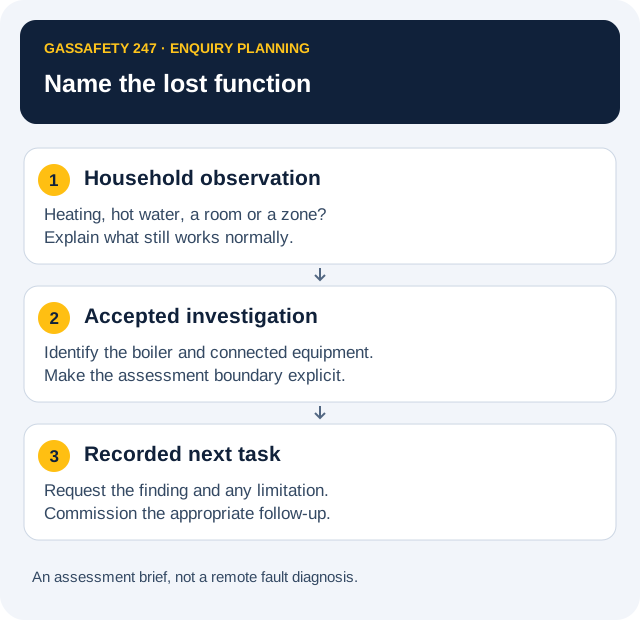
Arrange an assessment of a boiler fault before purchasing a replacement component or committing to a repair. Nottingham-based GasSafety 247 can review the lost function, installed model and previous findings to define an accepted diagnostic visit. Send the postcode and whether heating, hot water or both are affected through Contact. The intended deliverable is an explained finding, its limits and an appropriate next proposal. Tell us about any instruction restricting use. An assessment enquiry must preserve that instruction rather than treat a booking as permission to restart an unsafe appliance.
Boiler Fault Diagnosis: detailed service scope, booking and next steps
Explore this page
01
Define the function you need restored
Give the enquiry a symptom rather than a shopping list of parts
Describe what the household cannot do: heat rooms, obtain hot water, maintain normal operation or use a particular demand. Include the timing and whether the problem is constant. A message saying replace the pump may be a previous professional recommendation or the customer's guess; make that distinction clear. The provider needs to assess the actual fault before accepting corrective work. This route is for understanding a malfunction, while a component-specific repair enquiry is useful when a documented finding already identifies the proposed intervention.
Distinguish appliance failure from a problem elsewhere in the system
Tell us whether the boiler appears to operate while one room, tap or zone fails to respond. Connected controls, distribution equipment and stored-water arrangements can affect the household's experience, so the diagnostic boundary should not be inferred from the word boiler alone. Identify a cylinder or other equipment when known. Ask whether the quotation includes investigation beyond the appliance and which items need another instruction. The result should distinguish an appliance finding from a connected-system question instead of imply that every heating component was examined.
Describe the current condition and earlier professional advice together
Send any earlier report and state what happened afterwards. A fault that disappeared after an intervention may have returned, changed or become intermittent. Separate those observations from the earlier diagnosis so the new visit does not adopt it without assessment. If the boiler is currently restricted or disconnected, disclose the full instruction before the scope is agreed. HSE's domestic guidance explains the importance of relevant competence and professional advice about unsafe equipment. Routine diagnostic scheduling is not a substitute for the appropriate urgent response to a suspected gas emergency.
02
Choose the diagnostic purchase that matches your evidence
Use a general assessment when the cause has not been established
The starting question may involve one appliance, its connected equipment or an installation-wide symptom. Give the provider enough context to identify the initial assessment boundary rather than request a universal whole-property test. Ask what the attendance charge covers and how further work will be proposed if the cause cannot be established within it. Diagnosis should produce a reasoned result or a clear explanation of uncertainty. Neither a visible error message nor an appliance's age alone justifies promising a particular part replacement before the actual assessment.
Supply displayed messages without treating them as a conclusion
Copy the exact message and identify the model, including letters, punctuation and any sequence. A code is useful evidence but does not independently verify a failed component. Use error-code diagnosis when the principal question concerns interpretation of the display and the appropriate investigation. Avoid selecting a part from a generic code list for a different product. The provider must establish the correct product instructions and interpret findings in the context of the installed appliance and observed behaviour.
Commission a recurring-event investigation when the fault is absent today
For an occasional problem, provide an ordinary-use event history and earlier reports. The intermittent-fault page addresses the evidence and follow-up boundaries when a symptom may not occur during attendance. A currently operating boiler does not prove the earlier report was mistaken. Ask what can be assessed now and what remains unverified. This prevents paying for an ordinary one-off visit under an assumption that every irregular event can be reproduced or conclusively excluded within a fixed appointment.
03
Agree an assessment boundary before accepting repair expenditure
Identify the equipment and ordinary access required
Provide the make, full model and existing installation information without removing the appliance cover. Describe a locked boiler cupboard, fixed joinery or shared route that may affect access. Ask which permissions or keys are needed and how an inaccessible item will be recorded. A photograph taken safely from the normal room position can help plan the visit; it cannot establish hidden condition. The customer should not dismantle fittings or create a technical test condition to improve the enquiry. The competent professional decides the appropriate investigation method.
Specify diagnostic authority separately from authority to buy parts
Explain whether the initial purchase is assessment only or whether you are willing to consider a proposed repair during attendance. Name the decision contact and any spending limit. The person admitting the engineer may have no authority to accept an additional charge. Pre-repair assessment provides the related route for purchasers who need a distinct diagnostic stage before approving corrective work. Ask whether repeat attendance, ordered materials or a second work category require a new proposal instead of assume they are included in the first fee.
Discuss what happens if the result extends beyond boiler repair
An assessment may identify a connected-equipment question, a need for further access or a finding requiring another professional. Ask for that boundary and the next instruction to be explained. A boiler-repair proposal should not silently include unrelated plumbing, electrical work or building alterations. Equally, a limitation should not be presented as a completed whole-system diagnosis. Clarifying the possible handover makes the visit useful even where a single replaceable part is not the outcome. It also gives the owner evidence for commissioning the next appropriate task.
04
Make the visit workable for the household or property manager
Plan around the demand that has actually been lost
Explain how the fault affects occupants, especially where the household relies on one source of heat or hot water. Give practical attendance constraints and an authorised contact for decisions. No fixed arrival time or repair completion is established by this page. If a finding prevents normal use, the professional must explain it, and the responsible party needs a clear route to decide on follow-up. A diagnostic proposal can address those arrangements without inventing a guaranteed restoration time or promising that every repair can be completed during the first attendance.
Keep the property identity clear when several people are involved
A managing agent should specify the unit, address, installed appliance and tenant access arrangement. Identify the report recipient and payer rather than assume they are the same person. Where building management controls communal access, provide the responsible contact before booking. GasSafety 247's business base is Nottingham; its target-area content does not establish a branch or dedicated engineer at each property. The postcode and proposed task determine the actual attendance enquiry, while an accepted appointment establishes what has genuinely been arranged.
Retain evidence without trying to reproduce a hazardous event
Useful history includes a previously visible display, when the symptom occurred and what professional advice was given. Do not provoke a lockout, bypass a restriction or repeatedly restart equipment to make the fault appear for a photograph. Missing evidence should remain identified as missing. A brief, accurate observation can be more useful than an elaborate theory about an internal component. The provider should tell you what ordinary information supports the accepted task, while technical testing and interpretation remain part of the appropriate professional assessment.
05
Use the findings to commission the next job deliberately
Request an explained result that separates fact from uncertainty
Ask which appliance was assessed, what the accepted investigation established and what remained outside its scope. If a part is proposed, request the finding that supports that recommendation and the treatment of associated work. A diagnosis should not be presented as a guarantee of future fault-free operation or a property-wide safety certificate. Keep the record with the original enquiry so a subsequent provider can understand the actual result rather than infer a conclusion from a short payment description. Follow any professional instruction about use while work remains outstanding.
Connect the assessment to repair, maintenance or another defined task
The boiler-diagnostics hub is the parent for this assessment, and boiler repairs is the commercial route when corrective work is accepted. Maintenance may be an additional task, but it should not be used as a generic answer to every unresolved malfunction. The Nottingham diagnostics cluster connects the enquiry to the business's primary geographic entity. Send the result with the outcome you now want and ask for a clear scope, charge and booking confirmation.
Questions about boiler fault diagnosis in Nottingham
What should I describe if I do not know which part has failed?
Describe the lost function, when it occurs and what still operates normally. Include previous professional findings as evidence, clearly separate from your own observations. The diagnostic purchase is intended to establish a cause or an explained next step before a part is selected.
Can diagnosis be requested when there is no error message?
Yes. A lack of displayed information does not erase an observed malfunction. Explain the appliance's behaviour, affected demand and earlier work. Ask the provider to define an appropriate assessment rather than require a code before accepting that the household has a genuine problem.
Does one cold radiator establish a boiler defect?
Not automatically. Tell the provider whether other rooms and hot-water demands work. Connected-system assessment may be needed, and its scope should be explicit. The visit must not presume an appliance failure solely from a problem affecting one room or outlet.
Should I send the full earlier report or only the suggested part name?
Send the complete report where available, with its date and appliance identity. It may contain limitations or an open recommendation that a part name omits. The new assessment should preserve that context instead of silently adopt an incomplete description of earlier work.
Can the assessment guarantee a same-visit repair?
No such guarantee is established. Ask what diagnostic work is accepted and how parts, additional scope and return attendance will be proposed. Relevant equipment, actual findings and availability need confirmation before corrective work can be treated as arranged.
Is the diagnostic fee automatically deducted from a later repair?
Only if the accepted terms say so. Ask how assessment, corrective labour, materials and return attendance are charged. Do not infer an allowance from the existence of related diagnosis and repair pages; the actual proposal determines the purchase.
What happens if the cause cannot be established at the visit?
Request an explanation of the work completed, uncertainty and recommended next assessment. An honest limitation is preferable to an unsupported part diagnosis. Ask which additional access or evidence would be needed before authorising a new task or repeated attendance.
Can the engineer examine a cylinder alongside the boiler?
Identify the cylinder and request that boundary before booking. A boiler-only assessment should not imply all storage and associated controls were reviewed. The accepted proposal needs to distinguish each item of equipment and any separate work category.
Should the tenant approve replacement parts during the assessment?
Only under the landlord's or agent's agreed authority. Identify who can approve expenditure and who receives the finding. The tenant providing access should not be assumed to have an unlimited repair budget or responsibility for the owner's purchasing decision.
Is a current error code enough to order a replacement component?
It is evidence, not proof of one failed part. Supply the exact display and model for interpretation within the actual assessment. A generic list or another boiler's code meaning should not determine the remedy before the relevant product and findings are considered.
Can a fault after a previous repair be assessed independently?
Explain the repair scope, observed outcome and any contractual process you are relying on. Keep the original documents intact. The new provider can assess the current instruction without automatically accepting another contractor's liability or deciding its guarantee obligations.
What if the boiler works again before the appointment?
Tell the provider and keep the earlier observations. The task may need an intermittent-investigation boundary rather than cancellation of the concern. Normal operation at one moment should not be sold as proof that the reported event never occurred.
Do I need to remove the case to find a component label?
No. Provide existing paperwork and information visible without dismantling the appliance. Explain what remains unknown. The relevant professional should establish product identity and appropriate access rather than ask the customer to disturb internal equipment for an enquiry.
Can the visit settle every electrical issue affecting heating?
Do not assume that. State the concern and ask which investigation is accepted and whether another trade is required. The diagnostic report should distinguish appliance findings, connected controls and work outside the provider's accepted competence or quotation.
Does diagnosis produce a landlord gas safety record?
Not by implication. Commission any required safety check expressly and ask for the appropriate documentation. A fault assessment and the landlord-check task have different scopes, even when a provider proposes both during one attendance.
Should I retain a use restriction while requesting another assessment?
Follow the professional instruction and disclose it fully. A new enquiry or appointment date does not cancel it. The next accepted task must acknowledge the restriction and explain any subsequent advice based on the assessment actually undertaken.
What if the flue or plant cupboard needs communal access?
Identify the responsible building contact and arrange the required permission before attendance. Ask how unavailable access affects the assessment and charge. A dwelling key alone may not give the provider access to every relevant part of the installation.
Can I choose assessment only before considering repair?
Yes, make that approval boundary clear in the request. Ask for the result and any corrective proposal separately. Professional advice about safe use still needs to be explained, while paid intervention must follow the financial authority actually agreed.
Does a Nottingham-area page confirm attendance at my address?
No. Supply the postcode, appliance and proposed task to confirm acceptance and appointment. Nottingham is the business base; surrounding service-area targeting does not invent a branch, local employee or reserved visit.
How do I book a useful fault-diagnosis enquiry?
Send the installed model, lost function, ordinary observations and previous findings through Contact. Request the equipment boundary, assessment charge, written outcome and additional-work approval terms, then obtain actual booking confirmation before arranging access.
Speak directly with GasSafety 247
Need boiler fault diagnosis?
Send the postcode, appliance information and the symptoms or planned work to GasSafety 247.

 Check the ID card