
Skip to content
Based in West Bridgford · Serving Nottingham and surrounding areas GasSafety 247: +44 7888 885791
After an incident is made safe

Request Gas Safety Follow-Up Work in Nottingham

Request gas safety follow-up in Nottingham after immediate emergency action. Supply incident findings and restrictions to agree inspection or repair scope.

Suspected natural-gas escape? Call 0800 111 999 from a safe place. Possible carbon monoxide exposure needs urgent safety and medical help. This business enquiry is for later follow-up.
Illustrative gas-work image, not verified staff, client work or a customer endorsementCheck the ID card
and work category

Urgent incident help and later service work

For a suspected natural-gas escape, contact the national gas emergency service on 0800 111 999 from a safe place. Suspected carbon monoxide exposure needs urgent safety and medical help; do not wait for an ordinary booking reply. GasSafety 247's business contact is for discussing appropriate follow-up inspection or repair after the immediate incident has been addressed. The business is based in Nottingham, and proposed attendance in Nottingham or a surrounding target area needs confirmation for the property and work required.
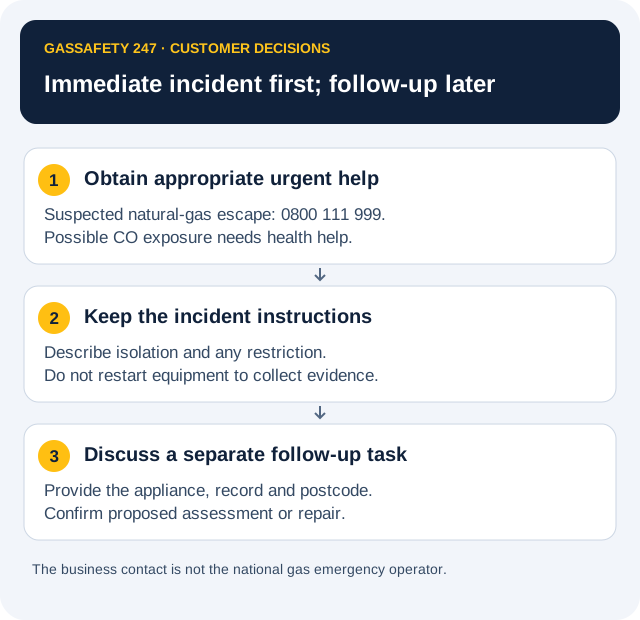
Obtain appropriate urgent help: Suspected natural-gas escape: 0800 111 999. Possible CO exposure needs health help.; Keep the incident instructions: Describe isolation and any restriction. Do not restart equipment to collect evidence.; Discuss a separate follow-up task: Provide the appliance, record and postcode. Confirm proposed assessment or repair. The business contact is not the national gas emergency operator.
The business contact is not the national gas emergency operator.
Page-specific information

Define the post-incident inspection or repair enquiry

Explore this page

Immediate help comes before a follow-up enquiry

Use the emergency route for the incident itself

This retained website URL must not confuse a service enquiry with reporting a gas emergency. If you suspect a natural-gas escape, use 0800 111 999 and follow the instructions given. Do not rely on sending the business a WhatsApp message or reading other landing pages while an immediate incident remains unresolved. An enquiry to GasSafety 247 does not notify the network emergency operator or establish that the property has been made safe.

Take possible carbon monoxide exposure seriously

The NHS advises going outside and obtaining medical advice if carbon monoxide poisoning is suspected, without returning to the affected building until advice is received. Call NHS 111 for possible symptoms. For the serious symptoms described by the NHS, including breathing difficulty, sudden confusion, loss of consciousness, weakness or chest or muscle pain, use 999 or A&E; do not drive yourself there. This website does not diagnose exposure or replace medical advice.

An alarm or a loss of heating can require different action

A carbon monoxide alarm event should not be treated as the same enquiry as an ordinary boiler fault code. Equally, loss of heating alone does not establish the cause or justify bypassing an appliance safety instruction. Explain the actual event when seeking appropriate help. Do not test whether a potentially unsafe appliance will restart merely to provide a clearer description for a quotation.

Identify the follow-up work once the immediate risk is addressed

Bring the information supplied during the incident

For a later enquiry, explain what happened, who attended and what written notice or instruction was left. Say whether an appliance or supply was isolated and whether there are restrictions on use. A short account plus the relevant record is more useful than an assumption that “the gas is fine now”. The proposed professional needs to understand the existing instructions before deciding what assessment or work may be appropriate.

Distinguish investigation from a predetermined repair

A follow-up request may require checking a reported problem before a repair can be specified. Describe the appliance, fuel, location in the building and the reported finding. Do not assume that a replacement part, a boiler service or a reconnect visit is automatically the correct response. The boiler diagnostics hub and gas pipework hub represent different work categories to discuss when they fit the actual record.

Identify a carbon monoxide concern as its own category

A previous alarm or suspected combustion issue needs a clear account of the event and the professional advice received. It should not be reduced to a request for a general service without that context. The carbon monoxide safety hub helps distinguish related enquiry categories. An ordinary customer description does not establish the source of an alarm, and this site does not provide remote clearance for reoccupying a building.

Give the setting and fuel before discussing attendance

A domestic natural-gas boiler, an LPG installation and equipment in commercial premises are not interchangeable requests. State the fuel if known and describe the premises without guessing from an appliance's appearance. Use the LPG services hub or commercial gas hub for the relevant category. Confirm actual capability and the person's suitable work categories before accepting the proposed visit.

Arrange the people, access and authority needed

Homeowners should retain the incident instructions

Keep any notice, record and contact reference alongside the appliance information. Explain which equipment may not be used and whether another responsible party controls the supply or building access. An appointment proposal should make clear what is being investigated. A customer should not reconnect a disconnected appliance in anticipation of a visit or treat a quotation as permission to ignore the instructions already given.

Landlords and agents need coordinated responsibility

Where a rented property is involved, identify who is arranging the work, who can authorise any expenditure and how tenant access will be coordinated. Keep incident information distinct from the normal inspection schedule. The landlord services page helps connect that later administrative requirement to the appropriate service. A new inspection request must not hide a known unresolved incident from the person being asked to attend.

Managed buildings may involve another party

If a shared supply, communal equipment or managed access is involved, explain which facilities manager, building owner or other contact holds the relevant information. Do not assume that the person opening one flat can authorise work on all shared equipment. The follow-up enquiry should identify the responsibility and access boundary without publishing security codes or another resident's personal details.

Business premises need the site context

Commercial operating hours, responsible-site contacts and access requirements can affect how a proposed visit is coordinated. Describe the equipment and the record left during the incident, rather than expecting a domestic boiler enquiry to cover the whole premises. Ask what information is required before agreement. No contract, supplier authorisation, catering qualification or site-specific approval is invented by this page.

Nottingham follow-up enquiries and surrounding areas

Start with the actual property postcode

Nottingham is the business base and the strongest geographic cluster. The Nottingham city-centre hub and areas directory help identify the location relationship, but they do not confirm a response time or a locally stationed engineer. Give the postcode, work category and existing incident instructions. Ask the business whether it can accept the proposed follow-up work and what attendance arrangements are available.

Coverage is a proposal to confirm, not an emergency guarantee

A target location such as West Bridgford or Edwalton does not create a branch or a guaranteed immediate visit. The ordinary business phone number must not be described as the national emergency line or a substitute for it. If urgent safety action is still required, use the appropriate incident route. Once the immediate situation is addressed, the business can discuss the separate service request on its actual terms.

Agree a defined scope and understand the outcome

Clarify the proposed work and pricing basis

Ask whether the proposed appointment is an assessment, a specified repair or another clearly defined task. Identify which appliances or sections are included and how further findings would be explained. The pricing page helps frame those questions without inventing a fixed emergency tariff. A contact message does not accept an undisclosed attendance charge or create a confirmed booking by itself.

Check the assigned professional for the actual category

Use the engineer verification information to check the person attending and the categories relevant to the work. The website does not supply an invented roster or imply that every engineer can work on every fuel or commercial setting. If the requested work changes after further information is supplied, the suitability of the assignment and the scope should be reconsidered rather than assumed.

Keep follow-up records and remaining restrictions clear

Ask what was assessed or completed, what document is being supplied and what remains unresolved. A follow-up enquiry does not guarantee repairability, reconnection or a satisfactory finding. Retain any continuing restrictions and the proposed next step. The booking process provides the broader appointment context; it does not override the instructions relating to an unsafe installation.

Authoritative references for this page

Questions answered

Emergency routes and follow-up questions

Which number should I use for a suspected natural-gas escape now?

Use the national gas emergency service on 0800 111 999 from a safe place and follow its instructions. GasSafety 247's ordinary enquiry route does not report the incident to that service. Do not wait for a booking reply.

Is GasSafety 247 presented as the network emergency operator?

No such role is claimed. This page distinguishes the immediate incident route from a proposed later inspection or repair. Nottingham-based follow-up enquiries still require confirmation of the actual work and attendance arrangements.

Should I send WhatsApp details before obtaining urgent help?

An unresolved incident should be directed to the appropriate emergency help first. A business message is a later service enquiry, not a substitute for that action. Keep the incident instructions available for the follow-up discussion.

What if someone may have symptoms of carbon monoxide poisoning?

Follow the NHS advice about going outside and getting urgent medical help. NHS 111 is the route for possible symptoms, while serious symptoms require 999 or A&E as described by the NHS. This page cannot diagnose exposure.

Does the absence of a smell rule out carbon monoxide?

Do not use smell as a clearance test for a carbon monoxide concern. Follow the relevant alarm, safety and medical advice. The follow-up enquiry should describe what happened rather than assuming the building is safe from that observation.

Can I restart an isolated boiler so I can describe its behaviour?

Do not reconnect or operate equipment contrary to the instructions left after an incident. Explain its isolated state and provide the relevant notice instead. A clearer booking description is not a reason to bypass a safety restriction.

What incident documents are relevant to a later service request?

Identify any notice, record, restriction or written advice supplied and the date of the incident. Ask how to share the relevant document proportionately. Avoid sending unrelated household information or security credentials with it.

Is a follow-up enquiry automatically a boiler-service booking?

The appropriate category depends on the reported issue and required assessment. A service, diagnosis and repair have different scopes. Explain the incident first so the proposed task is not chosen only from a familiar service name.

Can the business confirm by message that a building is safe to re-enter?

This page does not provide remote clearance for reoccupation. Follow the advice from the appropriate incident and medical services. A quotation conversation cannot substitute for the assessment or instructions needed for the actual situation.

How should a landlord describe a tenant's incident in an enquiry?

Give the property reference, event, instructions received and who can coordinate access and authorise work. Keep personal details proportionate. Do not omit a known incident merely because a routine inspection was already due.

What if the affected equipment serves more than one flat?

Explain the shared equipment and the person or organisation responsible for it. Authority to enter one dwelling may not cover work on communal equipment. The proposed service needs the relevant scope and access arrangements clarified.

Does the same follow-up category cover LPG and natural gas?

Fuel and equipment matter. State what is known and ask about the appropriate category and competence. Do not assume a natural-gas appliance enquiry establishes suitability for an LPG installation.

Why should a commercial enquiry identify the premises type?

Commercial equipment and site arrangements can differ from a domestic visit. Describe the setting, equipment and responsible contact before agreement. The business must confirm the actual category and capability rather than this page inventing them.

Are immediate visits guaranteed in surrounding target locations?

No verified attendance-time guarantee is stated. Coverage and availability require confirmation for the postcode and request. An active incident must use the emergency route independently of any proposed follow-up visit.

Does the location directory prove there is an engineer based in each town?

It identifies target service areas, not a roster of local staff or branches. Nottingham remains the published business base. Ask about the proposed assignment and attendance rather than inferring them from the URL.

Should the follow-up quotation separate assessment from repairs?

Ask what the proposed appointment includes and how any further work would be authorised. Distinguishing assessment and a specified repair avoids assumptions about parts or outcomes. Keep the actual confirmation with the incident record.

Can a repair outcome be guaranteed before the equipment is assessed?

The condition, scope and possible findings have not been established by an enquiry alone. A follow-up may identify further work or continuing restrictions. This page does not guarantee repairability or reconnection.

What should I check if the assigned person changes?

Check the actual person's identity and relevant current work categories for the requested fuel and setting. Do not transfer an earlier credential check to someone else by assumption. Ask for the appointment information to remain clear.

Is this page an instruction manual for finding a leak?

It is a route to the appropriate immediate help and a later professional enquiry. It does not instruct customers to dismantle appliances, test gas fittings or reproduce a hazardous condition. Supply existing observations and records safely.

What should I keep after follow-up work is discussed or completed?

Retain the agreed scope, supplied records, outstanding restrictions and next-step information. Ask about anything unclear before assuming normal use can resume. The service conversation should remain consistent with the actual professional findings.

Speak directly with GasSafety 247

Discuss follow-up after the incident is addressed

Provide the incident record, restrictions and postcode. Do not wait for a booking reply during an emergency.

Content updated:

Gas emergencyLater follow-up