
What this means for your next step
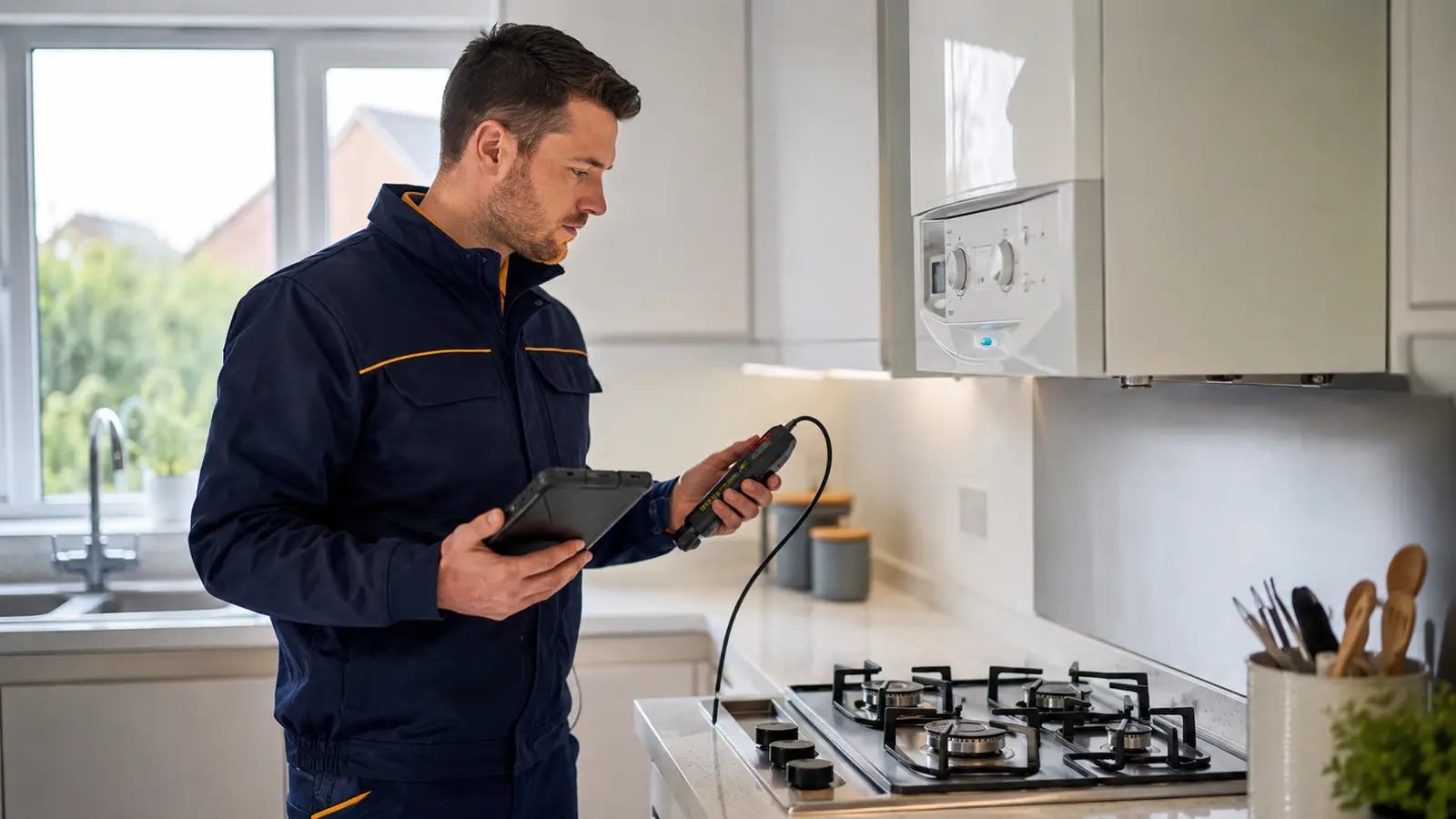
Tightness testing assesses whether the relevant gas installation holds under the prescribed test conditions. It requires appropriate competence and equipment; it is not a household leak-search exercise. Agree the reason for the test and the installation being assessed.
When the property is safe and you are arranging follow-up or planned work, our gas pipework services page explains the related service options. Use the coverage directory to check the enquiry route for your postcode.
Gas tightness testing: start with observable facts
Record the exact symptom
Note what the appliance or heating system is doing, when it happens and whether anything restores normal operation. A practical homeowner guide starts with evidence, not guesswork.
Identify the appliance
Keep the make and model available from an accessible label or the appliance documents. Do not remove the casing to find identifying details.
Avoid repeated resets
Record the displayed code before resetting and avoid repeatedly restarting the appliance. Repeated resets can hide useful fault history without resolving the underlying cause.
Checks that may matter for gas tightness testing
Appliance condition
Visible condition, controls, operating behaviour and service history help the engineer decide which safe checks are relevant to the reported issue.
The connected system
Boiler pressure, circulation, emitters, valves, ventilation and the flue route can affect performance. The relevant combination depends on the appliance and symptoms.
Clear findings
A useful outcome separates observed facts, likely causes and confirmed faults. Any extra work or parts should be explained before the appointment scope changes.
Prepare a useful gas tightness testing enquiry
Send the essentials
Include the full postcode, appliance make and model, fault code, current heating and hot-water status, and the best contact number for access.
Make access clear
Explain tenant arrangements, parking restrictions and obstacles around the appliance, meter, controls or radiators so the visit can be planned properly.
Verify before work
Ask to see the Gas Safe ID card and check that the category listed on the reverse covers the appliance and task being discussed.
Related questions before booking
For another part of gas tightness testing, read Gas tightness testing: Warning signs to record before choosing the appointment scope.
For another part of gas tightness testing, read Gas tightness testing: What an engineer checks before choosing the appointment scope.